Few experiences are more heart-wrenching than a family member, friend, or loved one going missing. The waiting and wondering, the not knowing, the sense of grief and loss, and lack of closure.
With more than 300 unidentified people from Nevada registered in the National Missing and Unidentified Persons System (NamUs), many families may never learn the fate of their loved ones.
Thanks to a partnership between UNLV’s Department of Anthropology and the Clark County Office of the Coroner/Medical Examiner, an annual event called Missing in Nevada Day aims to change those outcomes.
The event brings together families with multiple community and law enforcement agencies, forensics professionals, and nonprofits. Services include filing missing persons reports, collecting familial DNA reference samples, running searches in missing persons databases, reviewing forensic artist sketches, and in the best-case scenario, reuniting families with loved ones who were missing.
“I don’t think this event would have ever happened if it wasn’t for both parties wanting to collaborate to create this event. Clark County didn’t have the bandwidth, especially after 1 October and the COVID-19 pandemic, but they saw the need,” said Liam Johnson, a co-organizer of Missing in Nevada Day and a biological anthropology doctoral student at UNLV.
The Impact
Held on Jan. 31 at UNLV’s Gateway Building, the 2nd annual Missing in Nevada Day drew 18 families, eight new missing persons reports were filed, and one family was notified that their missing loved one was found alive.
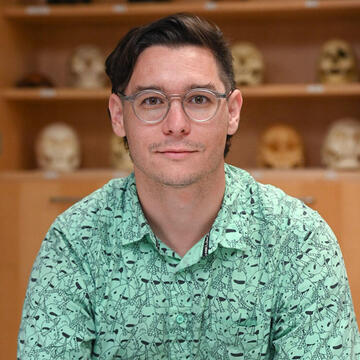
This followed the success of the inaugural event in 2025, which drew about 25 families and groups. Participants filed 10 new missing persons reports, and staff collected 12 familial DNA reference samples and facilitated two next-of-kin notifications. Johnson, along with the Coroner’s Office, received a Community Hero Award from Nevada Child Seekers for innovative efforts in resolving missing persons cases that year.
The numbers are notable because research shows many missing persons are unhoused and can be difficult to track. Fear of interacting with law enforcement and confusion about the reporting process contribute to some cases going unreported altogether, Johnson said.
“The system set in place for finding people isn’t great. There’s very little federal mandate, so it’s left to states and local governments. A lot of times the systems they create don’t talk to one another,” he added.
That’s why the program's staff and volunteers strive to lessen the stress for families and make the process as seamless as possible.
“Internally, our goals are to make the event more welcoming and help attendees feel safer,” he said.
How It Began
Discussions began in earnest with Clark County Coroner Melanie Rouse in 2022 to coordinate a missing persons event with wraparound services for families provided by multiple local, state, and national agencies, including Las Vegas Metropolitan and Henderson police departments, Bureau of Indian Affairs Missing and Murdered Unit, UNLV Forensic Anthropology and Bioarchaeology (FAB) Lab, NamUs, and Resiliency and Justice Center, among others.
Missing in Nevada Day is an outgrowth of a longstanding agreement between the Coroner’s Office and the UNLV FAB Lab. Through the agreement, UNLV forensic anthropologists consult on unidentified persons cases, conduct research, examine human remains, and assist with complex forensic scene documentation and recovery.
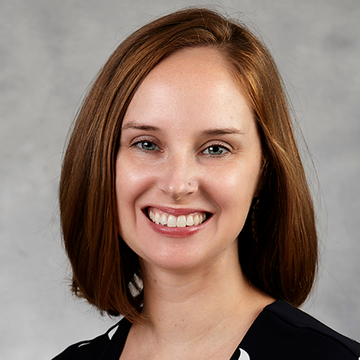
Associate professor of anthropology and FAB Lab co-director Jennifer Byrnes received a Top Tier Doctoral Graduate Research Assistantship grant from the UNLV Graduate College (2023-26), which Johnson assisted in drafting. The award funded his dissertation research for three years and helped him launch Missing in Nevada Day as a collaborative, community event with Clark County officials and a small army of volunteers.
Johnson, who has also conducted master’s-level research at Louisiana State University, had been studying missing and unidentified persons events for nearly 10 years when his passion research project collided with community need in Las Vegas.
“How I visualize our discipline is applied. I am not really interested in doing purely theoretical research. I want to see a tangible impact with my work, even if I’m not the one necessarily doing the work,” he said.
The Connection
The work is scientific yet personal. When missing persons cases and forensics intersect, the findings can help narrate a person’s life story, Byrnes said.
“We are essentially listening with the information and the evidence we have to tell the best story we can. In forensics, we focus a lot on identification and trying to provide context across time and space,” she said.
Human connection cannot be discounted because it helps define us and shapes communities and society, she added. “Once you’re removed from that, and you’re missing or unidentified, you have lost that social connection. Making that connection is the goal — to help us know or understand who the person may have been, where they lived, who their kin are, how they existed in the community.”
Sustaining Hope
With two successful events completed and plans established with Clark County, Johnson hopes Missing in Nevada Day continues long after he graduates in May.
“I helped to get it started, and I hope to come back in 10 years and see the event still happening,” he said.
“I’m confident it will continue with or without me. Even if it just helps one person, it’s worth it.”