Department of Anthropology News
Anthropology focuses on the spectrum of the human experience from the past to the present. With a comprehensive and well-integrated curriculum, the Department of Anthropology teaches and trains students in a way that balances methodological and theoretical approaches in anthropology. Our courses and research programs are relevant on local and global scales, and we provide students with an insightful understanding of our shared humanity and diverse human cultures around the world.
Current Anthropology News

A selection of prominent headlines featuring UNLV experts from July and August.
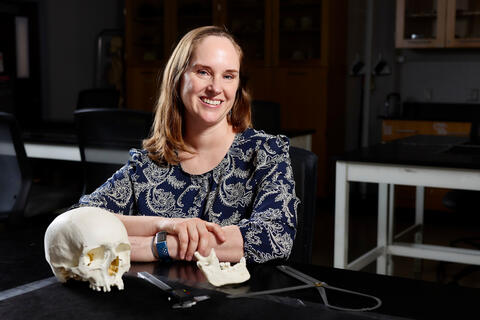
Jennifer Byrnes’ work has helped resolve unidentified and missing person cases, filling critical gaps in service and expertise.

The soon-to-be two-time UNLV alumna is helping graduate students find their voice and advocate for themselves.
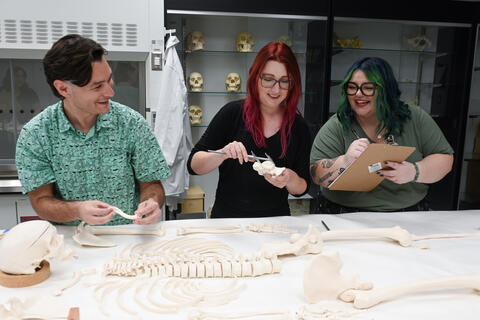
Faculty and students from the Forensic Anthropology and Bioarchaeology Lab help solve missing persons cases.

A collection of the top news headlines featuring UNLV faculty and students.

From trips to Peru and an alien zoo, UNLV faculty lead students on learning journeys via the university’s newest immersive learning tools.
Anthropology In The News
Hunter-gatherer communities are a window on how the human species learned to get a good night's rest. Here's what you can learn from them.
A year after ICE enforcement fears began emptying Latino festivals and parades, the pattern is still reshaping how communities gather — and what it's costing them.

Scientists drove ATVs for miles and then hiked miles more through dense forest to reach a site untouched by looting on Mexico’s Yucatán Peninsula. They named it Minanbé, meaning “there is no path.”
New fossil discoveries are reshaping scientists' understanding of a pivotal chapter in human evolution, revealing that several human ancestor lineages lived side by side nearly 3 million years ago.
She walks through the door. You already know this story. But here's what you don't: the femme fatale isn't a Hollywood invention — and she was never warning you about her. Heliox explores anthropologist William Jankowiak's landmark cross-cultural study of dangerous-woman folklore across 84 global societies, from the Igbo of West Nigeria to Aboriginal Australia to modern South Korean farms. The finding that changes everything? In 89% of those cultures, the man wasn't destroyed because he wanted a fling. He wanted to fall in love.
An international team of researchers has discovered 13 fossil teeth in Ethiopia's Afar region that do not fit any known human species. The find suggests that multiple hominid lineages coexisted in Africa more than two million years ago, including one that science had not yet identified.