College of Sciences News
In the College of Sciences, discovery and education go hand-in-hand to provide innovative and engaging learning environments to enable students to go on to successful careers as researchers, educators, private-industry scientists, and health professionals.
Current Sciences News
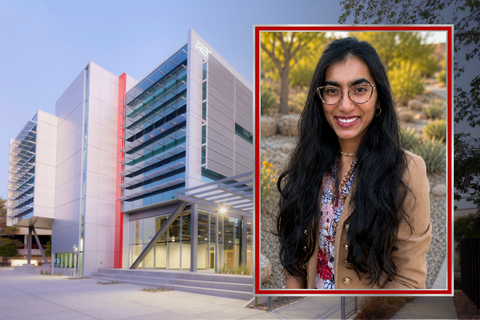
The Engineering Alumna of the Year leads data and business intelligence analysts at the Nevada National Security Sites while helping connect UNLV students with industry opportunities.
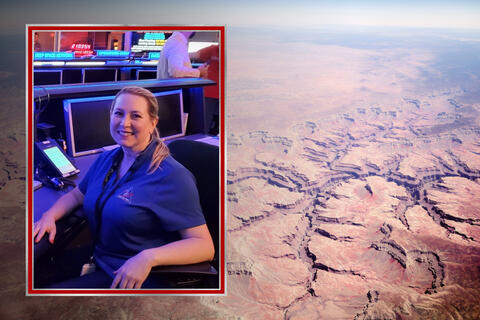
The College of Sciences Alumna of the Year and NASA planetary geologist fosters internship opportunities for UNLV's next generation of scientists.
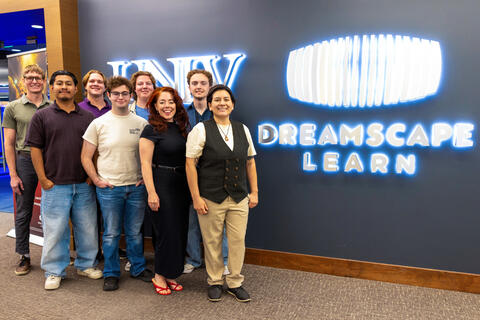
Created by a multidisciplinary team of UNLV students, R.2X Cosmic Expedition takes the campus community beyond the classroom and into the solar system.
A selection of prominent headlines featuring UNLV experts from July and August.

From advancing their professions to improving the lives of others, this year’s honorees are putting their expertise to work in ways that reflect the values and experiences they gained at UNLV.
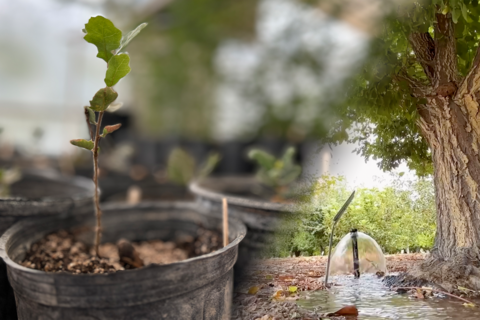
As allocations from the Colorado River further squeeze the Las Vegas Valley’s water resources, innovation from UNLV's Center for Urban Water Conservation may ease the burden on plants and communities.
Sciences In The News
Arizona recently raised an arsenic limit at one monitoring well at Pinyon Plain Mine, where scientists are still trying to understand how water moves underground.
As with most birds, food sources are always a draw, but ravens might also decide your home is the perfect place to rest or even nest.
As temperatures drop and natural food sources become harder for wildlife to find, your yard can become an important refreshment stop for winter birds. But simply getting whatever bird feeder you can find and filling it with seed isn’t always helpful. The type of feeder, where you place it and how often you clean it can all affect which birds show up and whether you accidentally invite squirrels, mice and other pests into your yard as well.
From deterrents to yard changes, these expert-backed tips can help make your outdoor space less appealing to crows—without putting them at risk.

In March of this year, a team of scientists—led by Emil Ruff, a Ph.D. in microbial ecology—descended into a 2.2-mile-deep mineshaft just outside of Johannesburg, South Africa. The NASA-funded expedition had an unusual objective: to research a billion-year-old brine discovered after an earthquake split a tunnel wall. That radioactive brine contains microbes, argon, phosphorus … and oxygen. Scientists call it “dark oxygen,” oxygen produced without photosynthesis. Ranjani Murali, assistant professor of microbial environmental genomics at UNLV, was on that expedition along with Sujung Lim, a postdoctoral scholar from Murali’s lab.

NASA is quickly moving forward with plans to establish and build a Space Academy for the U.S. Space Force, similar to the existing military academies for the Air Force, Army and Navy.