Carrie Tyler


Biography
Carrie Tyler is a marine conservation paleobiologist whose research focuses on understanding the evolution of underwater ecosystems, particularly how marine food webs respond to dramatic change, and the relationship between biodiversity and marine food webs throughout ancient history to modern day.
Tyler, who joined UNLV's faculty in 2022, examines the effects of prey consumption and environmental changes on ecosystems — especially in the modern rocky intertidal, or range between high and low tide lines. Her work also seeks to assess the quality of fossils and determine ways to use that information to inform paleoecology, as well as conservation law and policy.
In addition to wrestling with topics such as past climate change and natural resources, students in Tyler's classes also learn about ecosystem functioning and recovery, habitat loss, and mass extinction.
Education
- Ph.D., Geosciences, Virginia Tech
- M.S., Geological and Earth Sciences/Geosciences, San Diego University
- B.A., Anthropology, University of Colorado Boulder
Carrie Tyler In The News
Articles Featuring Carrie Tyler

UNLV Newsmakers 2025: August
The top news stories starring university students and staff.

Study: Fossils Reveal Reliable Record of Marine Ecosystem Functioning
Research published in PNAS confirms fossilized marine invertebrates serve as a powerful tool for understanding long-term ecological change and informing modern conservation efforts.
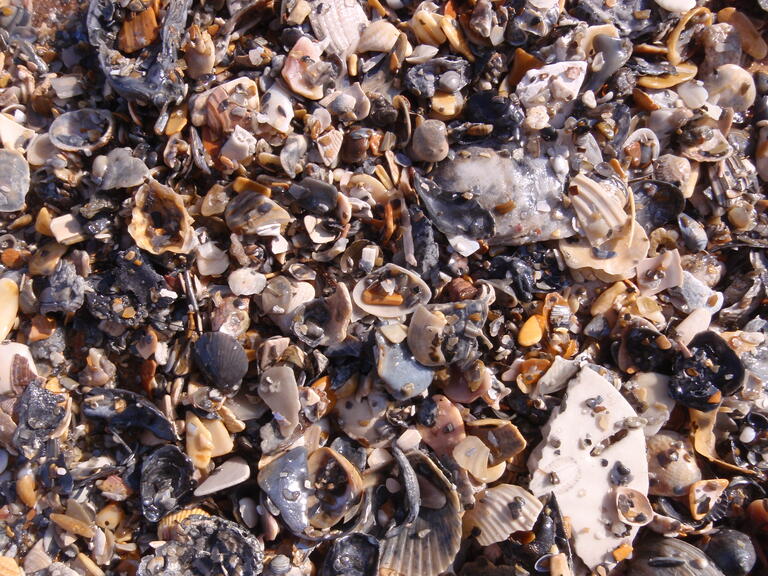
UNLV Study Validates Marine Fossil Record, Providing Reliable Benchmark for Deteriorating Underwater Ecosystems
Discovery of abundant, diverse range of remains give scientists new lens on historical underwater ecosystem changes and potential future conservation strategies.
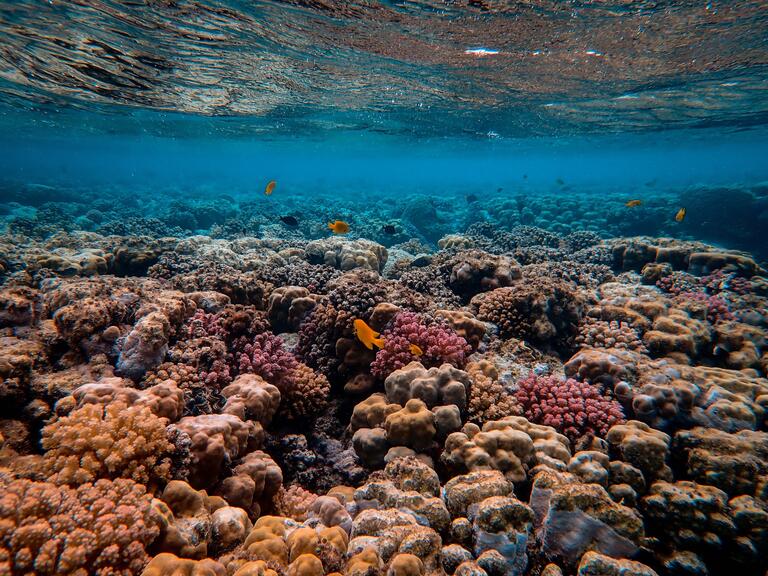
Research in Brief: Have Humans Wreaked Too Much Havoc on Marine Life to Halt Damage?
UNLV analysis challenges the idea that ocean ecosystems have barely changed over millions of years, pointing scientists down a new path on conservation efforts and policy.