Please fill out the Permissions Request Form with the requested information:
- Name
- NSHE ID
- Class and section number (ex. MUS 221-1001)
- Reason for permission
- Upload screenshot of professor's requested permission from email.
Your Permission will be entered within 1 week from submission. If you have any issues after submitting, please email the School of Music Undergraduate Coordinator, Stephanie Council at Stephanie.council@unlv.edu.
- Composition Handbook
- Jazz and Commercial Music Studies Handbook
- Music Education Handbook
- Musicology Handbook
- Percussion Handbook
- String Handbook
- Vocal Handbook
- Wind Band Studies Handbook
- Woodwind Handbook
- Dismissal Policy
- DMA Qualifying Exam, Music History: Description and Sample Questions
- Graduate Advising
- Graduate Forms
- Graduate Music Education Practicum Application
- Graduate Placement Exam Information
- Graduate Student Checklist
- Graduate Study Timeline
- Graduate Student Music Handbook
- Music Supervised Teaching Application - Graduate
- Graduate Independent Study Request Form
The UNLV School of Music Graduate Music History Placement Examination
The Graduate Music History Placement Examination assesses the breadth and depth of incoming students’ music-historical and stylistic knowledge, understanding, and perceptivity. The Examination helps ensure that graduate students can participate productively in graduate-level music-historical and other historically-oriented course work. It further emphasizes that musicology courses at UNLV help our students to think, speak, and write with authority and understanding of western musical repertoires and practices, whether during subsequent graduate studies or professional careers, which in many instances demand teaching, public lecturing, or writing about music of European traditions.
Most newly admitted Master of Music and Doctor of Musical Arts candidates are required to take the Examination. The following categories of students are exempted: (1) doctoral students who completed a Master’s degree in music at UNLV no more than five years prior to matriculation; (2) those entering the A.D. (Artist Diploma) program; (3) those pursuing only the K-12 Teacher Licensure Certificate; and (4) those entering the M.M. or D.M.A program in Jazz and Commercial Music.
Dates and Administration of the Examination
The Examination is administered on-line through UNLV’s Canvas course management system. The Examination is offered over a period of several days prior to the first day of instruction of both the fall and spring semesters. The specific dates and times of the examination’s open window will be advertised in late spring or early summer, normally on the School of Music Web site and/or in other electronic or printed communications. Students who will matriculate in a spring semester may opt to take the Examination prior to the start of the subsequent fall semester.
The Examination has a time limit of three hours and may be taken during any convenient three-hour interval that falls within the announced date and time range. The student will want to start the Examination at least three hours prior to its 11:59 PM closing time. Students should not start the Examination until they are prepared to complete it in its entirety. Once started, it must be completed in one sitting. No part of the Examination may be reopened or repeated after it has been started and its duration has ended. Students should select a time to take the Examination (a) when they feel prepared to do so, (b) can give it uninterrupted attention, and (c) are in a location where they will be able to work undisturbed.
If technical problems arise while taking the Examination, contact I.T. Support (702-895-0777) as a first step toward resolving the problem. If they are unable to assist, notify the members of the Musicology Area by email (anthony.barone@unlv.edu, Jonathan.r.lee@unlv.edu, and Richard.miller@unlv.edu) of your difficulty. We recommend that students plan to take the Examination during business hours (Pacific Standard Time) to ensure that I.T. phone support is available. The Musicology faculty's response time will vary according to its schedules, and inquiries sent after business hours might not be addressed until the following day.
Preparing for the Placement Examination
Suitable preparatory and review materials include Burkholder's A History of Western Music or Barbara Hanning’s Concise History of Western Music (in any recent edition) and the accompanying volumes of the Norton Anthology of Western Music.Students enrolled at UNLV also have free access to the A-R Music Anthology (access via the UNLV Libraries’ database page), an online resource that includes both scores and essays about the classical repertoire; students preparing for the Examination may find particularly helpful the Content Guides on this site, which are organized by music-historical style period. In principle, any current, eminent college-level music-history text and associated score anthology, can be used for the purpose.
It is important that students be able to reference and discuss examples of repertoire in the course of the Examination, so preparation and review should not be limited to mere historical and biographical facts (e.g., "Beethoven died in 1827"); rather, it is more important that students have in mind a broad historical repertoire of works that they have studied or performed that can be invoked to demonstrate important historical phenomena (e.g., "Beethoven's Third Symphony is a good example of...", “Debussy’s String Quartet in G Minor demonstrates the use of…”, etc.).
Enrolling to Take the Examination
Newly matriculating graduate students will be identified by the School of Music and added to the roster of the Canvas course called “Music History: Graduate Placement Exam.” Those students will receive an email invitation to join this course.
Additionally, any current student who has not yet passed the Examination and must retake it will be able to request that they be added to the Examination roster.
Once students have accepted their invitations to join the course, they will have access to the three important items below:
- Instructions on Lockdown Browser and Respondus Monitor
- Sample Graduate Placement Quiz: Technology Check (Requires Respondus LockDown Browser + Webcam
- Graduate Placement Exam - [semester and year] (Requires Respondus LockDown Browser + Webcam
The Examination requires the use of Lockdown Browser and Respondus Monitor, two integrated tools that help ensure the integrity of on-line examinations. The instructions for using these tools and the Sample Quiz will be immediately available to students who are enrolled in the “Music History: Graduate Placement Exam” course; the Examination itself will only become accessible at the start of the Examination window.
Description of the Placement Examination
The Examination has four parts: (1) terminology, (2) multiple-choice questions, (3) style analyses of scores, and (4) an essay. The four parts are designed as follows:
- Students will be presented with columns of terms representing different periods of music history (loosely corresponding to "Medieval/Renaissance," "Baroque," "Classical," "Romantic," "Modern") from each of which students will choose two terms to explain in brief paragraphs that should include examples of composers and/or works that illustrate in a salient way the significance of the terms.
- Students will be presented with a series of twenty-eight multiple-choice questions that address a spectrum of music-historical facts across all periods.
- Students will be given a set of five score excerpts, from which they will choose four to discuss with respect to their stylistic and technical features, with the aim of assigning the score to a particular style period and/or movement and speculating on its possible composer. The aim here is to ascertain students’ ability to draw conclusions about musical styles, genres, forms, techniques, and processes from notated music. Each score can probably be addressed with an essay of between 80 and 150 words, but there is no specific length requirement. Examinees are advised to provide as much detailed evidence as appropriate to substantiate their conclusions.
- Examinees will choose one from among four essay-length questions on broad music-historical topics. A response of 250-400 words may be appropriate, but there is no specific required length.
The design and content of the Examination is subject to change; substantive changes will be announced and described in advance of any subsequent Examination offering.
Members of the musicology faculty grade the Examination. The minimum passing score is 70%.
Results of the Examination
Students who pass the Examination may enroll—subject to individual course prerequisites—in graduate musicology-area seminars. Students who do not pass the Examination will be sent recommended remediation strategies, which may include coursework, or self-study followed by retaking the Examination.
Integrity of the Examination
The Examination is governed by University “Academic Misconduct” and other relevant policies. Students alleged to be in violation of Academic Misconduct policies will be referred to the Office of Student Conduct. Penalties for such violations may include the nullification of Examination results.
Penalties, costs, and other consequences of a student’s failure to observe these Placement requirements are the responsibility of, and will be borne solely by the student.
- Instrument Rental Contract
- Instrument Use Policy
- Locker Rental Agreement
- Locker Use Policy
- Piano Use Policy
- Applied Juries
- Instrumental Jury Form
- Instrumental Repertoire Form
- Vocal Jury Form
- Vocal Repertoire Form
- Music Theory Proficiency Sample Exam
- Music Theory Proficiency Study Guide
- Independent Study Form
UNLV School of Music Undergraduate Music History Information and Course Offerings Spring 2026
Information for Undergraduate Students
- A recent change in our music history curriculum provides many undergraduate students with new flexibility: B.M. students (except for those in Jazz and Commercial Music subplans and the B.A. in Music program), while still required to take MUS 341 and MUS 342, may now choose from among MUS 347 (Ethnomusicology: Global Perspectives on Music and Sound), MUS 348 (Issues in American Music), and MUS 343 (Music History III - Music Since 1900) to satisfy the remaining three credits of their music history requirement.
- Jazz and Commercial Music subplans and the B.A. in Music program have different requirements; see the UNLV Undergraduate Catalog for further information.
- MUS 131 (Introduction to Music Literature) or satisfactory performance on the Undergraduate Music History Placement Examination is a prerequisite for MUS 341, 342, 343, 347, and 348. Other prerequisites may apply to these and/or other music history courses; see the UNLV Undergraduate Catalog for further information.
- The Undergraduate Music History Placement Examination is offered on-line during the final weeks of each fall semester. Notifications concerning the Examination are distributed through Rebel mail. Students who do not take or pass the Examination are required to enroll in MUS 131 in a subsequent spring semester.
- Music history requirements differ among the B.A. and B.M. degree plans.
- MUS 347 and MUS 348 may satisfy music history requirements in some undergraduate music degree plans.
- MUS 491, MUS 492, and MUS 493 may satisfy music history requirements in some undergraduate music degree plans;
- Prior to enrolling in any music history course, consult the UNLV Undergraduate Catalog for clarification regarding your options and requirements.
Course Offerings for Undergraduate Students
The musicology faculty is pleased to announce the following courses for spring 2026.
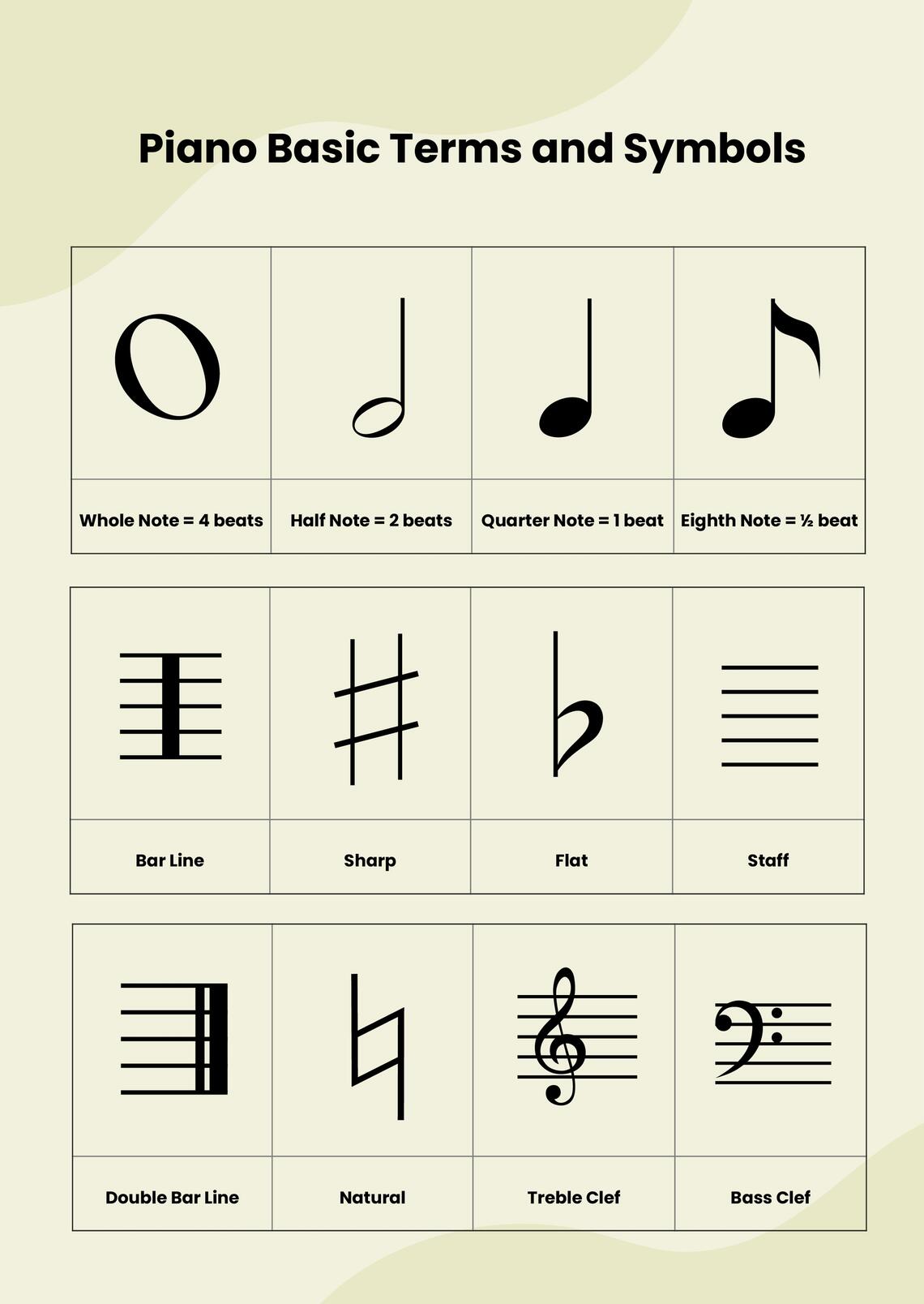
MUS 131 (Introduction to Music Literature)
Professor Richard Miller
MUS 131 Introduction to Music Literature is designed to introduce you to the broad sweep of classical and popular music in Europe and the Americas from the Medieval period to the present day. At the same time, this course will help you develop three skills that you will need to be successful in the UNLV School of Music:
- Listening deeply to music as both artistic expression and social activity
- Analyzing what you hear in terms of form, texture, and meaning
- Interpreting what you hear, both orally and in writing
This course thus lays the groundwork for further study in music and more generally for an understanding of contemporary music-cultural developments and debates. The material is organized into five units, reflecting the major repertoires taught here at UNLV, four emphasizing the western classical tradition and one emphasizing popular music of the 20th and 21st centuries.

MUS 347 (Ethnomusicology: Global Perspectives on Music and Sound)
Professor Richard Miller
MUS 347, Ethnomusicology: Global Perspectives on Music and Sound, uses the perspectives of ethnomusicology to journey through the richness and diversity of music and sound on a global scale, providing an understanding of music as a cultural, social, and political human activity that shapes lives around the world. Topics covered include selected musical traditions of Asia, Africa, and the Americas, as well as the ideas, methods, and procedures of ethnomusicology--the anthropology of music and the musicology of people.
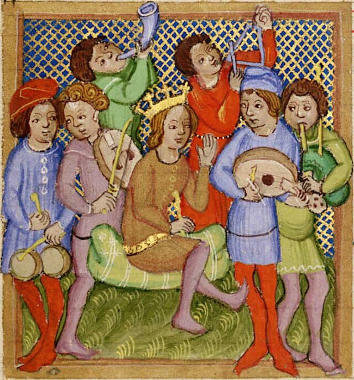
MUS 341 (Music History I: Medieval, Renaissance, and Baroque Music)
Professor Jonathan Lee
Music History I is a survey of significant musical compositions, styles, and artists in Western Europe and its spheres of influence ca.900–ca.1750. The course examines its works and artists in various cultural, political, and social contexts to understand the relationships among musical works and their creators, performers, and consumers. The course provides a foundation for further study in MUS 342 and other advanced music history courses.
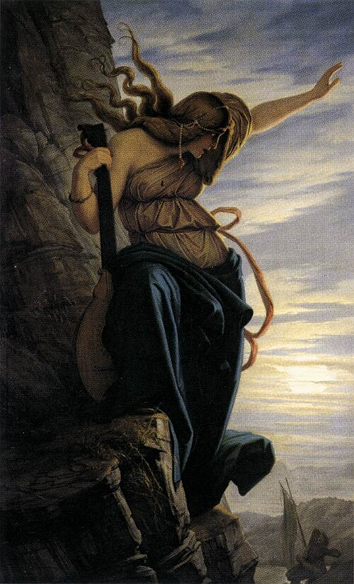
MUS 342 (Music History II: Classical and Romantic Music)
Professor Anthony Barone
MUS 342 Music History II is a survey of significant musical compositions, styles, and artists in Western Europe and its spheres of influence ca.1750–1900. These spheres of influence include the margins of Europe, Asia, the Americas, and other regions where these cultural developments have had and continue to have an impact. The course examines its works and artists in various cultural, political, and social contexts to understand the relationships among musical works and their creators, performers, and consumers. The course builds on concepts and repertoire treated in MUS 341 and provides a foundation for further study in MUS 343 and other advanced music history courses.
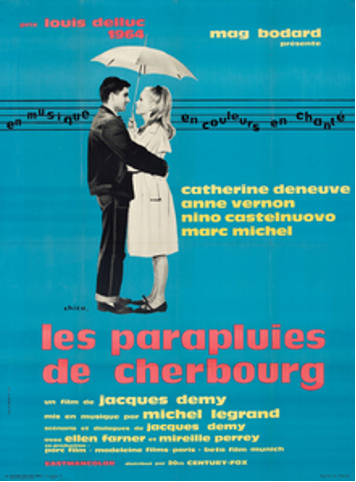
MUS 493 / HON 420 (Film Music and Film Sound)
Professor Jonathan Lee
MUS 493 / HON 420 (Film Music and Film Sound) surveys the history of music’s use in the cinema. Our primary texts will consist of a wide variety of films, ranging from silent film (and its musical accompaniment) to contemporary productions, including both orchestral scores and compilation soundtracks. In addition to feature films, we will study genres such as documentaries, cartoons, and experimental films. Hollywood productions will be at the heart of this survey, but we will also touch on alternative approaches from European and Asian cinema.
Please note that independent studies in music history do not satisfy degree course requirements.
- Advising
- Ensemble Requirement
- Individual Applied Lessons Grading Policy
- Individual Applied Lessons
- Minimum Course Grade
- Music Supervised Teaching Application
- Piano Proficiency Examination
- Piano Proficiency Packet
- Satisfactory Progress Evaluation Form
- Senior Project Approval Form for B.A. Music Candidates