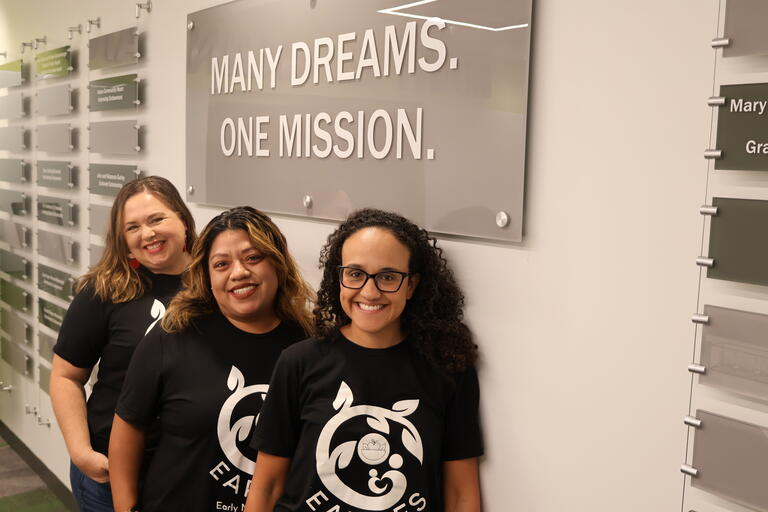
It’s a Friday afternoon at 2 p.m. and Lisa Dirk, Billy Owensby, and Ryan Sousa are together in their study group at the social work graduate lounge. Owensby reminds the group about presentation deadlines and offers snacks. Their laptops are out, and they’re chatting about school as well as their spouses, work, kids, and pets.
For the last few years, this study group has become a regular thing, and it’s clear the three have leaned on each other during their time as students in UNLV's School of Social Work.
“I think if I didn’t have that study group, my focus and my determination may not be as heightened as it is now,” Owensby said. “I’ve excelled in school; I don’t know if I would have if it wasn’t for the friends I met.”
Making lifelong friends in college is expected when you're fresh out of high school, but these three nontraditional students were surprised they also got that type of college experience at UNLV. Just like their traditional peers, they defy the misconceptions of UNLV as a "commuter campus." They’ve made time to meet each other after class with their busy schedules and various responsibilities.
Dirk, 52; Owensby, 56; and Sousa, 34, will graduate on May 16 with their bachelor’s degree in social work, something that’s been a longtime goal for all three.
They are among 8,000 undergraduate and graduate students currently considered nontraditional students, according to fall 2025 data provided by the UNLV Office of Decision Support. Typically over the age of 25, these students may have dependents and work full time while attending school, but they're still here for the full student experience.
“We can bring a lot to the classroom. We can give some good advice and learn from the younger students as well,” Owensby said. “You need to humble yourself and be willing to be taught but everybody can do this. It’s never too late.”
Though their lives are different, Dirk, Owensby, and Sousa came to UNLV sharing a drive to be agents for social change, said Lauren Shute, an assistant professor of social work who has had all three in her classes.
“Nontraditional students tend to come in and form relationships and create dynamics that help other students to feel more comfortable. They may not even realize it, but they are actually a huge part of why they and their peers — traditional and nontraditional students alike — are going to be able to have a lasting impact in the program, university, community, and the social work profession more broadly,” Shute said.
We talked to Dirk, Owensby, and Sousa about why their life experiences inspired them to enroll in college at later stages in life. Their study group will continue past this graduation day. All three are continuing on in UNLV’s master’s program in social work.
Lisa Dirk
On most days, you can catch Lisa Dirk juggling her grandson in one hand and a social work assignment in the other. Other days, you can catch her studying in her car while her 14-year-old son’s hockey practice is underway. She leaves the books aside when her son’s playing in a game.
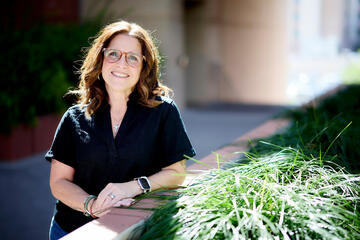
Dirk will graduate with a 3.8 GPA. She had been an x-ray technician for 12 years when a personal family issue demonstrated the need for more social workers in Nevada, Dirk said. She enrolled, at age 48; it was her first time attending college. But it wasn’t a surprise to her family. She’d long been talking about the gaps in mental health care in Southern Nevada.
“Something has to change,” Dirk said. “And why not me? I mean, I’m one person, but one person can get another person's attention to make a difference.”
The mother to a 27-, 25-, and 14-year-old, Dirk said her academic journey was not one without challenges. She managed her classes while caring for her mother who had dementia and passed away.
In the last year of school, over the winter break, Dirk underwent brain surgery but returned to class when the semester resumed. She proudly shows off the surgery scar on the base of her neck. It’s a reminder of how far she’s come and where she's going, she says.
“God put me here for a reason,” Dirk said. “My days are packed but I really do love it. I thrive on chaos. I like learning. We should never be done learning.”
Dirk completed her practicum at the School of Social Work’s sports research lab focusing on the emotional health of individuals, groups, teams, and organizations in sports environments. She will begin her master’s degree in social work this summer at UNLV with an emphasis on improving mental health access for athletes.
Billy Owensby
Billy Owensby has a reminder for individuals who want to change their life for the better: Your mistakes don’t define you and you can change the course. Owensby said his life has been marked by many turning points. Decisions that led him astray also led to choices for better opportunities.
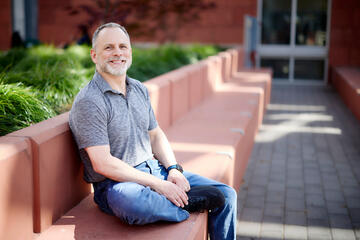
Upon his release from serving a sentence in prison, Owensby learned about the Justice Involved Education program (JIVE), which gives people who were previously incarcerated the chance to obtain a degree or trade skills.
Truckee Meadows Community College administrators were seeking state funding to start the JIVE program and asked Owensby to testify for its need in front of the Nevada Legislature and share his story with then-Nevada Gov. Brian Sandoval. Owensby explained he was a veteran, worked in the IT industry for years before serving time in prison, completed a substance abuse rehabilitation program, and wanted to start a new chapter in his life to give back to his community.
In 2020, life gave Owensby yet another decision to make.
The JIVE program coordinators received funding for JIVE and asked Owensby if he wanted to enroll in college. The JIVE program would offer to pay his tuition. He was 50 at that point. The dream of going to college all his life could become a reality if he gave himself grace.
“I always thought my past defined me and the decisions I made in my past kept me from going anywhere. I firmly believe everybody deserves a second chance. Everybody has the ability to do more. Everybody’s worthy,” Owensby said.
Owensby earned a 4.0 GPA and associates degree in social work at Truckee Meadows Community College. He moved to Las Vegas with his husband and will graduate from the UNLV with another perfect 4.0. He completed practicums at behavioral health centers, a mandated therapy clinic, and volunteered at the veterans administration and will start his master’s of social work at UNLV in June.
“The funny thing is in social work there's a huge emphasis on lived experience. And boy do I have a lot of lived experiences,” Owensby said. “I’m a veteran. I am gay. I had substance abuse issues. I check a lot of different boxes.”
Owensby wants to help veterans with substance abuse problems or previously incarcerated individuals.
“People can always change and people need to be given another chance. The people you may throw to the side or not support or judge, sometimes they are the ones that can excel. Don’t give up on anybody.”
Ryan Sousa
Talk about a best friend forever. Ryan Sousa’s best friend Dyala, encouraged him to apply for the bachelor’s degree in social work. Sousa said he would if Dyala would pay for his application fee. So she did. And on May 16, Sousa will walk across the stage as a social work graduate.
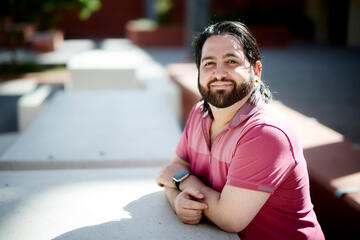
Sousa began college in California in 2009 and tried many programs but nothing quite fit until he came to Las Vegas in 2023. He selected social work because of someone who helped him through a difficult time.
When he moved to Las Vegas with his husband, he needed help navigating medical costs without insurance so he visited the LGTBQ+ Center in Las Vegas. That’s where Sousa met a case manager with a similar background as himself: both identified as queer and were HIV positive. He soon found he wanted to provide support to others like the case manager did for him.
“I feel like as social workers, we give voices to people in spaces where they don’t have a voice themselves or hold space for themselves,” Sousa said. “We advocate for our patients. Speaking from my own personal experience, sometimes we shy away from a problem that gets bigger and bigger, and we need to figure it out and navigate the dark and scary path. Social workers help take the weight off your shoulders.”
He balanced both a full-time job, school, and a required practicum where he worked alongside case managers at a local hospital assisting with referrals and counseling patients.
Sousa will graduate with a 3.8 and will begin his master’s degree in social work at UNLV in June. He plans to obtain his license to become a clinical social worker so he can provide counseling services for the queer community.