Many people have probably heard of “leaky gut,” which happens when the intestinal lining breaks down, allowing harmful gut bacterial antigens to slip into the bloodstream alongside nutrients. This breach in the gut’s protective barrier is more than a digestive issue – it’s a sign of inflammatory bowel disease (IBD) and has been increasingly linked to chronic conditions ranging from diabetes to fatty liver disease, neurodegeneration, and autoimmune disorders.
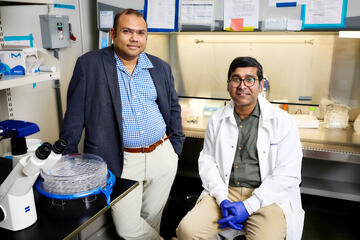
A team of researchers working in the lab of UNLV cellular biologist Prasun Guha has uncovered a key mechanism underlying leaky gut and identified a promising and natural way to repair it.
Notably, the potential solution is already in many of the foods we eat every day.
In a study published formally on May 28 in the journal Nature Communications, the team shares how phytic acid (or InsP6), a natural compound found in whole grains, beans, lentils, nuts, and seeds, plays an important role in maintaining the integrity of the intestinal barrier.
“Phytic acid is something many people already consume daily, especially in plant-rich diets,” said Sujan Chatterjee, a UNLV postdoctoral fellow and lead author on the study. “What’s exciting is that it’s beyond just a dietary component; it also functions as a biologically active molecule that supports gut health.”
At the center of this discovery is a cellular regulator called histone deacetylase 3 (HDAC3). This protein acts as a gatekeeper, controlling genes that maintain the strength and function of the gut lining.
“When HDAC3 stops working properly, harmful genes are activated, leading to breakdown of the gut barrier and increased inflammation,” said Guha. “We found that phytic acid directly activates HDAC3 and is necessary for its proper function, essentially protecting the gut from within.”
Because leaky gut is a defining feature of IBD, these findings carry important clinical implications. The study reveals how intestinal barrier breakdown occurs at a molecular level and demonstrates that it can be reversed.
Guha emphasized that while more research is needed, this work opens the door to a potential new class of therapies that are safer, more natural, and focused on restoring the body’s own protective systems.
“The future of medicine may lie at the intersection of nutrition, metabolism, and epigenetics,” Guha says.
It’s also not as simple as only eating a plant-based diet, as diet alone may not be enough. “To achieve consistent therapeutic effects, we will likely need targeted supplementation or medical formulations,” Guha said. “Factors like absorption, metabolism, and disease state vary widely between individuals.”
Publication Details
“Phytic Acid (InsP6) activates HDAC3 epigenetic axis to maintain intestinal barrier function” was formally published on May 28, 2026 in Nature Communications. The Guha Lab is part of the School of Life Sciences and the Nevada Institute of Personalized Medicine (NIPM) at UNLV.
The study also included contributions from faculty and undergraduate and graduate student researchers from the UNLV School of Life Sciences, the UNLV Department of Mechanical Engineering, the Institute of Organic Chemistry at the University of Freiburg in Germany, the Medical Research Council Laboratory for Molecular Cell Biology at University College London, and the Division of Gastroenterology at Washington University School of Medicine in St. Louis.