As Lusayla Romancik crosses the Commencement stage this weekend with her bachelor’s degree in public health, her mom will be there cheering her on — not only as a parent, but as a fellow student in the UNLV School of Public Health’s master of public health program.
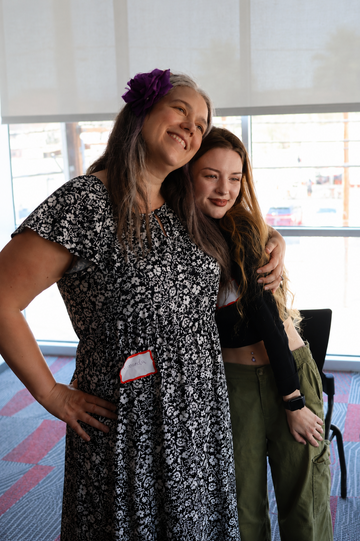
Melanie Romancik returned to UNLV to pursue her master’s after earning her undergraduate degree in health care administration in 2018.
After earning her bachelor's, Melanie worked in infection prevention at multiple valley hospitals. She later returned for her graduate degree in public health after navigating the pediatric challenges of raising a son with special needs.
When Lusayla was considering public health as her major after the pandemic, her mom encouraged the decision in real time over text during an advising appointment.
“Public health, public health — you can go anywhere with that degree,” Lusayla recalled her mother texting her.
Ahead of her daughter’s May 16 graduation, Melanie said she’s feeling both overwhelmed and happy.
“I’m gonna have to find that waterproof mascara,” she joked.
Two Generations of Public Health
This year, Tim Bungum will retire from the School of Public Health after 25 years at UNLV. A professor of epidemiology and biostatistics, he taught both Lusayla and Melanie — first Lusayla in 2023, then her mother a year later.
One of the difficult realities Melanie said she learned in Bungum’s class is the role wealth and socioeconomic status play in people’s health. According to Bungum, wider income gaps often lead to wider disparities in health outcomes.
“He would then make a joke about how, ‘Remember kids, marry rich. Your life expectancy will be longer,’” Melanie recalled.
It wasn't uncommon for Melanie to come home after class and tell her daughter what professors taught that day — and vice versa.
“It was always a way to just drive home again the meaning behind impactful lectures,” Melanie said. “I love when we can relearn together.”
In a video she and Lusayla recorded for Bungum’s retirement party earlier this month, Melanie told him, “You taught two generations of our family to think bigger about public health … and to maybe marry wealthy, for the data.”

He described both mother and daughter as genuine, earnest students who were open to ideas and engaged in class. For nontraditional students like Melanie who return to school for a graduate degree, many are older, more mature, and ready to learn.
Watching those students succeed, Bungum said, “It’s rewarding.”
As Commencement approaches, Lusayla credits Bungum with creating a welcoming classroom environment where she always felt comfortable raising her hand.
She added that social and behavioral health professor-in-residence Amanda Morgan taught her about human sexuality, the laws that govern it, and why we care so much about it from a public health and public safety perspective. Meanwhile, assistant director of environmental health and safety Brent Webber taught her about injury prevention and how systemic issues can contribute to accidents that sometimes go unaddressed.
But ultimately, it was Lusayla's mother, Melanie, who instilled in her from a young age the value of education, particularly for women.
“She gave me this realization that education and knowledge is power,” she said. “As a woman, I do want to be powerful and be smart and get an education.”
After graduation, Lusayla plans to apply for jobs at local hospitals. Long term, she hopes to care for and support her family.
“That’s everything for me,” she said. “That’s all I really need.”