As the east side of the Cox Pavilion stands fill up ahead of a late-season UNLV women’s volleyball match, Merlelynn and Adrian Harris settle into their seats halfway up the less populated west side of the gym.
It’s a very strategic move. Not because the couple desires extra elbow room or is antisocial. Rather, this vantage point allows the Harris’ to keep one eye on the UNLV sidelines as the other scans the action on the court.
The reason? Family.
Deja Harris — the second of Merlelynn and Adrian’s five daughters — is roaming the sidelines as an assistant coach on the Rebels’ volleyball squad. At the same time, Jaida Harris — daughter No. 4 and 10 years Deja’s junior — is rising above the net as she nears the end of her sensational first season at UNLV.
As has been the case for every home match in 2025, Merlelynn and Adrian are attending this late-season battle against Wyoming to support their daughters and cheer on their Rebels.
Yes, their Rebels.
Because unlike every other parent inside Cox Pavilion on this mid-November evening, Merlelynn and Adrian Harris have been there, done that. And they’ve got the sweat-stained Rebel jersey — and UNLV Hall of Fame inductions — to prove it.
But to get the opportunity to now watch not one but two of their children represent the scarlet and gray?
“It’s tough to put into words,” Adrian Harris says.
Adds Merlelynn: “It’s such a blessing.”

This particular legacy story goes back more than four decades to 1983 — the year, Adrian Harris left his hometown of Los Angeles after accepting a UNLV football scholarship.
It was a decision the onetime linebacker never saw coming: “I didn’t even know UNLV had a football team.”
That changed when Harris learned that Kirk Jones — a heavily recruited Southern California running back — revealed that he was going to be a Rebel. The decision was the first thing that piqued Harris’ interest in UNLV.
Enter Wayne Nunnely, then a Rebels assistant coach who took his recruiting pitch to another, more personal level.
“I was recruited by a lot of different schools,” Harris says. “But Coach Nunnely actually showed up at my door.”
Just like that, Harris was headed to Las Vegas.
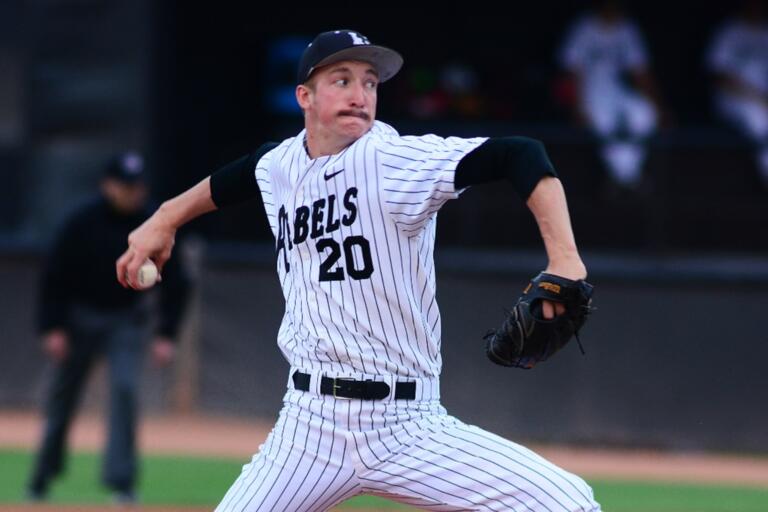
After redshirting as a true freshman, he first buckled his UNLV chinstrap in 1984 for what arguably remains the best team in school history. Behind future NFL star quarterback Randall Cunningham, the '84 Rebels finished 11-2 and appeared in (and won) the school’s first bowl game.
Although that season was later vacated because of NCAA rules violations, the 1984 squad was honored with a 2012 induction into the UNLV Athletics Hall of Fame and again with a 40th anniversary celebration during a 2024 game at Allegiant Stadium.
Lesson Learned
As for Harris’ UNLV career, it spanned the 1984-87 seasons — during which time he worked just as hard in the classroom as he did on the field.
“When I first got to UNLV, I wanted to be a doctor,” Harris says. “But taking so many science courses while also playing football was really tough. Still, I had stocked up the science courses, so I decided to become a science teacher.”
After graduating with his education degree, Harris headed north — way north — in an effort to secure a spot on a Canadian Football League team. Quickly realizing it wasn’t meant to be, Harris put away his cleats, returned to Las Vegas, and landed a job with the Clark County School District.
It ended up being the first of two lengthy stints with CCSD as both a science and physical education teacher. And the second act is ongoing: Harris is currently a PE teacher at Dean Peterson Elementary School, less than three miles east of the UNLV campus.
Adrian Harris' decision to settle in Las Vegas after his brief sojourn to Canada? It didn't just result in what has been a long and rewarding career; it led him to his soulmate — who, ironically enough, is Canadian.

Merlelynn Harris uses words like “regimented” and “organized” when describing her formative years. It's easy to understand why, given that fact that — even as a young teenager living in Toronto — she had her life mapped out in four-year increments.
That wasn’t an arbitrary number, either.
A talented basketball player who topped out at 6-foot-6, Harris was 16 years old in 1985 when she earned a spot on Canada’s national team — an accomplishment that immediately put her on the four-year Olympic cycle.
During Harris’ 11-year run with the national team, Canada only qualified for the Olympics once (in 1996, her final year with the squad). However, the experience allowed her to travel and play all around the globe. That included games throughout North America in the mid-1980s, which exposed the teenager to universities on both U.S. coasts.
In turn, coaches from those universities were exposed to the center’s talent.
The scholarship offers soon followed.
“My parents had a ninth-grade education — nobody in my family had gone to college,” she says. “So I was pretty much on my own to figure things out. But one thing I knew was I didn’t want to be in the snow, so that cut out the entire East Coast.”
That geographical mandate gave Lady Rebels head coach Jim Bolla and his then-wife (and assistant coach) Sheila Strike-Bolla a shot at landing Harris.
Alas, it was a long shot. That is until Harris — who had been living on her own in Toronto since she joined Canada’s national team — learned that UNLV didn’t require freshman student-athletes to live in what was then the lone dorm building on campus.
“I was like, ‘Oh yeah, I can keep living on my own!’” she says. laughing. “The fickle decisions you make when you’re young and don’t have any mentoring!”
The Canada Connection
While living solo was a big selling point, what sealed the deal was that UNLV’s scholarship came with a larger stipend than what other schools offered. “Because I’d been living by myself, financial security meant a lot to me,” she says.
Another important factor: The Lady Rebels had a strong Canadian connection. Not only was Sheila Strike-Bolla from north of the border, but so was Misty Thomas, a star point guard for UNLV from 1982-83 to 1985-86 who played alongside Harris for Team Canada.
Harris — then known by her maiden name, Merlelynn Lange — arrived on campus ahead of the 1988-89 season and played in 111 games over four years. Her finest season was her last in 1991-92, when she returned from a major ankle injury and averaged 10.6 points, 8.1 rebounds and made 62.3% of her shot attempts.
The latter still stands as a single-season school record, as does Harris’ career 58.1% field-goal percentage. She also was a key contributor to the 1989-90 team that posted a school-record 28-3 record; finished No. 5 in the national rankings; and earned a 2006 induction into the UNLV Athletics Hall of Fame.
Harris’ career was, in a word, impressive. But what she accomplished off the court might have been more remarkable: While fulfilling her basketball commitments for both UNLV and (in the offseason) Team Canada, Harris double-majored in psychology and pre-med.
Her intention upon graduating from UNLV: play professionally overseas, then begin pursuing a medical degree in psychiatry.
The first box got checked: Harris played two seasons in France and one in Germany (and even played for the WNBA’s Phoenix Mercury in 1999).
The second box? It got tweaked following a chance meeting with a UNLV professor on the eve of Harris' initial journey to France.
During that meeting, the professor — Dr. Wayne Lanning — asked Harris to describe an ideal day on the job as a professional psychiatrist. She did. His reply: “You will never do that a day in your life if you continue on the path that you’re on.”
“That created a crisis for me,” Harris recalls. “Immediately, I was like, ‘Uh, what do I do now?’”
Lanning encouraged Harris to look into a new marriage and family therapy program that UNLV had just launched. She ultimately took Lanning's advice, enrolled in the program in the mid-1990s, and eventually earned her graduate degree from UNLV in 2000.
Soon after, Harris opened her own marriage and family therapy practice in Henderson, which she has operated for the past two decades, while also doing a substantial amount of nonprofit work. The giving back hasn't ended there, either, as Harris has occasionally served as an adjunct professor in the MFT program.
“It was my last day on campus, I had already sat for my MCATS, applied to medical school and signed my contract to play overseas when I had that divine meeting with Dr. Lanning,” Harris says. “I can’t imagine where I’d be today had that not happened.”
As it turns out, that was the second divine, life-changing encounter that Harris would experience in a span of two years.
Merlelynn Harris admits she was dismissive, if not downright rude, the first time she met her future husband in 1990.
The backstory: Merlelynn's roommate had a crush on a UNLV student-athlete who happened to be renting a room at Adrian’s house. One day, the quartet gathered at the home of Merlelynn’s parents (they were snowbirds from Canada who spent winters in Las Vegas).
As Merlelynn sat at a table clipping newspaper articles written about her, Adrian stole a play from the basketball playbook: He put on a full-court press.
Adrian: “At that point in my life, I was looking to get married, but all the women I had been dating had the same story: ‘Oh yeah, I’m going to do this, and I’m going to do that.’ But the words never aligned with their actions. So I just started asking [Merlelynn] random questions about the classes she was taking and what her plan was. And she mentioned that she was pre-med.”
Merlelynn: “I don’t even know that I was making eye contact — I was that rude.”
Adrian: “So I’m asking all these questions: Did you take this class? Who was your professor? Turns out, she had her whole life planned out.”
Merlelynn: “He was quizzing me, but I didn’t know it. They weren’t trick questions, though; he just asked about my life. And I rattled off the answers without even thinking about it.”
When the informal meet-up ended, Adrian squeezed into the back of Merlelynn's roommate's Trans-Am for a ride back to his place.
“So,” she asked, “how’d you like Merlelynn?”
Adrian’s reply: “I’m going to marry her.”
“Two weeks later, we went on our first date,” Merlelynn says. “And the rest is kind of history.”
Indeed, these two Rebels have been together ever since, making their union official in January 1995.
At that moment, Merlelynn became the bonus mom to Adrian’s daughter, Kassandra. Then in spring 1996 — just weeks before Merlelynn began training for the 1996 Olympics in Atlanta — the couple welcomed Deja. And not long after returning from the Olympics, they learned that another daughter, Alexis, was on the way.
“We joke that we had two Olympic babies,” Merlelynn says.
Jaida arrived nearly a decade later, followed shortly thereafter by Aliyah.
At that point, the Harris girls technically could’ve fielded a basketball team on their own. However, all eventually gravitated toward volleyball.
Deja and Alexis played four years together at San Diego State (with Deja becoming the Aztecs’ all-time career leader in blocks); Jaida initially decamped to Long Beach State; and Aliyah just completed her first season at Tennessee State.
That’s right: All four girls played Division I volleyball, though none initially chose their parents’ alma mater.

A Rebel Homecoming
After wrapping up her playing career with a brief stint overseas, Deja returned to her hometown in 2021 when UNLV offered her an assistant coaching position. “It was a no-brainer, because there’s a family legacy,” she says of her decision to take the job. “If the circumstances were different back when I was being recruited, it would’ve been a no-brainer to play here.”
Like her big sisters, Jaida also took off to Southern California to launch her collegiate volleyball career.
“I received an offer from UNLV, but like most kids, I wanted to leave my hometown for college,” she says. “I ended up choosing Long Beach, and it was beautiful. I do not regret going there for my first two years.
Ultimately, though, the experience on the court didn’t meet Jaida’s expectations, and she decided to transfer after her redshirt freshman season.
As was the case when their daughters were initially recruited in high school, Adrian and Merlelynn adopted a hands-off approach in regard to Jaida's transfer decision — well, mostly hands-off.
“I mean, I may have mentioned UNLV to her,” Adrian Harris says.
Counters Merlelynn: “Everybody knew where Dad stood!”
When Jaida’s name hit the transfer portal, Deja put forth her best sales pitch to land her sister — it is, after all, part of her job. But she didn’t push hard, either.
“The ball,” Jaida says, “was in my court.”
In the end, though, it was a pretty easy decision to come home — not only to play for her sister but to play in front of her parents.
“It’s been amazing,” says Jaida, who is working toward her psychology degree at UNLV. “It’s been so good for me, not only as an athlete, but good for my mind and my heart to be back home with my family. My parents get to come watch our home games, and my sister gets to coach me again, which is also amazing. And although we had a fresh, new team this season, we got to grow together.”
And what about the player/coach/sister dynamic in the gym?
“It’s intricate and unique. But there are boundaries, 100%,” Deja says. “As a coach, I pride myself on being very consistent. So the amount of times that I get on her and the amount of feedback I give her is no different than any other player.
“But, yes, of course I know her well. I know what gets her motivated, and I also know when it’s time to lay off and let her work through a problem. I think that’s been helpful in her maturation as a player.”
One look at the stat sheet confirms that the relationship is working just fine: Jaida started all 28 games during her redshirt sophomore season and led UNLV in multiple statistical categories, including points, kills, attack attempts, and service aces.
And she did it all while wearing No. 15 — the same number Deja wore at San Diego State. And the same number their mother wore for four years on the UNLV basketball court.
“To see them wearing my number, it’s very emotional,” Merlelynn says. “When we played in alumni games a long, long time ago, I often wondered, ‘If I ever have kids, will I get to see them in a UNLV uniform playing on campus?’ So to see one of my daughters as a UNLV coach on the sidelines while my little one is on the court, it’s very, very fulfilling. We’re so, so grateful.”
That gratitude is echoed down the family line.
“More than anything, it’s an honor,” Deja says. “Our parents are an amazing support system and our wise counsel, and we try to represent them the best we can. So there’s a little bit of us doing this for them.”
Adds Jaida: “When I was younger, I was like, ‘Nah, I’m not going to UNLV.’ Now that I’m here, though, it’s an honor to wear No. 15 and represent the Harris family, including my sister. And I want to continue to do it well. Because I’m not just playing for myself anymore.”