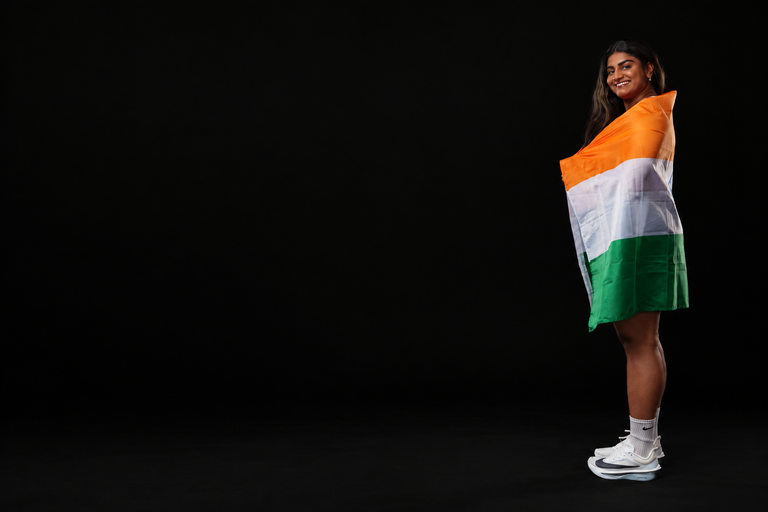
The “Rebels make it happen" tagline accurately describes alumna Marie Padilla, who has been with UNLV for over 13 years. On a day-to-day basis, she does exactly that: makes it happen.
Having graduated with a Bachelor of Science in healthcare administration, Padilla’s continued interest in healthcare is what ultimately led to her role as an operations specialist in the Kirk Kerkorian School of Medicine's Office of Graduate Medical Education (GME). Her role is all about “being a steady point of support and connection.” She coordinates communication, supports daily workflows, and serves as a liaison between the GME office, internal teams, and external partners — often helping “connect the dots” from behind the scenes.
Everything she does — providing continuity, coordination, and support — is so the people the office serves can stay focused on what matters most: improving healthcare in Nevada.
The number one tool that helps Padilla reach her goals and document her journey is something you’d find in any office: Post-it notes. To her, Post-its are “modern day tire tracks.” She says, “Each one marks a step taken, an idea formed, a plan refined, a goal achieved. They show where I’ve been, what I’ve learned, and how I continue to move forward as a UNLV Rebel."
What initially drew you to UNLV, and why did you choose to work here after graduation?
At first, I wanted to stay locally, with family, versus attending university out of state. The longer I was studying at UNLV, the more I liked what Rebels stood for: "Rebels make it happen. Rebels are steeped in the anything-goes, make-it-work culture of Las Vegas — a culture that inspires people to take chances, seize opportunities, and find unconventional solutions to any challenge they care to tackle."
Whenever I encounter a hurdle, I take a moment to stop and tell myself, “Think like a UNLV Rebel.” This helps me refocus and step outside the usual approach. I write each idea on a Post-it, eliminating what doesn’t work, until a solution emerges or a new direction begins to take shape.
Why choose to work at the school of medicine?
I've always worked with the school of medicine while I was employed at UNLV's Clinical Simulation Center of Las Vegas. It was a natural transition to continue working with the school of medicine as I've always wanted to remain in the healthcare department and loved what I was doing.
I deeply value the school's vision. I have long been aware of the physician shortage in Nevada, and it has affected me personally through my own healthcare experience and that of my loved ones and friends. In my own small way, I wanted to be part of a team that makes a meaningful impact on our community. One that helps strengthen healthcare in Nevada and ultimately benefits everyone I love and value.
What inspired you to get into your field?
I knew from a young age that I wanted to be in healthcare. Upon completing an internship at a hospital, I realized that bedside care was not my forte. I was working with the surgical administration leadership team, and it made me realize how much I loved being on that end of healthcare, being part of the group that manages healthcare operations. I preferred to be in the background, helping healthcare practitioners do what they do best while I take care of their needs so they can focus on patient care.
What’s the last big project you completed, and how did you decompress afterward?
The GME dashboard for our programs. It provides an overview of how our existing residencies/fellowships are doing as it relates to Accreditation Council for Graduate Medical Education Institutional Requirements. In GME, data isn’t just informational; it supports accreditation oversight, institutional accountability, and decision making. A well-built dashboard allows leadership, program directors, and the GME office to quickly see where programs are meeting expectations, where trends are changing, and where follow-up may be needed, without having to manually sort through raw data.
To get there, the data had to be extracted, organized, and aligned across more than 20 residency and fellowship programs. I worked through how each metric should be calculated, built the dashboard to be automated, and set it up so each data point is color-coded to show what’s performing well, what’s meeting minimum requirements, and what’s falling below established thresholds. Because there wasn’t an existing template that fit our needs, the dashboard was designed specifically for our institution, with each data element tied back to supporting information so it could be trusted and used confidently.
Oftentimes, after completing these types of projects, I decompress by reading isekai manga. These are manga about reincarnation or being summoned to a different world. This genre helps me decompress because it isn’t just about escaping into something new; it’s about perspective. I like watching characters work through challenges by shifting how they think and approach situations. That reminder that a change in mindset can make difficult moments feel more manageable is what makes isekai feel grounding for me.
Since joining the school of medicine, has there been a memory that has stuck with you?
It was during COVID. At the time, I was supporting three departments — the Kirk Kerkorian School of Medicine, the UNLV School of Nursing, and Nevada State University School of Nursing — under the Clinical Simulation Center. While the majority of employees transitioned to working from home, healthcare providers and the staff and faculty who supported them continued to work through COVID.
There were many uncertainties and concerns during that time, but healthcare providers consistently placed patients first, even in the face of personal risk. Being part of that effort reinforced why I loved where I worked and the mission we served.
If you weren’t working at UNLV, where do you think you’d be?
I’d likely be working as an administrator in a hospital or clinic setting, supporting operational needs and helping keep things moving behind the scenes. Being at UNLV allows me to apply those same skills within an academic environment, where the work is closely connected to education and the training of future healthcare professionals.
What is something people would be surprised to learn about you?
I'm a voracious reader. My favorite reads are Asian light novels and some fanfiction. I would recommend the Japanese light novel, That Time I Got Reincarnated as a Slime and the Korean light novel, Dungeon Reset. Both actually have manga/manhwa versions that show the drawn versions of both. In both stories, the MC (main character) is presented with a lot of hurdles in an unfamiliar setting and both work their way through, gaining skills as they navigate their new environment and gain new allies/friends. Additional recommendations would also be Apothecary Diaries and Solo Leveling, which have also been animated and are trending.
What advice would you give your younger self?
Don't be afraid to try all jobs! Nothing is a mistake, it's just another step in understanding what you like and what you are capable of.
Who would you like to thank?
I’d like to thank my former colleagues at the Clinical Simulation Center of Las Vegas. It was a place of tremendous learning and growth for me, and the experience there truly helped shape how I approach my work today.
I’d also like to give a heartfelt shout-out to all of the colleagues I work with across campus. From my fellow GME staff, GME program staff and faculty, to teams in communications, IGS, parking, HR, finance, IT, accounts payable, contracts, the dean’s office, facilities, purchasing, property control, NSHE, and more. Thank you for everything you do to keep things moving and for the support and collaboration that make it possible for me to do my work day to day.