In The News: College of Sciences

The 6.5-magnitude Tonopah earthquake was felt by many here in southern Nevada. It’s now raising questions if a similar-sized quake could rock the valley anytime soon.
Once you leave the majestic skies of Earth, the word “cloud” no longer means a white fluffy-looking structure that produces rain. Instead, clouds in the greater universe are clumpy areas of greater density than their surroundings.
As the casinos on the Las Vegas strip remain dark and anxiously prepare to reopen, a tiny new start-up company comprised of out of work, fretful, quarantined, designers, engineers, and entertainers have become the first company in the world to successfully introduce to market a proven, proactive technology engineered specifically to mitigate the proliferation of virus and bacteria in a casino environment.

The SafePlay UV partitions were developed by Las Vegas-based Smith Rosen. The company manufactures products that mitigate exposure to airborne contaminants in casinos.
The SafePlay UV partitions were developed by Las Vegas-based Smith Rosen. The company manufactures products that mitigate exposure to airborne contaminants in casinos.
While the coronavirus pandemic continues to take a toll on human lives and cause major economic hardship, scientists around the world are struggling to find vaccines against COVID-19. Among them is Michael Pravica, a professor of physics at the University of Nevada in Las Vegas (UNLV).
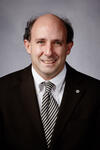

It’s all hands on deck in the fight against the coronavirus.
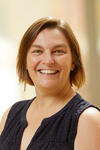
University of Nevada, Las Vegas physics professor Michael Pravica may have found the answer to the COVID-19 vaccine through targeted x-rays.
The coronavirus pandemic is going to change every aspect of our lives. It’ll be a long time before anyone feels comfortable crowding into a airliner for a long-haul flight, but sooner or later the package holiday companies will start up again.
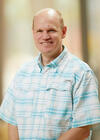
As the coronavirus pandemic continues to take terrible tolls on human lives and cause economic hardship, scientists around the world scramble for a COVID-19 vaccine. They include Michael Pravica, a UNLV physics professor.
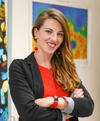
She is sparkling. Determined. Brilliant. Arya Udry is 32 years old. This native Valaisanne, whose mother lives in Hérémence and who grew up between Brittany and neighboring France, is now a professor of geology and planetology at the University of Nevada, in Las Vegas. A dazzling journey for the one who, while crawling on the mountains of Valais, dreamed of being an astronaut. "To realize this dream, you had to either become a scientist or an airplane pilot."
SARS-CoV-2, the virus that causes COVID-19, is believed to spread primarily when a person with the virus coughs or sneezes in close proximity to someone who is healthy — underscoring the current emphasis on social distancing.