
Kwang Kim

Distinguished Professor, Department of Mechanical Engineering
Director, UNLV Active Materials and Smart Living Laboratory
Fellow, The American Society of Mechanical Engineers
Fellow, National Academy of Inventors
Expertise: Soft robotics, Active/smart materials (electroactive polymers), Energy systems

Biography

Distinguished professor Kwang J. Kim in 2012 joined UNLV’s department of mechanical engineering, where he oversees the Active Materials and Smart Living (AMSL) Laboratory. His research primarily focuses on active materials and related technologies with emphasis on soft-robotics.

Kim has authored or co-authored more than 420 technical publications, including over 200 referred journal papers and three monographs, and has been awarded five U.S. patents.

His research programs have been funded by private sectors and federal agencies including NASA, the National Science Foundation, and the U.S. Departments of Energy and Defense. He sits on the editorial boards of several prominent academic journals. Kim is also the recipient of numerous accolades and research awards, including the the 2021 SSH lifetime achievement award from SPIE, an international professional society for optics and photonics technology; the 2016 Harry Reid Silver State Researcher Award; the 2016 Barrick Distinguished Scholar Award; and the Nevada System of Higher Education 2015 Regents’ Researcher Award.

Education

  • Ph.D., Arizona State University
  • M.S., Arizona State University
  • B.S., Yonsei University

Search For Other Experts On

energyscience & technology

Kwang Kim In The News

VoxelMatters
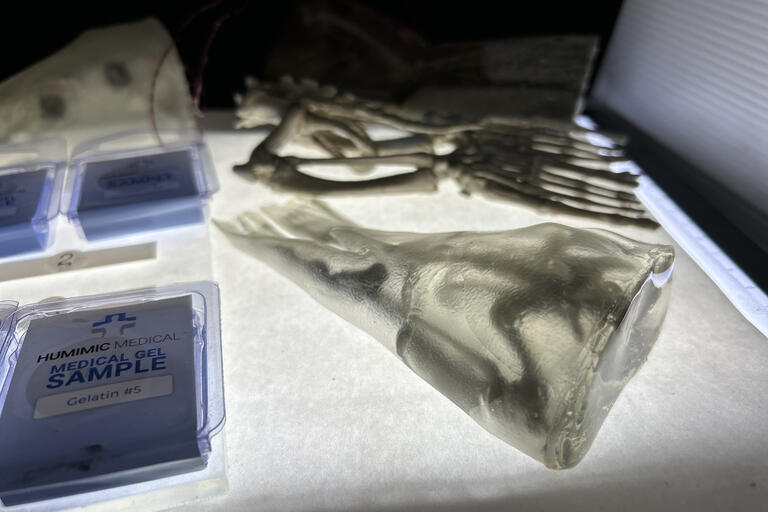
In recent years, sea life along California’s southern coast has been in a state of crisis, with growing numbers of deceased or sick sea lions washing up on shore. The cause can be traced to toxic algal blooms and domoic acid in particular, which acts as a neurotoxin and can lead to seizures, brain damage, and death. In order to diagnose and treat sick sea lions that are beaching themselves, veterinary professionals are on site to collect blood from the animals. In an effort to improve this procedure and enable vets to work more efficiently, a team of researchers from the University of Nevada, Las Vegas (UNLV) as developed a synthetic sea lion pelvis using a combination of medical imaging and 3D printing technologies.
Las Vegas Sun
San Diego native Jacqueline Phan passed on opportunities to study in California so she could contribute to biochemistry research here in Las Vegas.
Electronics360
Soft robots have become an area of interest due to the fact that they would make possible tasks and environments previously unachievable by traditional and rigid robotic systems. For example, soft robots could get around in rough terrain or engage in more physical contact with the human body.
ConSalud.es
Thanks to the use of an electroactive polymer, the material could make prostheses much more flexible and can even be handled by external electronic means.

Articles Featuring Kwang Kim

laboratory samples on back lit table
Research | February 25, 2026

UNLV mechanical engineering lab creates 3D-printed synthetic sea lion pelvis, enhancing veterinary capabilities and countering ongoing beaching crisis.
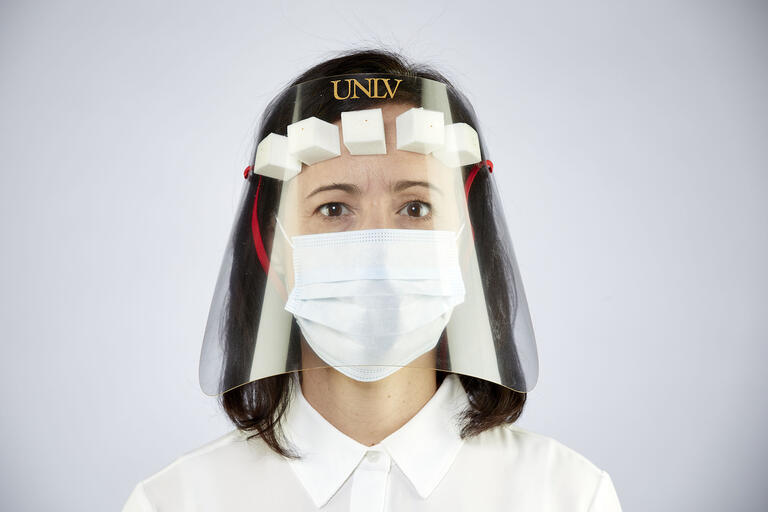
woman wearing face shield and face mask
Business and Community | April 16, 2020

Engineering faculty, staff, and grad students design and fabricate personal protective equipment for local health care professionals.
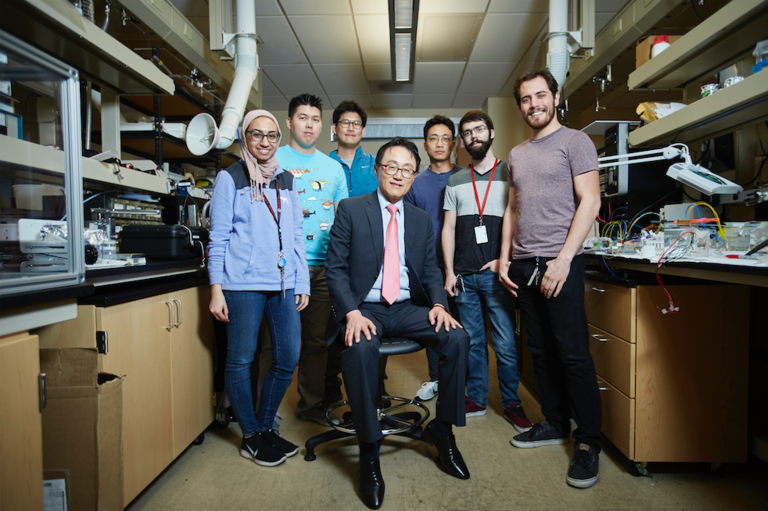
Kwang Kim and his mentees.
Research | September 1, 2018

UNLV engineer Kwang Kim was one of 155 academic inventors to be named a 2017 National Academy of Inventors (NAI) Fellow.
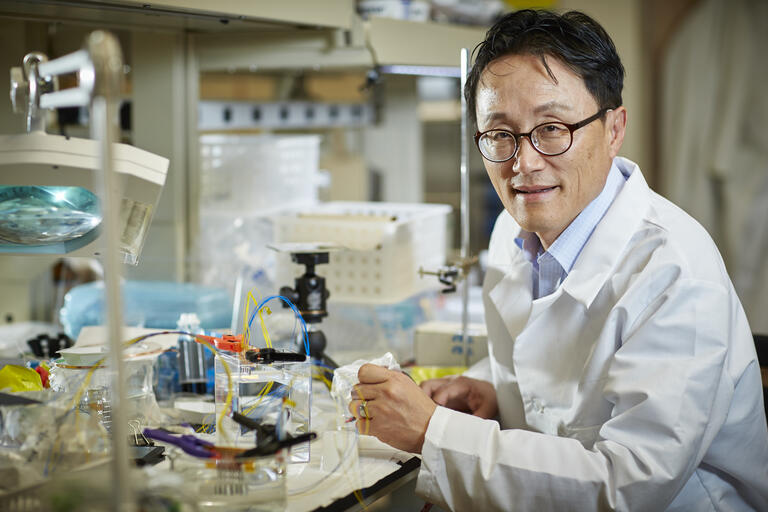
Portrait of Mechanical Engineering Professor Kwang J. Kim, Ph.D.
People | April 10, 2018

Kwang Kim, a 2018 Distinguished Professor, work in biomedical engineering is inspiring a new generation of researchers.