
The life of a university student is hectic. Early morning classes. Late nights studying. Rushing from class to work. Many students also pull double duty as a caregiver for a parent, a sibling, or a child.
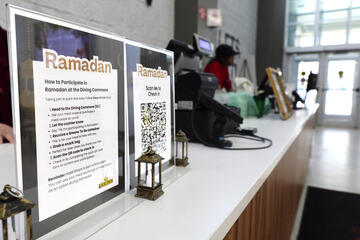
That means there isn’t a lot of time for students to think about their next meal. For students observing the holy month of Ramadan, it gets even more complicated when they fast from dawn to sunset.
“For those of us who live at home, we can end our fast in our kitchen,” says Rayan Muneer, president of the UNLV Muslims Students Association. “But for the students who live on campus and their only source of food is their meal swipe — there wasn’t anything available when they needed it.”
Recognizing this gap, UNLV Eats and the Muslim Students' Association began working together to expand halal dining options and better support students observing Ramadan.
Expanding Dining to Reflect Campus Diversity
UNLV Eats serves thousands of students daily at both the Hazel M. Wilson Dining Commons and the Student Union. But the department’s mission extends beyond simply serving meals it’s about creating community, supporting student wellbeing, and fostering inclusion.
As UNLV’s student body has grown increasingly diverse, the university’s dining program has continued evolving to meet a wide range of cultural and dietary needs.
“UNLV has long been recognized as one of the most inclusive campuses in the country and maintaining that environment requires intentionally supporting the many cultures represented here,” said Courtney Cawthon, resident district manager for UNLV Eats. “Food is one of the most meaningful ways we can do that. By offering Ramadan-friendly dining and a variety of culturally inspired options, we help ensure students feel seen, respected, and included.”
Understanding Ramadan is key to understanding why these efforts matter.
Ramadan, observed by Muslims worldwide, involves fasting from dawn to sunset and emphasizes reflection, communal prayer, and charitable acts. Students eat suhur before dawn and iftar to break the fast at sunset.
Before the conversation could expand to accommodating fasting schedules, the Muslim Students' Association first needed to advocate for broader halal dining options on campus.
“The only halal options at the time were fish,” says Muneer. “Many students would bring food from home, but that wasn’t an option for students living on campus.”
In response, UNLV Eats opened the Halal Shack at the Student Union in fall 2025, and daily halal chicken is now available in the Dining Commons.
“The first step was to fulfill our basic needs, which was the addition of halal food options on campus,” says Muneer. “Then we thought, the next step will be to ask them to accommodate fasting during Ramadan.”
UNLV Eats worked closely with the Muslim Students' Association to run a pilot program during Ramadan in 2025. The lessons learned from that experience helped shape the updated program now fully implemented across campus this year.
“We think every year this program will continue to improve,” says Muneer.
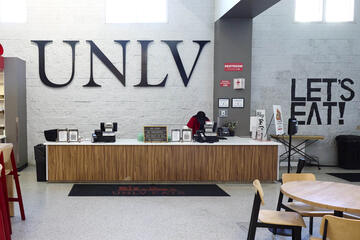
UNLV Eats makes it easy for students to participate in the Ramadan-friendly dining program. When students enter the Dining Commons, they simply let a cashier know they would like a Ramadan meal. Students then receive a snack bag containing fruit, a granola bar, dates, and a bottle of water. They also get a green to-go box that they’re able to fill with as much food as they like.
This system allows students to take meals when they need them, including food for suhur before dawn the next morning.
“Having the snack bags and to-go food makes fasting a lot easier,” says Muneer. “When you fast, you always look forward to the meal at the end of the day. And knowing that you already have that meal ready, and you don’t have to plan it out or interrupt what you’re doing to prepare it, takes away a lot of stress.”
A Culture of Support Across Campus
The impact extends beyond the dining hall. Faculty and staff say they have noticed the efforts UNLV Eats is making to ensure campus dining reflects the diversity of the university community.
“It speaks to UNLV’s mission of inclusivity,” says Afsha Bawany, director of communication for the UNLV Greenspun College of Urban Affairs and advisor to the Muslim Students' Association. “We celebrate the idea of community in our faith and we’re grateful the UNLV community is supporting us.”
For Aya Shata, a professor of journalism and media studies, UNLV stands out among the universities where she has worked.
“I think it’s just part of the Las Vegas culture,” says Shata. “It’s a touristy city, so people here are used to being hospitable to other cultures, races, and religions. UNLV is a part of that accepting Las Vegas culture.”
Safiyya Bintali, a staff member with UNLV Information Technology, says that support is also felt in everyday workplace interactions.
“We sometimes go out to lunch as a team, and I was really nervous about telling them I couldn’t go because of Ramadan,” says Bintali. “But they were very understanding and accommodating. Having a supportive work environment takes the stress out of feeling like an outsider.”
Dining Innovations for All Diets
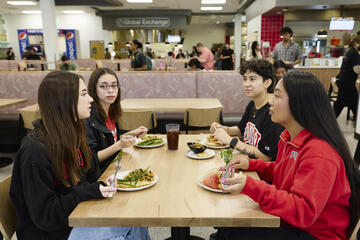
While Ramadan dining is one example, UNLV Eats continues to expand its offerings to serve the wide range of dietary needs and cultural traditions represented across campus.
With increasing dietary requirements in mind, they launched the True Balance allergen-free station in the Dining Commons, which serves meals free of gluten and the top nine allergens. Students with specific dietary requirements can meet one-on-one with a chef to create a customized meal plan. And a new “Battle of the Employees” program gives staff a chance to share dishes from their own cultures with the campus community.
Partnerships with student organizations, such as the Food Tasting Club, lead to culturally inspired meals and events. For example, UNLV Eats recently hosted a Black History Month dinner that not only featured diverse culinary traditions but also brought students together in a shared dining experience.
“Campus dining is always evolving, and we expect that to continue,” says Cawthon of UNLV Eats. “As student needs and campus life continue to change, we’re committed to adapting and finding innovative ways to meet them.”
Looking Ahead
For Muslim students and faculty on campus, the addition of the halal-friendly dining options is more than just an easy way to get a meal — it reflects a growing awareness of the campus’s diverse community.
“We’ve had students who’ve come to our MSA dinners who weren’t Muslim, but they’re interested in joining the student association,” says Muneer. “Students see the Halal Shack and now they see the Ramadan flyers. They see us and they want to learn more. We hope it spreads interest and creates a larger community.”
Providing meals and accommodations during Ramadan is one way UNLV Eats is working to ensure every student feels welcome at the table.
“Our goal is to make every student feel included and valued within the UNLV Eats community. Providing meals and accommodations for Ramadan is a simple but meaningful way to honor that commitment and ensure all students have access to food options that support their traditions and well-being.”
Check out UNLV Eats for more information on dietary accommodations, meal plan information, daily menus at the Dining Commons, and more.


