Department of Physics and Astronomy News
The Department of Physics and Astronomy offers comprehensive programs on two of the most basic and fundamental sciences–physics and astronomy. Physics is the study of matter, energy, motion, and force. Its concepts help us understand how the universe behaves. Astronomy studies the universe beyond the earth’s atmosphere, including celestial objects and the formation and development of the universe.
Current Physics and Astronomy News
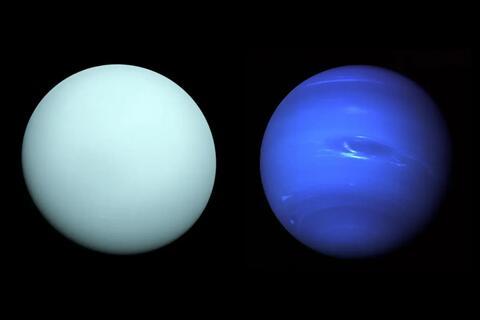
UNLV research shows that water can change its structure under the scrutiny of intense pressure, giving us an idea of its appearance on extraterrestrial worlds.
A selection of prominent headlines featuring UNLV experts from July and August.
A collection of top headlines featuring UNLV faculty and students.
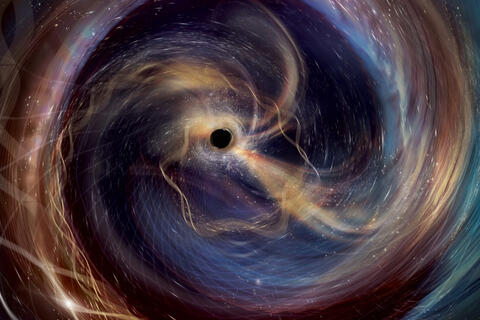
Updated LIGO–Virgo–KAGRA catalog features 161 gravitational wave events between April 2024 and January 2025, including evidence of second-generation black holes and the clearest-ever gravitational wave signal.

UNLV physics lab works on new research harnessing the power of X-rays to extend the lifespan of batteries in electric cars and cell phones.

A flowery collection of top headlines featuring UNLV faculty and students.
Physics and Astronomy In The News
Researchers at the University of Nevada have demonstrated that water can adopt a more asymmetric atomic structure when subjected to extreme pressures.
Water behaves strangely under extreme conditions beyond Earth, according to new research highlighting the unexpected realities that may one day greet future astronauts.
Every human being has an all-encompassing relationship with water that spans their entire lifetime. Our bodies are 50% water. We drink water, bathe in it, and swim in it. We skate on it, snowboard on it, and have snowball fights with it. We can take its familiarity for granted.
Water ice under extreme pressure shifts into a denser, less symmetrical structure, informing planetary models while its atomic arrangement remains unclear.

NASA is quickly moving forward with plans to establish and build a Space Academy for the U.S. Space Force, similar to the existing military academies for the Air Force, Army and Navy.
While Earth's atmosphere protects us from harmful cosmic rays, other cosmic particles are passing through us every second.