News: Department of Physics and Astronomy
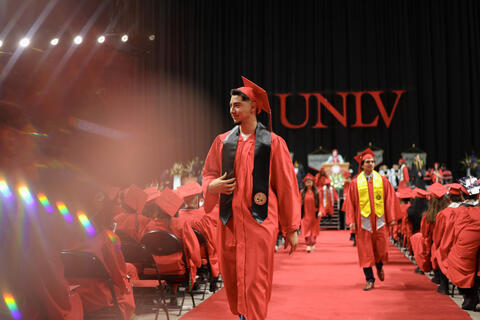
A collection of the top news headlines featuring UNLV faculty and students.

Some of the biggest news headlines featuring UNLV faculty and students.
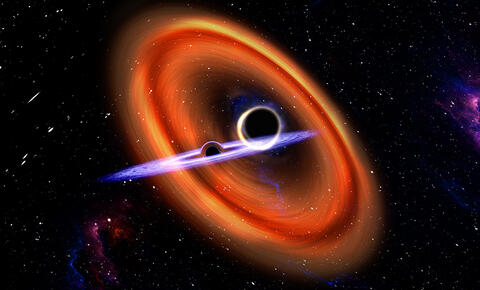
The mergers, measured one month apart in 2024 by LIGO-Virgo-KAGRA collaboration, advance scientific understanding of the nature of black hole formation and fundamental physics; offer evidence of "second-gen" black holes.
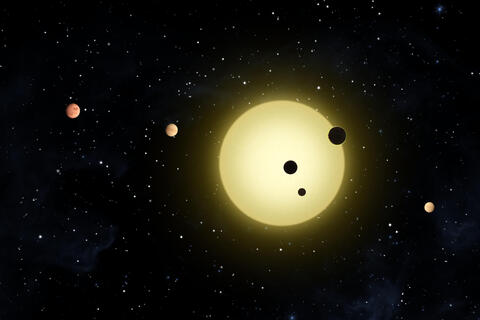
In new study, published in Astrophysical Journal Letters, collaboration of scientists detail recent observations explaining how planets form over time.

A selection of top news headlines featuring UNLV faculty and students.
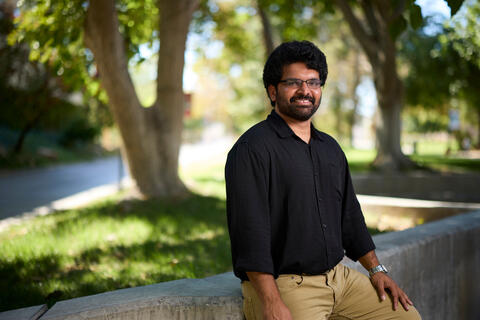
The assistant professor helps launch career-focused engineering technology program designed with student success in mind.

The students and faculty of UNLV are springing into headlines around the country.
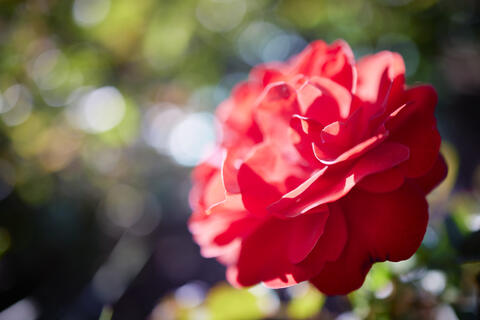
The rosiest headlines and highlights featuring the students and faculty of UNLV.

Headlines and highlights featuring the students and faculty of UNLV.

UNLV astrophysicists analyze data from Event Horizon Telescope’s groundbreaking imaging of Sagittarius A* and suggest it formed by merger of two black holes roughly 9 billion years ago.
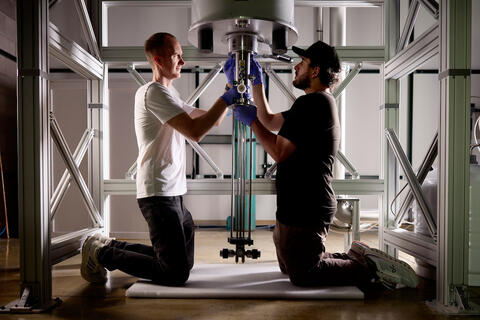
The College of Sciences installs a dilution refrigerator, a machine used to study quantum particles and devices near absolute zero.
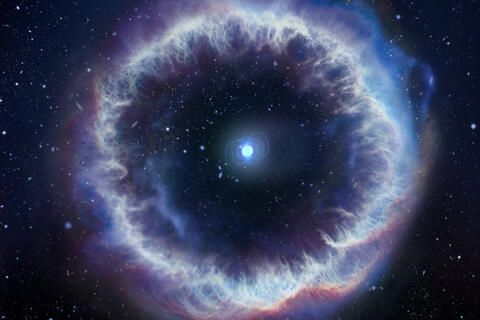
New study by international team of scientists in the journal Nature has discovered the origin of the persistent emission of radiation observed in some deep-space fast radio bursts.