For media inquiries, visit the Office of Media Relations website or call 702-895-3102.

Clark County commissioners approved permits for construction of Nevada’s first standalone children’s hospital during a meeting on Wednesday. The eight-story facility is slated to also feature a heliport and will be located at UNLV’s Harry Reid Research and Technology Park near the 215 Beltway and Durango Drive.

Whenever another development threatens to push farther into the Mojave, the same words appear: beige, barren, empty, wasteland. But the Mojave Desert, which includes Las Vegas, is anything but. More than 50 mammalian species wander its foothills, more than 200 species of birds cross its skies, and more than 2,000 species of plants endure its extended droughts and blistering heat. It’s home to the Joshua tree, found nowhere else on Earth.

The family behind Primm Valley Resorts says it is working to revive the fading Nevada gambling hub after mass closure announcements sparked fears that it's about to become a ghost town.

The family behind Primm Valley Resorts says it is working to revive the fading Nevada gambling hub after mass closure announcements sparked fears that it's about to become a ghost town.


From the races for governor to a rural county commission seat, candidates are wrestling with the economic and environmental effects of the divisive industry.


Candida auris presents ongoing challenges for Nevada’s healthcare facilities. In 2025, the Silver State on its own accounted for 22% of the nation’s nearly 7,200 C. auris cases — reporting 1,605 infections to the Centers for Disease Control and Prevention, and outpacing California’s roughly 1,550 cases and Texas’ 830. When adjusted for population, Nevada logged 20 times more cases per capita than its coastal neighbor.

A new UNLV-led study found that testing wastewater from hospital sewer lines can detect drug-resistant strains of C. auris months before patients begin showing symptoms, offering health officials an earlier warning of potentially deadly outbreaks.
Artificial intelligence leaders, startup founders and corporate executives gathered Tuesday at The Clubs of Stonebridge Ranch as McKinney positioned itself as a growing hub for innovation and emerging technology. The Batch 5 Expo, hosted by Plug and Play McKinney, the McKinney Economic Development Corporation, NTT DATA and the Sports, Entertainment and Innovation Conference, featured startup pitches and discussions focused on AI-driven business growth and the expanding role of artificial intelligence across industries. The full-day event explored enterprise AI, travel, hospitality and emerging technologies through keynotes, fireside chats and live pitch sessions designed to connect founders with investors and strategic partners.

Every hospital has drains. Sinks, toilets, floor gullies in procedure rooms, the slow trickle from IV lines flushed between patients. For years, all of that went down the pipes and nobody thought much about it. But researchers at the University of Nevada, Las Vegas have spent the better part of four years paying very close attention to what hospitals are washing away, and what they’ve found in Southern Nevada’s sewer lines is, by any measure, alarming: a drug-resistant killer fungus circulating through healthcare facilities months before a single patient tests positive.
You Might Also Like
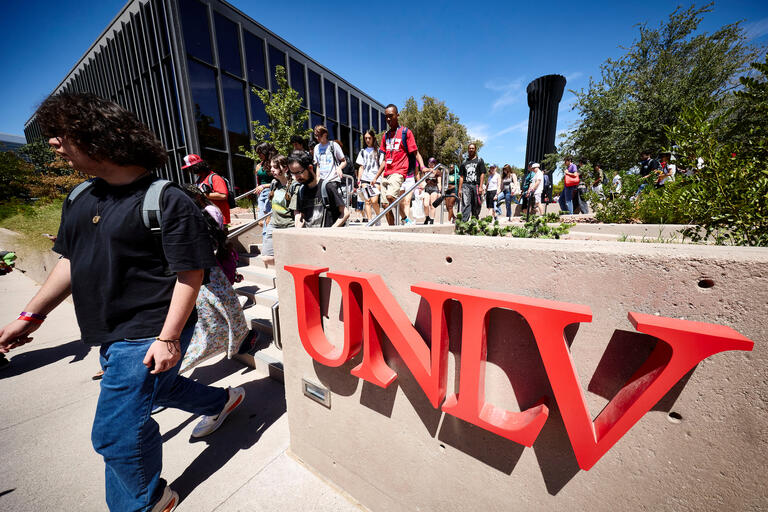
UNLV Newsmakers 2026: Summer Edition
A selection of prominent headlines featuring UNLV experts from July and August.
UNLV Newsmakers 2026: June
A collection of top headlines featuring UNLV faculty and students.