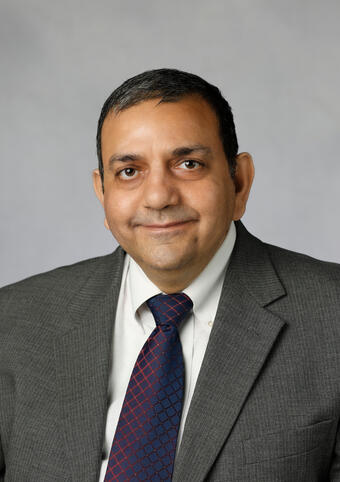
Manoj Sharma

Professor, Department of Social and Behavioral Health
Adjunct Professor, Department of Internal Medicine at UNLV's Kirk Kerkorian School of Medicine
Expertise: Health behavior research, Stress-coping, Integrative health (mind-body interventions), Obesity prevention, Mental health

Biography

Manoj Sharma is a professor and past founding chair of the Department of Social and Behavioral Health at UNLV's School of Public Health. His research interests are in developing evidence-based health promotion interventions, stress-coping, mental health, obesity prevention, integrative health, and evaluation.

Sharma, a public health physician, is a master certified health education specialist with certification from the National Commission on Health Education Credentialing. In his career, spanning over 35 years, he has trained or taught over 6,000 health professionals at 13 national and international universities. 

He is also a prolific researcher who has published 17 books, over 460 peer-reviewed research articles, and more than 600 other publications. Sharma is ranked in the top one percent of scientists globally from 176 subfields and in the top 400 in public health by the prominent Dutch publisher Elsevier. Additionally, ScholarGPS ranks him as 20th in stress management and 60th in health education globally.

Sharma has received several prestigious honors. These include the American Public Health Association’s J. Mayhew Derryberry Award, which honors outstanding contributions to health education research theory and recognizes outstanding behavioral scientists, as well as the organization's Lyndon Haviland Mentoring Award and Integrative, Complementary, and Traditional Health Practices Impact Award, and Public Health Education and Health Promotion Distinguished Career Award. He is also the recipient of UNLV’s Harry Reid Silver State Award, Barrick Distinguished Scholar Award, Outstanding Graduate Faculty Leadership Award, and Community Engagement Community-Based Research Faculty Award.

Education

  • MBBS, University of Delhi
  • Ph.D., Preventive Medicine (Public Health), The Ohio State University

Search For Other Experts On

health & medicine

Manoj Sharma In The News

Indica News
Ultra-processed foods (UPFs) are dietary products usually containing multiple treated industrial ingredients, including substances extracted from foods (oils, fats, sugar, starch) and additives like artificial flavors, colors, or emulsifiers. They are designed to be greatly palatable, convenient, and shelf-stable, and are rapidly replacing fresh foods. Examples include sugary beverages, packaged snacks, ready-to-eat products, packaged breads and cereals, reconstituted meats, and so on. UPFs, including beverages, have now become the leading food consumption patterns around the world. Consumption of UPFs increases the risks for overweight/obesity, heart disease, metabolic disease, diabetes, and cancers.
Martha Stewart
The next time you head to the grocery store, take a closer look at how many prepackaged foods end up in your cart. Many of these items contain more sugar than you might expect— even those labeled as having natural sugars. Manufacturers frequently add sugar to extend shelf life and to help prevent bacteria or mold from developing. Sugar also plays a role in improving "mouthfeel," giving low-fat products a richer, more satisfying texture, according to Manoj Sharma, a professor and public health physician.
Indica News
A recent article published in the journal Arteriosclerosis, Thrombosis, and Vascular Biology has concluded that sleep-aligned extended overnight fasting improves nighttime and daytime cardiometabolic function. The results support that if at least 3 hours before sleep nothing is eaten, then heart health, blood pressure, and the way food is processed, including glucose regulation, are improved.
The Epoch Times
Manoj Sharma, a tenured professor of social and behavioral health at the University of Nevada, Las Vegas, told The Epoch Times that a constantly busy schedule keeps the brain in a state of high alert, resulting in rapid beta waves visible on an electroencephalogram (EEG). This chronic overactivation depletes energy, leading to stress, burnout, mental fatigue, poor sleep, decreased work efficiency, and emotional neglect.

Articles Featuring Manoj Sharma

spring campus
Campus News | April 1, 2026

Some of the most vibrant headlines featuring UNLV faculty and students.

Campus landscape
Campus News | March 3, 2026

Some of the hottest headlines featuring UNLV faculty, staff, and students.

Fall colors 2025
Campus News | November 10, 2025

Some of the biggest news headlines featuring UNLV faculty and students.

First day of classes.
Campus News | September 9, 2025

The top news stories starring university students and staff.