For media inquiries, visit the Office of Media Relations website or call 702-895-3102.
Selling your home can be a financial windfall, but it can also trigger a hefty capital gains tax bill. Fortunately, there are several ways to reduce or avoid that tax if you know the rules. Of course, it's impossible to provide information that applies to all sellers, as everyone's situation is unique. For guidance tailored to your specific situation, please consult a licensed tax professional.


The best budgeting apps make it easy to track your income and spending as well as achieve your financial goals. The top budget apps allow you to sync your financial accounts, so spending and payments are automatically logged and categorized. Some also provide personalized spending insights and a debt payoff plan tailored to your needs, along with a variety of other useful features.

Culture is being celebrated as the 8th annual Art Walk rolls through the UNLV campus. The free event on Friday night, October 24, gives the greater Las Vegas community a chance to explore a variety of arts, performances, and live music, as they walk along the academic mall, along with food tastings from favorite local restaurants, a beer garden, wine tastings, and other surprises.
As the Southern Nevada Health District (SNHD) has confirmed a case of measles in Clark County, discovered in a visitor to Harry Reid International Airport, one doctor is explaining how quickly you could recognize symptoms if you are exposed.


The Las Vegas Medical District is set to expand with a new testing facility that officials say will strengthen the region’s public health infrastructure.
Spreading your wings in the cabin might seem harmless, but don't be surprised if the flight crew clips them.

Amid the government shutdown and recent 20+ hour filibuster from Sen. Jeff Merkley, D-Oregon, UNLV Professor Dr. Rebecca Gill talks with us on ARC Las Vegas about what this means for the public and where we can go from here.


There are about 220,000 undocumented immigrants in Nevada. According to Pew Research Center, one in 10 Nevada households includes an unauthorized immigrant. Immigrants are part of the fabric of our community, attending schools, contributing valuable work and supporting our local economy.

There are about 220,000 undocumented immigrants in Nevada. According to Pew Research Center, one in 10 Nevada households includes an unauthorized immigrant. Immigrants are part of the fabric of our community, attending schools, contributing valuable work and supporting our local economy.

You Might Also Like
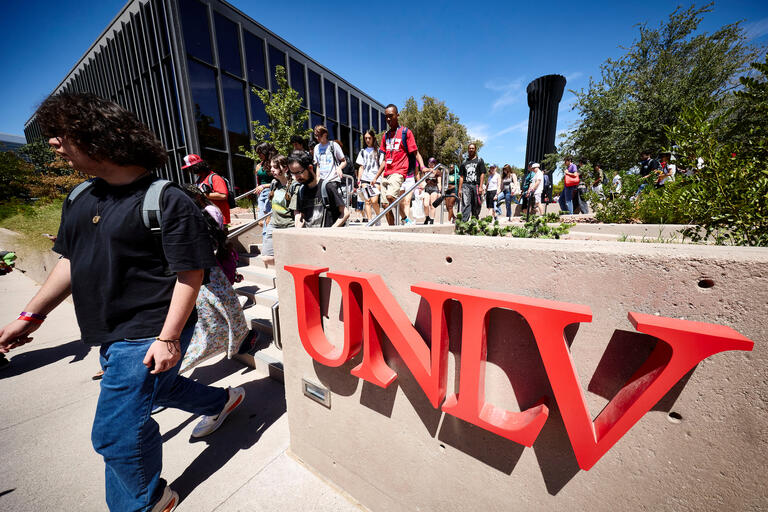
UNLV Newsmakers 2026: Summer Edition
A selection of prominent headlines featuring UNLV experts from July and August.
UNLV Newsmakers 2026: June
A collection of top headlines featuring UNLV faculty and students.