For media inquiries, visit the Office of Media Relations website or call 702-895-3102.
Less than two years after shocking the science world with the discovery of a material capable of room-temperature superconductivity, a team of UNLV physicists has reproduced the feat at the lowest pressure ever recorded.


Did the 12th century B.C.E. -- a time when humans were forging great empires and developing new forms of written text -- coincide with an evolutionary reduction in brain size? Think again, says a UNLV-led team of researchers who refute a hypothesis that's growing increasingly popular among the science community.

Last year's study was sharply criticized by a team of scientists from UNLV, who found many ambiguities in it.
New research has demolished previous theories about evolution, as researchers find that human brains did not shrink 3,000 year ago.

Did the 12th century B.C.E. — a time when humans were forging great empires and developing new forms of written text — coincide with an evolutionary reduction in brain size? Think again, says a UNLV-led team of researchers who refute a hypothesis that’s growing increasingly popular among the science community.

The Southern Nevada Health District announced Thursday that it had received nearly 3,000 additional doses of monkeypox vaccine, as the United States declared a public health emergency to bolster the federal response to the spread of the disease.


The public’s reaction to Thursday night’s strip shooting was something experts call – priming effect. 8 News Now spoke to a UNLV psychologist about this and how dangerous it can be because of social media.


Las Vegas’ sewer sleuths, who came to prominence during the pandemic tracking coronavirus through wastewater, are on the trail of another emerging threat: monkeypox.
In previous research released in Frontiers in Ecology and Evolution, experts asserted that the human brain shrank amid a transition to modern urban societies nearly 3,000 years ago.
You Might Also Like

UNLV Newsmakers 2026: September and October
A selection of top headlines featuring UNLV experts from the front half of the fall semester.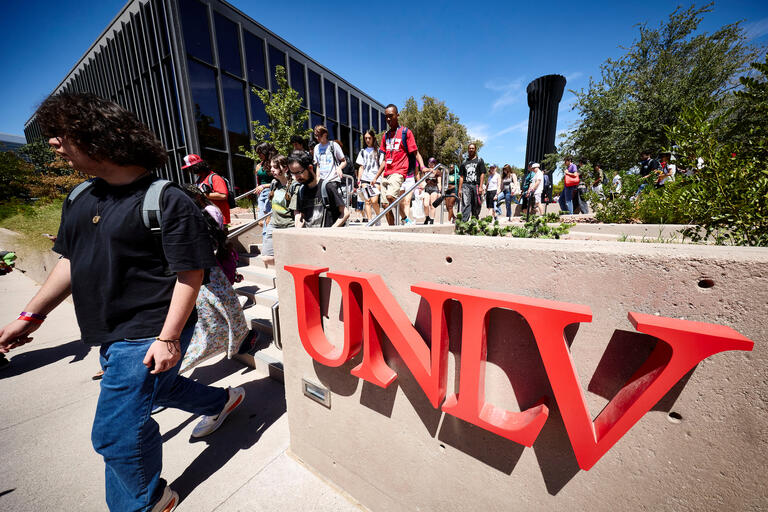
UNLV Newsmakers 2026: Summer Edition
A selection of prominent headlines featuring UNLV experts from July and August.