When the Nevada Childhood Lead Poisoning Prevention Program started inspecting homes to identify sources of lead exposure in homes across Las Vegas, they experienced a rude awakening. Although they successfully found sources of lead within homes, the families living there often lacked the financial resources to remove or mitigate those risks.
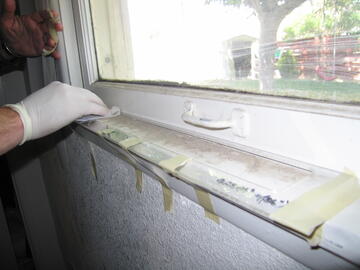
“It was about food on the table, a roof over their head, or remediate the hazard. They would do all of them if they could, but they can’t because it’s thousands of dollars,” program director and School of Public Health assistant professor Erika Marquez said.
But the work of the program evolved over time, and thanks to funding from institutions like the United States Department of Housing and Urban Development, the program was able to collaborate with groups like the City of Henderson to finally rid homes of identified hazards.
Over 100 of the roughly 150 homes that were assessed in Henderson during a four-year period had lead-based paint in them, Marquez said.
Today, the program continues its work of testing and identifying lead poisoning in children and ensuring that all of Nevada’s health authorities have the capacity to respond to cases. National coverage of the contamination of drinking water in Flint, Michigan, proved an unfortunate reminder of why programs like NvCLPPP are so important.
“It really opened people’s eyes again as to why we need programs like this, why we need to monitor surveillance of children and being able to have the capacity to respond,” Marquez said In her episode of the School of Public Health’s podcast.
Hiding in Plain Sight
Most children who are exposed to lead will not show any signs or symptoms, and the only way to know is through a blood-lead level test.
The recommendation is that children be tested at 12 and 24 months, or at least once before the age of 6.
But in Nevada, people can view lead exposure as “out of sight and out of mind,” according to program manager and research analyst for the Nevada Institute for Children's Research and Policy Samantha Smith.
Only 3% of the state’s more than 215,000 children under the age of 6 are tested for lead, placing it among the lowest in the nation for blood lead testing.
“A lot of people don’t realize that lead can be hiding in everyday things,” she said.
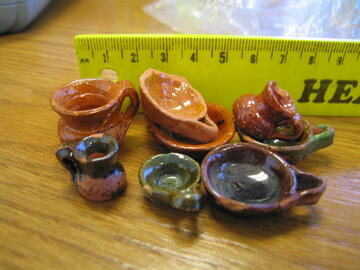
Consumer goods like pottery and even the plates that families eat off of that have been glazed or painted with lead paint, causing them to ingest high amounts.
Additionally there are approximately 300,000 homes in Nevada built before 1980, Smith said, and as the paint starts to peel, chip, and flake, it can create dust in the house or lead soil outside the home.
“It’s not just one point source, it’s multiple,” she said. “With environmental health, it’s all these layers of things that all come together to create the exposure.”
At chronic high levels, they are nonspecific and can be confused with common ailments children naturally experience like a lack of appetite, stomachache, fatigue, and muscle aches.
The only telltale sign in children with chronic cases and high levels of exposure, said Smith, is what’s called Burton’s line, a grayish-blue line that shows up between the teeth and the gums of affected children.
“Otherwise we really can’t look at a kid and know that they were exposed to lead,” Smith said.
Stronger Together
But how much lead do children have to be exposed to to be poisoned?
School of Public Health Dean Shawn Gerstenberger quantified the amount of lead needed to poison a child as little as seven grains of sugar spread over the span of an entire football field.
“It takes just a little bit of lead exposure to impact a child’s long-term health,” he said. “Even at doses where there are no symptoms, children can see permanent effects.”
Those effects include a permanent reduction in a child’s IQ score if lead exposure isn’t identified and treated.
This year for National Lead Poisoning Prevention Week, the program is focusing on educating the public through their social media channels about lead’s specific impact in Nevada, as well as promoting tips for families on preventing lead exposure.
In addition to its statewide work, Smith noted the work the team is undertaking across the globe, with team members pursuing research around lead poisoning in Ghana and the Philippines.
“Lead knows no borders,” she said. “We’re only as strong as our regulations across the globe.”
Lead Poisoning Prevention Tips
Lead poisoning is 100% preventable.
- Ask your healthcare provider for a blood lead test.
- Wash hands and toys often to reduce the risk of swallowing lead dust.
- Wet-clean floors and window sills to stop lead dust from spreading through the home.
- Serve meals rich in calcium, iron and vitamin C to help the body absorb less lead.