The Nevada Women’s Film Festival (NWFFest) — before it was known as a critically acclaimed festival held at UNLV — was a student club at the College of Southern Nevada. Spearheaded by Nikki Corda, now a film professor at UNLV, the club’s aim was to create a space where female students could feel represented in all aspects of the film industry.
“One of the first activities we planned was a film festival, and we thought it would just be a very local, small thing. We received over 700 film submissions from all over the world,” said Corda, who is executive director for the festival. “We couldn't believe it, and we realized at that point we were going to have a real film festival and we'd better figure it out – and we did.”
Within a few years, NWFFest had grown so much that Corda began collaborating with UNLV’s film department as a co-sponsor and co-host. When she joined UNLV in 2024, she created UNLV’s Film Festival Strategies course, giving students the opportunity to help run the festival.
As the festival prepares for its 12th year in production, student involvement continues to be at the heart of helping ensure its success.
Where Collaboration and Curation Come Together
Each week, students taking the Film Festival Strategies course meet with guest speakers to ask questions, glean insight, and learn from experts in the field. Then, students are given assignments to prepare for the event in “reel” time.
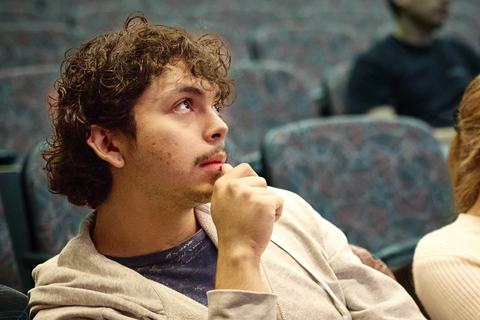
For film major Brayan Aguilar that meant taking on the task of organizing some of the festival's logistics. “I was looking for hotels to host the filmmakers,” Aguilar says. “I was calling hotels near UNLV, including hotels on the Strip, asking what their base group rates were like. Then I created a spreadsheet of the hotels, the address, how far is it from the screening room at [the Flora Dungan Humanities building], what the hotel's response was, and pricing.”
The festival is a collaborative effort, with students taking on roles from securing the host hotel — as Aguilar did — to screening official submissions.
"I don't think I've used email this much before," Aguilar said. "You're learning how to work behind the scenes in order to make those connections, talk to others, and share ideas."
Because of the course’s experiential approach, no two classes are the same. In one class period, students brainstorm audience engagement ideas with the festival's director of development. In another, they plan ways to celebrate the visiting filmmakers.
“Film festivals are a built-in exhibition opportunity for independent filmmakers,” Corda notes.
So for the students, being involved in film festival operations can be the launchpad for their careers.
“Everyone has the opportunity to meet, connect, and collaborate,” she says. “It creates community, family and connection. That's why film festivals — all film festivals — are important, and that's what we're diving into in this class.”
The Female Gaze and the Future
Throughout the course, students experience a blend of business with the art of filmmaking. A key component of this involves screening and providing insight regarding official film submissions. The process introduces them to films that offer different perspectives and new ways of storytelling, while offering inspiration for how they may craft their own films.
The feedback they give helps reinforce the festival’s overall mission in supporting women in the film industry.
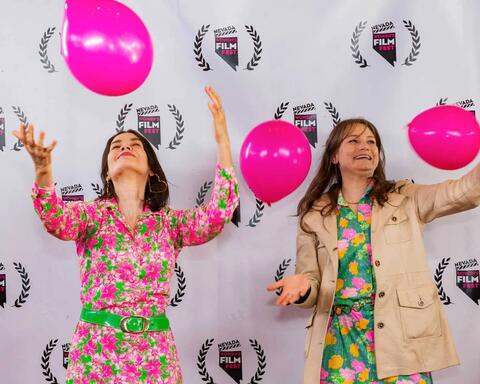
“If we want to sit here and say we want to be part of the community, and to be supportive of the community, then we need to actually think about the people in that community,” says film major Angelica-Rose Keenum, who took the Film Festival Strategies course and is a festival volunteer. Keenum is also president of the student organization Cinefemmes, a club that promotes equitable representation in film.
“There's a lot of interwebbing in female-led stories,” Keenum says. “They present different ways of thinking and understanding. It’s not just about stereotypical topics like pregnancy or marriage. They also present topics about things like how women live their lives. Women, like anyone, have a lot on their plates.”
For Keenum, the experience has also developed her leadership skills, allowing her to use her newfound knowledge and channel it into her work with Cinefemmes. “Seeing how things work with scheduling, project approval, and even thinking about how I communicate with others – it made me a better president for my club.”
Behind the Scenes, Facilities and Faculty Keep the Festival Rolling
NWFFest’s partnership with UNLV goes beyond student involvement. Heather Addison, UNLV film professor and department chair, and a board member of Women in Film Nevada, says the university’s support and Corda’s class provide stability for the festival — something few small festivals enjoy over time.
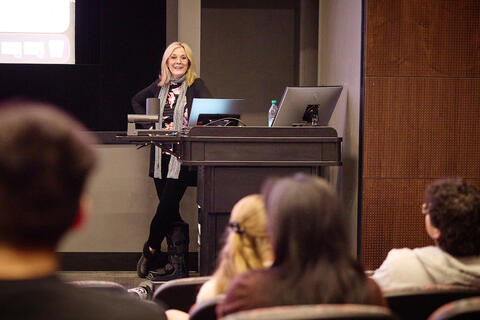
“Since we're an R1 university, it's so important that we embrace initiatives and events like this to show the world what it means to be out there, on the cutting edge of our field,” Addison says.
The festival takes place in UNLV’s Dolby Atmos Theater, which features state-of-the art immersive audio and 4K laser projection systems. The theater location on the first floor of the Flora Dungan Humanities Building makes the festival easily accessible for community members to attend.
“We have the whole lobby, and additional rooms on either side to host panels. We provide a volunteer break room and filmmaker lounge, so we’re able to present a true film festival right here on campus,” Corda says.
And The Winners Are…
During the festival, students get to see their hard work in action – both on and off screen.
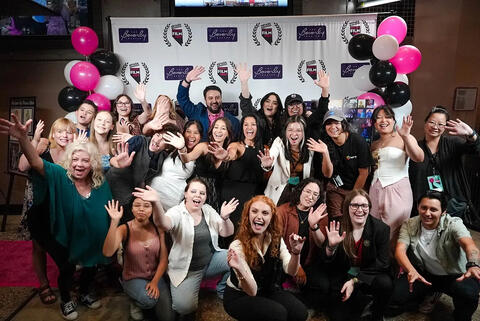
Last year, Hannah Werner won the “Femmy Award” for Best Student Film. This year, she returns as an UNLV alumna with her new submission, Ditched. Another returning UNLV graduate is Andrea Walter, whose film, daylight, was also part of the Filmmaker’s Vision lab under the guidance of film professor Adam Paul. Their continued involvement shows how NWFFest nurtures filmmakers from classroom to career.
Corda aims to make NWFFest an Oscar-qualifying festival by 2027 — a goal that reflects the growth and impact the festival has achieved.
“Something like this is extraordinary,” Addison says. “Not only as something for our community, but something for our world. People gravitate toward the mission of the festival and we continue to be strongly dedicated to it. Today, tomorrow, and into the future.”