For media inquiries, visit the Office of Media Relations website or call 702-895-3102.
Researchers explain what we know about the potential for water and life on Mars and what we might learn from analysis of returned samples.


America’s air traffic control system has been crying out for modernization for 25 years, yet remains trapped in technological limbo.

Dr. Manoj Sharma, a Professor of Social and Behavioral Health and Internal Medicine, answers queries on Irritable Bowel Syndrome (IBS).


As the investigation continues into the tragedy in Minnesota that left State Rep. Melissa Hortman and her husband dead, as well as State Sen. John Hoffman and his wife wounded, News 3 spoke with Dr. Michael Green, an associate professor in the University of Nevada, Las Vegas', Department of History about the rise in political violence across the country.


Tourism on The Strip is down this year, but weed isn't the salvation. Here's why allowing consumption lounges and other 420-friendly activities in the top casinos would put them at risk to lose everything.

There’s nothing worse than having ants in your home. And if you’ve spotted one, chances are, there’s likely to be a colony of ants lurking somewhere — ready to appear now the weather is warmer.


When Manuel Ruiz and Rodney Finley encountered each other on the Strip the night of June 8, their digital worlds collided with reality.

Once a house fire starts, it can grow quickly and without restraint, becoming a major fire in under three minutes. House fires are a common occurrence: around 944 house fires occur every day.

A Nevada geothermal giant could have waited years for its projects to get federal permits. Under President Donald Trump’s emergency executive order on energy, that process will take 14 days — at most.

You Might Also Like
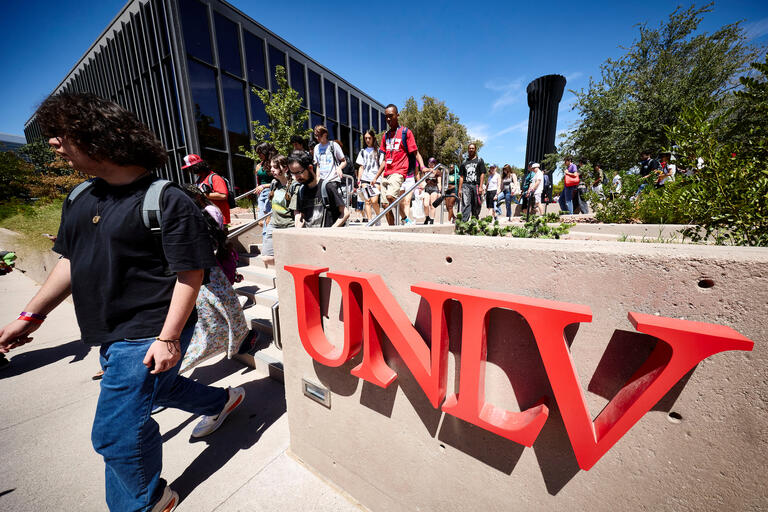
UNLV Newsmakers 2026: Summer Edition
A selection of prominent headlines featuring UNLV experts from July and August.
UNLV Newsmakers 2026: June
A collection of top headlines featuring UNLV faculty and students.