For media inquiries, visit the Office of Media Relations website or call 702-895-3102.

Fewer people are getting coronavirus tests now that a winter wave of infections is in the rearview, but officials still want Nevadans to get tested to help identify and stop further transmission.


Inside a strip mall here, blackjack students practiced flipping cards onto tables empty of gamblers. Nearby, a few people leaned over a craps table, the thrill of the game replaced by quiet study as the dice rolled.

In a battle between old tech versus new, phone calls and emails proved more helpful for lessening loneliness, isolation and stress than video chats, social media and interactive video games during the pandemic, according to a new study in the journal Human Communication and Technology.

There's a new online tool to help you make a more informed decision when selecting your college and major.

She needed no introduction, but the vice president offered one anyway.

The COVID-19 pandemic has been the focus of the Southern Nevada health district for the past year, working with local and state officials on guidelines and curbing the spread of the virus.
You’ve probably noticed a lot of ads for sports betting recently. Here’s why.
Vast amounts of ancient Martian water may have been buried beneath its surface instead of escaping into space, scientists report in the journal Science. The findings, published Tuesday, may help untangle a clash of theories seeking to explain the disappearance of Mars’ water, a resource that was abundant on the planet’s surface billions of years ago.

The theme song of an ’80s sitcom goes, “You take the good, you take the bad/You take them both and there you have/The facts of life.” The same can be said of our gut microbiome, the complex system—comprising 300 to 500 species of good and bad bacteria—that affects not just our digestive system but also has links to mental health, autoimmune diseases, endocrine disorders, cancer and more.

You Might Also Like

UNLV Newsmakers 2026: September and October
A selection of top headlines featuring UNLV experts from the front half of the fall semester.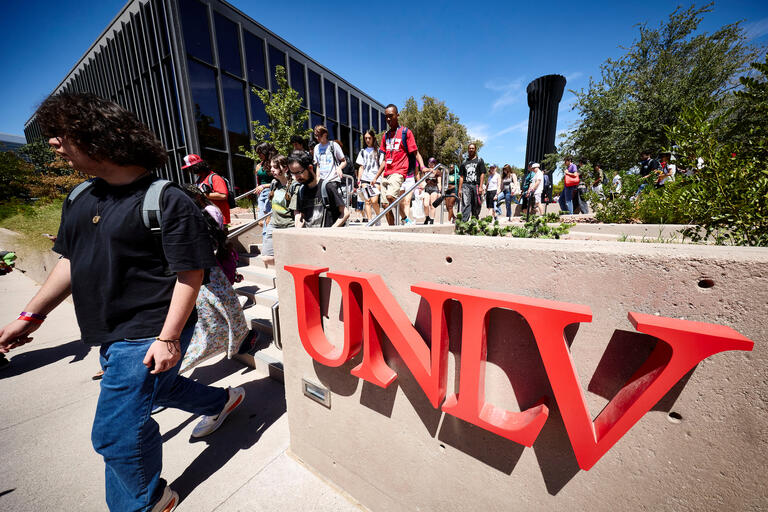
UNLV Newsmakers 2026: Summer Edition
A selection of prominent headlines featuring UNLV experts from July and August.