Cleft lip and palate are common birth defects occurring at a rate of 1 per 1,000 births for cleft lip and palate and 0.6 per 1,000 births for cleft palate alone. It occurs when tissues in the mouth or lip do not fuse properly during the first trimester of fetal development, leaving an opening or split. Multiple procedures at different stages of childhood are necessary to repair the face, and improve feeding, speech, hearing, dentition, and appearance.
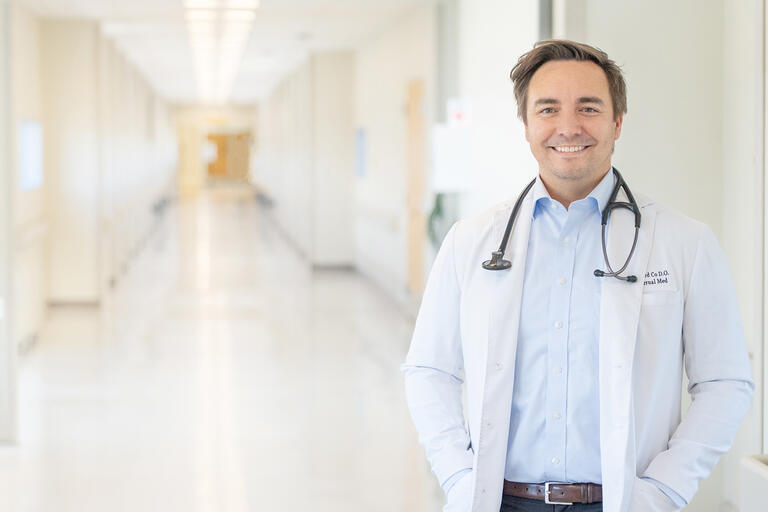
Dr. John Menezes, associate professor of plastic surgery at the Kirk Kerkorian School of Medicine at UNLV, completed his fellowship in craniofacial surgery at The Johns Hopkins University School of Medicine. He arrived in Las Vegas in 2002 and has been performing life-changing surgeries, both locally and abroad, ever since. He was also head of the cleft/craniofacial team until its defunding during COVID. In November 2025, with funding from Senate Bill 280, the UNLV School of Dental Medicine helped to re-establish the team at the Advanced Care Clinic, where the multidisciplinary craniofacial team coordinates the care of those faced with the myriad of challenges of cleft lip and palate.
Here, Menezes discusses his work caring for children with cleft lip and palate and the importance of bringing specialized care together in one place.
How many cleft lip and palate procedures do you perform?
When I first got here, we had a cohort of about 350 to 400 patients that were being seen by all the specialists. Since then, the population has more than doubled, and so has the population with craniofacial needs. So, my current personal list is around 900 patients that are from birth until 17. University Medical Center of Southern Nevada (UMC) has been the primary hospital for craniofacial surgery since I’ve been in town.
How is the UNLV School of Dental Medicine’s new Advanced Needs Clinic doing?
It’s working out well, as more people are finding out about the clinic. Patients typically get referred to us by different specialists. At birth, it is often the neonatalogist; later, it is their pediatrician or dentist. In the past, they were told they needed to go to California or Utah for cleft care. But now, our team is able to offer the gold standard for care set by the American Cleft Palate-Craniofacial Association (ACPA).
These standards are important because cleft patients aren’t just your average patients, they need coordination of care at specific ages by a team of specialists experienced in this subspecialty to get the best outcome. The Nevada team was established in the 1990s and remained accredited by the ACPA until 2021 when defunding due to the COVID crisis caused its closing. The team restarted in October of last year and right now at the clinic, we’re seeing about 10 patients once a month.
Why are so many specialists needed?
Because these children have problems that affect their ears, for which they need ear, nose, and throat specialists ... problems that affect their mouths that need dentistry, orthodontics, and oral surgery. They require speech and language therapy because when you have a cleft palate, you may not speak normally.
Also, on the cleft team, there is a social worker, which is significant, because some of these patients are underinsured, and sometimes they have to travel, and don’t get consistent care unless they are followed by a team. A social worker can help coordinate things. This type of comprehensive focus is important, and patients are grateful.
What is the treatment plan for a typical patient?
The lip repair is typically performed by 3 months of age, the palate by 8 to 10 months. Hearing, speech and language development need close follow-up for cleft in the preschool years. In those of school age, the first stage of orthodontic management begins prior to bone grafting to the gumline, which is done by age 7 to 8. The final procedures happen in the teenage years, when growth is nearing completion, with coordination again between a plastic surgeon, an oral surgeon, and an orthodontist.
What’s your advice for parents looking for the best surgeon?
It’s very important that surgeons who perform cleft lip and palate surgeries be fellowship trained and follow the current standards of care as outlined by the ACPA. Make sure they are board certified, preferably in plastic surgery, and have done a craniofacial fellowship. If they haven’t, you should strongly consider not going to them. Multiple studies show that plastic surgeons who just occasionally do cleft always have more complications, more scarring, need more revisional surgeries, and subsequently, the revisional surgeries are harder to do because of the techniques they used.
How have surgical procedures changed through the years?
There’s been a major refinement of technique. Years of evidence-based results are directing us to do things at certain stages: Why do we bone graft the gumline at age 6 to 7 instead of age 10 or at age 2? It’s because if you do it at age 2, you stunt facial growth by damaging the growing bone. But if you do it too late at age 10, the canine teeth get in the way and you get an inadequate bone graft and need a secondary bone graft. So ideally, you’re doing this at 6 to 7 and it’s the best of both worlds.
For cleft palate and craniofacial procedures, please contact the Advanced Care Clinic at 702-774-2450 or visit the Cleft Palate and Craniofacial Clinic page. To make an appointment with Dr. Menezes, please contact the UNLV Health Plastic Surgery Clinic at 702-671-2288 or visit the UNLV Health website.