From 1951 to 1992, the United States conducted 928 nuclear tests, which included 100 atmospheric tests and 828 underground tests, at the Nevada Test Site, which is now called the Nevada National Security Site. Radioactive fallout from the above-ground tests traveled and settled, particularly affecting parts of Nevada, Utah, and Arizona – severely impacting the people of these states for years to come.
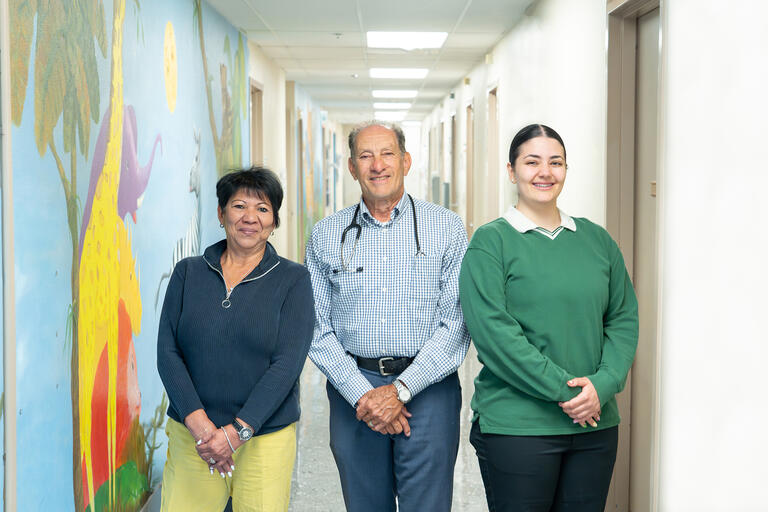
One program set on helping the individuals impacted by these nuclear tests, otherwise known as downwinders, is the Nevada Radiation Exposure Screening and Education Program (Nevada RESEP). Currently housed within the Kirk Kerkorian School of Medicine at UNLV, this program offers a number of free services and education to make sure downwinders get as much assistance as they need.
“Radiation that’s energetic enough to damage DNA can raise cancer risk by damaging the genetic instructions that control how cells grow and repair themselves. The effects may take many years to appear,” says Dr. Laura Shaw, a professor in the department of family and community medicine and principal investigator of Nevada RESEP. “For downwinders, exposure wasn’t only ‘being near a test,’ but could also be internal exposure from breathing or swallowing radioactive fallout … Many of the individuals we see today were children when the testing occurred. They had no say in the exposure but are still living with the consequences. This is exactly why programs like Nevada RESEP matter. We can’t undo the exposure, but we can help people get appropriate screening and support since cancers may appear decades later.”
One of the ways downwinders can get assistance is through the Radiation Exposure Compensation Act (RECA), which provides a one-time payment of $100,000 to people who are eligible. Family members of deceased downwinders are able to apply for this compensation as well. This act expired in June 2024 and was later reinstated through federal legislation in 2025.
“RECA is a federal law passed in 1990 that provides compensation to people who developed certain cancers and diseases after radiation exposure linked to U.S. nuclear weapons testing and uranium industry work,” Dr. Shaw says. “It covers several groups, including downwinders, onsite participants, and uranium workers such as miners, millers, core drillers, ore transporters, and other covered uranium workers as defined by the DOJ [United States Department of Justice], as well as certain people exposed to Manhattan Project waste.”
Amongst the services that Nevada RESEP offers is free assistance with filing claims under RECA. “Through Nevada RESEP, we have helped hundreds of individuals receive compensation from RECA, and over 80% of the claimants we assist are ultimately awarded benefits,” says Shaw.
Other services that Nevada RESEP offers include physical exams from a physician provided at no cost to those eligible; screening tests including blood work, urine dip, chest X-ray, and a fecal occult blood test; a summary and copy of exam results; educational materials about routine cancer screenings and other preventive health measures; and referral services.
“The most important message is that help is available right now. If a person or a family member lived in a downwind area and developed cancer, please contact Nevada RESEP,” Shaw says. “Our screenings and assistance with filing claims are completely free services. Funding for RECA claims is ending Dec. 31, 2027. We also want people in areas that have recently been added to know about these programs and get their applications in.”
To learn more about Nevada RESEP and eligibility, visit the program webpage.