Across rural communities in Nevada and the United States, graduates of the UNLV School of Dental Medicine are expanding access to care in places where it is often hardest to find. From small towns in northeastern Nevada to the desert communities of Moapa Valley and into the Texas plains, these dentists are building practices that go far beyond clinical care.
In many of these areas, patients would otherwise travel hours to see a specialist or delay care altogether. UNLV-trained dentists are helping close that gap by bringing comprehensive services directly to the communities they serve.
These “Rural Rebels” are redefining what modern dentistry looks like outside major metropolitan areas. They bring advanced procedures, invest in local outreach and become part of the everyday lives of their patients. In doing so, they are proving that high-quality care does not have to be limited by geography and that meaningful careers can be built where the need is greatest.
Dr. David Diehl Builds Community and Care in Elko County
For Dr. David Diehl, building a dental practice in rural Nevada was never just about dentistry. It was about people, partnership, and place. A graduate of the Class of 2017 and class president for all four years of his UNLV School of Dental Medicine training, Diehl now practices in Spring Creek (population 15,000) and Elko (population 20,000) alongside two other Rebels who shaped his journey: his brother, Dr. Russell Diehl, and his classmate and close friend, Dr. Joseph Weber.
“I am extremely fortunate to be in a business partnership with my two best friends,” Dr. David Diehl says. “We created a special bond at UNLV that continues into our practice and patient care today.”
The three also share a commitment to building something meaningful together, rooted in the same values that guided them through dental school.
Diehl chose to practice in northeastern Nevada to create the kind of life he wanted for his family. “We wanted to live in a place where we felt we could best raise a family. We wanted a small town with space to roam and play. The Elko area was perfect for us.
In a rural community, dentistry looks different: “I frequently see my patients outside the office, whether it’s at the grocery store or the park,” Diehl says. “You build real, long-term relationships with the people you serve.”
That sense of connection is reinforced by the team he works with every day. “I feel like I am working alongside two of my brothers. We go over cases together and continue to learn from each other. They are two of the best mentors I could ever have.”
He encourages current UNLV dental students to build their own practices in rural communities. “There’s a lot of stress that comes with ownership,” he says, “but for me, I sleep best knowing I’m living in a community I love, serving people I’ve grown to love.”
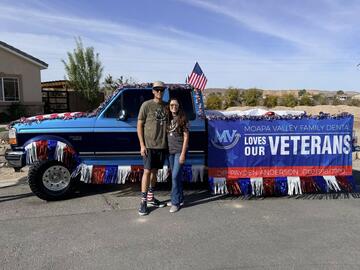
Dr. Payden Anderson Brings Dentistry Home to Moapa Valley
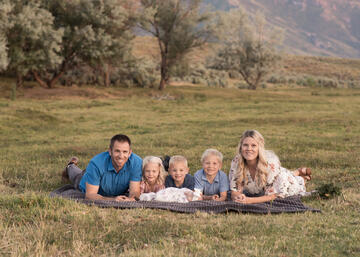
Dr. Payden Anderson was raised in the small Nevada community he now serves. Anderson and his wife grew up just miles from where his Moapa Valley dental practice stands today.
“Returning home wasn’t just practical,” Anderson says. “It became purposeful.”
After completing his education at the UNLV School of Dental Medicine, Anderson chose to build his practice in a town of just over 6,000 residents, where relationships matter and access to care can be limited. “I’m approached all over town about dental concerns, at the grocery store or a Little League game. I don’t mind it. It’s part of being connected to the community.”
In areas like Moapa Valley, where access to specialists is limited, Anderson has built a practice that offers a wide range of services under one roof, from routine procedures to advanced implant solutions. “Patients benefit from having comprehensive care locally instead of traveling long distances. It makes a real difference in their overall health.”
He has built a team-centered environment focused on patient comfort and long-term care.
“Success in a small town isn’t just about clinical ability,” he says. “It's about building trust, being involved in the community, and genuinely caring about the people you serve.”
Anderson invests heavily in the community through local events, youth programs, and school initiatives. He also supports livestock shows and scholarships.
For Anderson, the rewards of rural dentistry are both professional and personal. Living just minutes from his office, he is able to balance his work with time spent with his family. “I can run home for lunch or pick up my kids from school. Being present for my family while serving my community is the most rewarding part.”
As Moapa Valley continues to grow, Anderson takes pride in contributing to a community that has shaped him. “It’s a place where people show up for each other,” he says. “Being able to give back to that is something I don’t take for granted. I loved my experience at UNLV SDM and you can’t appreciate how prepared you are until you are done.”
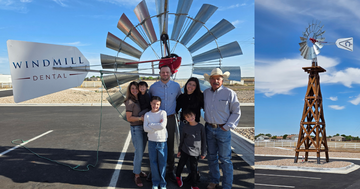
Ranch Roots, Rebel Training: Austin Whetten’s Rural Dentistry Journey
Long before he became a dentist, Dr. Austin Whetten spent his days on horseback moving cattle across the New Mexico ranch. “I was just a country kid who grew up on a cattle ranch about 60 miles from the nearest town,” Whetten says. “Dentistry wasn’t even on my radar.”
Then his father offered advice to him and his brother: Boys, this ranch has been good to us. It’s provided a wonderful life, his father said, but it belongs to your mom and me. You boys need to get an education and build a career. If you still want to come back after that, you can.
That conversation became a mission. Whetten’s brother went on to law school, and Whetten began charting his own path through higher education. While attending college, he worked on a farm where his employer had another profession that caught his attention. “Turns out he was a dentist,” Whetten says. “He had land, animals, and a life that blended hard work with opportunity. I remember thinking, ‘I want a life like that.’”
Years later that decision led him to the UNLV School of Dental Medicine, where he graduated with the Class of 2017.
“UNLV was one of the greatest blessings of my life,” Whetten says. “The faculty mentorship was exceptional, and many of those instructors are still mentors and friends today. The Class of 2017 built lifelong relationships, and many of my closest friendships came from that experience.”
After dental school, Whetten opened Windmill Dental in Amarillo, Texas, a city that had long held meaning for him. Growing up on the ranch, Amarillo was the family’s “big city.” When the family needed supplies, groceries, or new boots, they loaded up the truck and made the trip.
“People sometimes describe Amarillo as rural,” Whetten says. “But to a kid who went to grade school in a town of 1,200 people, Amarillo felt like New York City.”
Opening a practice there felt less like moving somewhere new and more like coming home.
Today, his ranch upbringing still shapes the way he runs Windmill Dental. “My dad always told us that if the ranch hands started work at 7:00, we needed to be outside by 6:30,” Whetten says. “You don’t ask people to do something you’re unwilling to do yourself.”
That lesson became his leadership philosophy. “I believe in leading from the front,” he says. “Working hard, showing up early, and supporting the team when things get busy.”
While rural dentistry is sometimes misunderstood, Whetten believes the opportunities are enormous. “One misconception is that practicing in a rural area means you’re limited to basic dentistry,” he says.
At Windmill Dental, Whetten provides comprehensive care that includes implants, orthodontics with clear aligners, periodontal procedures, oral surgery, and full-mouth rehabilitation. “Today’s technology allows us to deliver exactly that.”
For Whetten, the most important part of rural practice is the relationships built along the way. “Rural patients value honesty and authenticity,” he says. “When patients feel understood, dentistry stops feeling clinical and starts feeling personal.”
He offers simple advice to UNLV students considering rural practice: “You have to fully embrace it,” he says. “Rural America is filled with incredible people and meaningful opportunities to make a real impact.”