The Maternal Child Wellness Program, part of the department of pediatrics at the Kirk Kerkorian School of Medicine at UNLV, works closely with and for our local underserved community. Made possible through a Ryan White HIV/AIDS Program Part D Grant, the program’s purpose is to provide family-centered care in an outpatient setting to low-income women, infants, children, and youth exposed, infected, or affected by HIV.
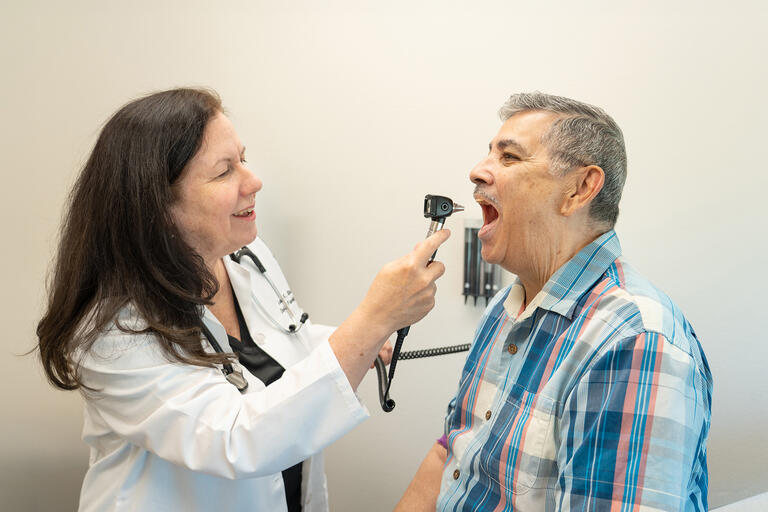
As a part of the school of medicine and UNLV Health, this program creates a “one-stop shop” for patients — where they and their families can access both primary and specialty care. Pediatric infectious disease practitioners and community health workers ensure wraparound services are available by collaborating with both pediatric and adult primary and specialty care physicians with UNLV Health and the community.
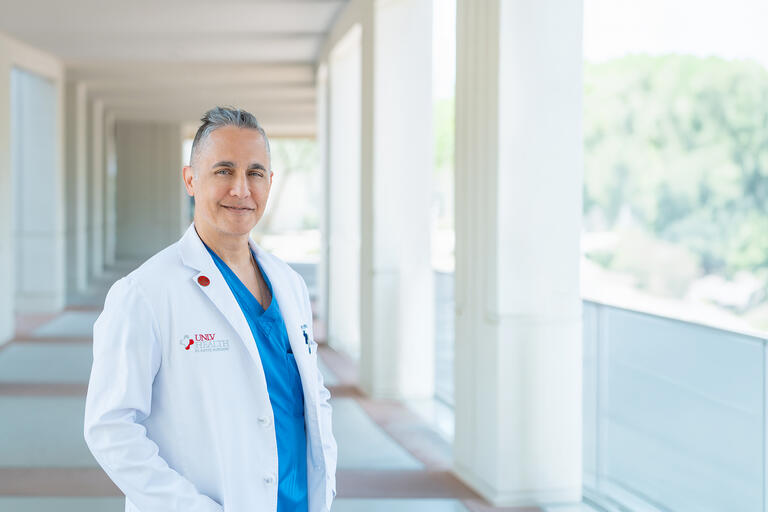
Dr. David Di John, professor and section chief for pediatric infectious diseases, leads the program. Di John came to Las Vegas in 2014 with over 25 years of experience in pediatric infectious diseases in New York and took on the program in 2017.
“I'd done it in New York for many years,” says Di John, “a sort of family-centered HIV care at NYU [New York University] Bellevue, which had a huge program back in the day when there was a lot more transmission of HIV ... So I got a lot of experience with that.”
He ran a similar program for 16 years on Staten Island, where he took care of infected children and affected family members. “We had a whole team that included people taking care of the adults ... Psychiatrists and everything, a real family care center, one-stop shop program. That's what we tried to do here to the extent that we could and I think we've done a nice job at it in eight-plus years doing this. The program focuses on preventing mother-to-child HIV transmission while serving patients from birth to age 24.”
The program is primarily funded by the Health Resources and Services Administration’s (HRSA) Ryan White HIV/AIDS Program Part D Grant, which is for local and community-based organizations that provide care to women, infants, children, and youth. The grant “provides us a lot of opportunity to give care to those that might otherwise not be able to afford it,” notes Di John.
A key element of the care and services they provide through the program is maintaining patient privacy and reducing the stigma around HIV/AIDS. The terms HIV/AIDS are not used in the name of the program for just that reason so as to eliminate any and all barriers for patients to receive care. “We're very, very careful about confidentiality and making sure that nothing is exposed in any way and that people and patients feel confident that everything is protected,” Di John says.
Assisting Di John in the program are community health workers Aaryana Mostafaeipour and Melba Borrero. Their roles are essential in helping patients get the help and resources they need. “So Melba and I — when listening to patients and hearing if there are any barriers — we are aware we are the bridge to our community, helping them with resources," Mostafaeipour says.
She notes that they assist with getting mothers formula, bus passes, information on food banks, among other necessities, but their main job is to just listen. “It’s doing the listening, assessing their social determinants of health, and ask a question if they would like assistance,” Mostafaeipour notes, “because we don't want to just assume and say, ‘We're going to give you a bunch of these resources that we have.’ We want to make sure that it is wanted, and they're willing to go and get those resources. I always call it like a community best friend, in a sense, because we have all the resources that many people might not even know exist.”
Di John explains that the community health workers are critical to his team and to the care of the patients. “The thing about our community health workers is that [they] not only know what's out in the community, but they know our patients and their families to a very, very deep extent. They’re very involved with them, very caring, they’re multilingual, and they really know what's going on with these patients and their families in great detail.”
It’s those social determinants of health that are critical to a patient’s overall health. If those basic needs aren’t met, the patient can’t focus on their healthcare. By assisting them with those basic needs, the patients are better suited to adhere to their medication regimen, which should decrease their viral load. Due to the great strides made in HIV/AIDS medications, treating it now is more like treating a chronic condition such as diabetes, where it used to be a death sentence. The end goal is to follow the Center for Disease Control's "Undetectable = Untransmittable" strategy.
That is the ultimate standard of success for Di John. “The key element of it is keeping our HIV-infected patients healthy,” he says, “keeping their viral loads at undetectable, keeping them on their meds, keeping them accessing care. For our exposed babies, the goal there is to have none of the exposed babies be infected, and with our moms, the goal there is to just teach them the things they need to do to minimize the chance that they'll have an infected child.”
To make an appointment with Di John, contact the Maternal Child Wellness Program at 702-676-3665 or visit the program webpage.
Want to stay updated and learn more about the medical school?
Subscribe to the Kirk Kerkorian School of Medicine at UNLV Making the Rounds newsletter to stay updated on the school’s progress in transforming healthcare in Southern Nevada!