In The News: Department of Interdisciplinary, Gender, and Ethnic Studies

The Historic Westside of Las Vegas is often forgotten. Still, the neighborhood is a pivotal part of the city's history, specifically the uprising of 1969 and its role in the civil rights movement.
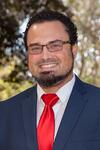

Although segregation in Las Vegas ended in 1960, UNLV Associate Professor of African-American and African Diaspora Studies Tyler Parry says that discrimination, racism and police brutality all contributed to tensions within the African-American community.

During the Civil Rights Movement of the 1950s and 1960s, uprisings and protests happened in urban areas across the country as Black Americans fought to end discrimination and racial segregation. During this time, residents in the Historic Westside of Las Vegas also joined that fight.
On Thursday, Feb. 6 at 6:30 p.m., join PH.D. Tyler D. Parry from UNLV at the Clark County Museum Railroad Depot as he explores the origins of the protests, its functions, or its consequences, and many histories of Las Vegas left it out completely.

The Clark County Museum will host a presentation by Professor Tyler D. Parry on February 6, focusing on the 1969 Uprising in Las Vegas's Historic Westside.
On the evening of October 5, 1969, Gerald Davis stepped out of his house in West Las Vegas to fix his mother’s car and noticed police officers had pulled over a taxicab nearby. Known by residents as the “Westside,” this Black-majority area is located west of downtown, literally divided by the railroad tracks running through the city. Patrol vehicles were a familiar sight on the Westside, though younger residents claimed the police seemed less interested in civil service and more prone to brutality and intimidation.
One small school that opened 150 years ago and served primarily African Americans had a big impact on how teachers are educated even now in South Carolina. An exhibit at the University of South Carolina’s College of Education is celebrating the State Normal School, which was founded in 1873 and lasted three years. The display, at the Museum of Education, describes how the school became the foundation for teacher education and training in the state’s public schools.
These founders know their companies can make investors and social media platforms squirm. They’re finding ways to succeed, regardless. Anna Lee remembers walking into rooms full of male investors with a prototype of her startup’s smart vibrator in hand. It might as well have been a slithering snake.

It used to be a Las Vegas hot tip: go off the Strip to Chinatown for the city’s best food. Now there is not just one Chinatown in Nevada’s biggest metropolis but two, and a variety of Asian cuisines can be found across the city.
Every year, the U.S. Open Tennis Championships sparks a frenzy that goes beyond its sport. We tune into matches, watch the stands closely, and get inspired to sign up for tennis lessons—even if we've never swung a racket before. And it's not just us.

It used to be a Las Vegas hot tip: Go off the Strip to Chinatown for the city’s best food. Now there’s not just one Chinatown in Nevada’s biggest metropolis, but two. And the prevailing wisdom counsels late night oxtail soup at the California Hotel, an off-Strip spot catering to Hawaiians, who are so populous in the city that they call it the Ninth Island. Or a sushi roll called the “Japanese Lasagna,” Korean corn dogs and affordable izakayas in the city’s more suburban Chinatown area in Spring Valley.

One-on-one interview with Tyler D. Parry, Associate Professor of African American Studies, UNLV.