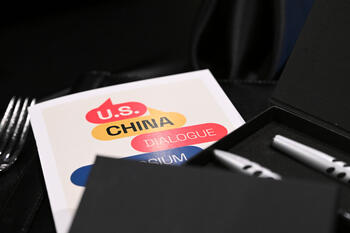
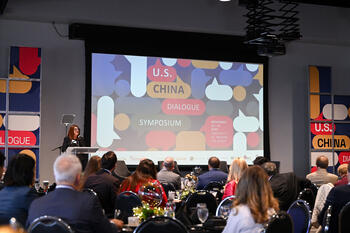
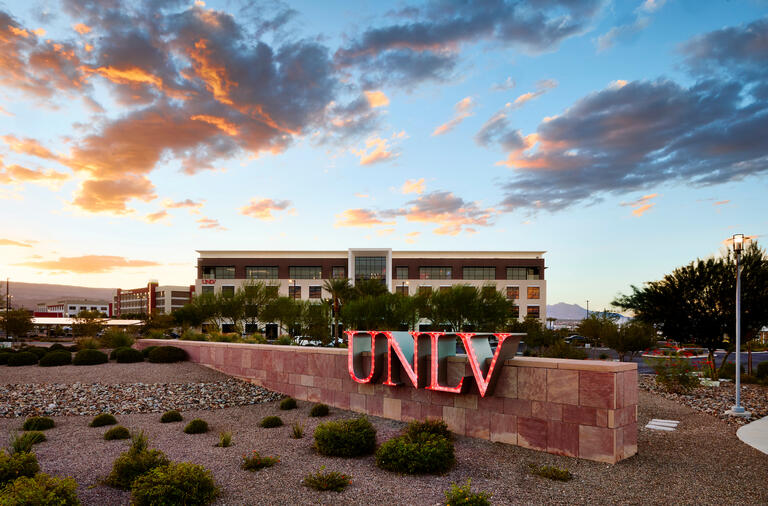
UNLV and Las Vegas Sands partnered to host the inaugural U.S.-China Dialogue Symposium in November, bringing together leaders from academia, business, and diplomacy to better understand and work to improve the complex relationship between the world's two largest economies.
The two-day event, which featured a series of panel discussions and remarks from members of Nevada’s federal delegation and ambassadors from both the U.S. and China, stressed the critical need for enhanced non-governmental people-to-people conversations and cultural exchanges.
The symposium was made possible through the partnership of Las Vegas Sands, the Sands Institute for Chinese Language and Culture at UNLV, the U.S. Chamber of Commerce, the U.S. China Business Council, the Vegas Chamber, and the Las Vegas Asian Chamber of Commerce.
UNLV interim president Chris Heavey emphasized the Sands Institute’s unique role in fostering the very type of dialogue the event facilitated.
“With the UNLV Sands Institute, we are intentionally expanding academic, cultural, business, and language engagement with China to open doors for our students to become informed and connected global citizens,” Heavey said. “Hosting the U.S.-China Symposium directly emphasizes the importance we place on this bilateral relationship. It's a natural fit for UNLV because of the international visibility of Las Vegas and the substantial number of Chinese visitors we welcome to our resorts and conventions.”
Reflecting on the meaningful connections and conversations that resulted from the panels, Andy Abboud, senior vice president of government relations and community development of Las Vegas Sands, noted that the symposium directly supported the mission of overcoming diplomatic challenges through cultural and educational engagement.
“We need to do our part, which is why we partner with UNLV,” said Abboud. “Dialogue can’t just be at the government level; it needs to be rooted at the academic, student, cultural, and sports levels. The ultimate goal is to rewrite the narrative of friction and show that our people and cultures are friendly and eager to engage, allowing us to break through diplomatic difficulties.”
Building Bridges Through Dialogue and Cultural Understanding
UNLV also welcomed Nevada Congresswoman Dina Titus to the stage, who previously served as a professor at the university for 34 years. She offered opening remarks on the importance of educating future leaders, noting that diplomacy and cross-cultural engagement can help avoid tensions, foster understanding, and advance respect between the two nations.
“While some view the relationship between the U.S. and China as adversarial and combative, programs like this, through the Sands Institute, are paving the way for our two countries to work together for the greater good of humanity and the world,” Titus said. “They create opportunities to collaborate, allowing us to compete while still working together peacefully.”
The panel discussions that followed, featuring scholars, business leaders, and diplomats, focused on core themes of collaboration and shared priorities, offering valuable takeaways for strengthening individual and institutional connections between the two countries.
- Global Health and Innovation: The "Healing Across Borders" panel featured experts discussing U.S.-China collaboration in public health, medicine, and cancer research, highlighting innovation that delivers real-world impact and builds mutual trust.
- Education as Diplomacy: The “Building Durable China-U.S. Institutional Partnerships” panel showcased how universities act as resilient bridges between China and the U.S., sustaining dialogue, research, and intercultural understanding even amidst geopolitical challenges.
- Higher Education Cultural Exchange in Action: Presenters highlighted innovative partnerships that connect students, educators, and communities, using experiential learning and academic collaboration to strengthen ties.
- Engagement Through Tourism, Sports, and Hospitality: The discussion explored practical pathways for cross-border connections, examining how tourism, sports, and hospitality intersect to facilitate meaningful engagement.
- Student & Scholar Experiences: UNLV Sands Scholars and international students shared their study abroad and cultural exchange experiences, providing a student perspective on the value and impact of these programs.
At the conclusion of the symposium, organizers outlined actionable next steps to strengthen collaboration and deepen ties between the two nations in the coming years.
The symposium also demonstrated a widespread commitment to the Sands Institute’s core mission of advancing understanding and appreciation of the nations’ cultures as drivers of international engagement and cooperation, a point echoed by UNLV acting executive vice president and provost Kate Korgan.
“The leaders and participants that gathered at the symposium are all united by a common and shared belief in the power of education, cultural understanding, and collaboration to strengthen the bonds between the U.S. and China,” said Korgan.