Richard M. Oxborough

Biography
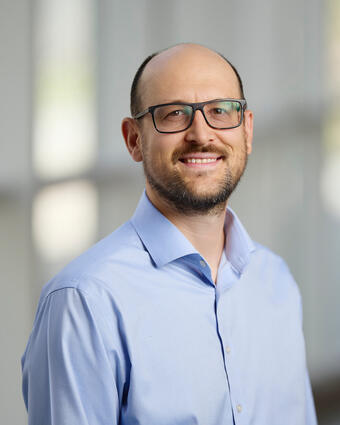
Richard Oxborough is an assistant professor in the UNLV School of Public Health and a medical entomologist with nearly two decades of experience researching and controlling disease-transmitting insects. He is co-director of the university's bug lab — more formally known as the Parasitology and Vector Biology (PARAVEC) Laboratory — where student and faculty researchers partner with regional, state, and global entities to engage, teach, and assist community members and to inform public policy.
Oxborough's research includes mosquitoes and mosquito-borne diseases of Southern Nevada, including West Nile virus, as well as insecticide resistance and the effectiveness of mosquito-control strategies. He studies triatomine bugs — an insect, also known as kissing bugs, that can spread Chagas disease through infected feces — and other vectors of public health importance in the U.S. Southwest. Oxborough additionally has expertise on arboviruses, which are spread to humans through the bites of blood-feeding insects and arachnids, such as ticks and sandflies.
His international research has focused on improving the control of malaria and other vector-borne diseases, including evaluating insecticides and mosquito nets, investigating insecticide resistance, and developing improved methods for testing vector-control interventions. His work has spanned multiple countries across sub-Saharan Africa, and he has contributed to World Health Organization expert committees on vector control and insecticide resistance.
Oxborough has also published commentary in The Lancet Planetary Health on emerging challenges in vector-borne disease control and preparedness.
Education
- Ph.D., Medical Entomology, London School of Hygiene and Tropical Medicine
- M.Sc., Biology and Control of Disease Vectors, London School of Hygiene and Tropical Medicine
- B.Sc., Biological Sciences Hons (2:1), University of Durham
Search For Other Experts On
health & medicineRichard M. Oxborough In The News
