Science and Engineering Building
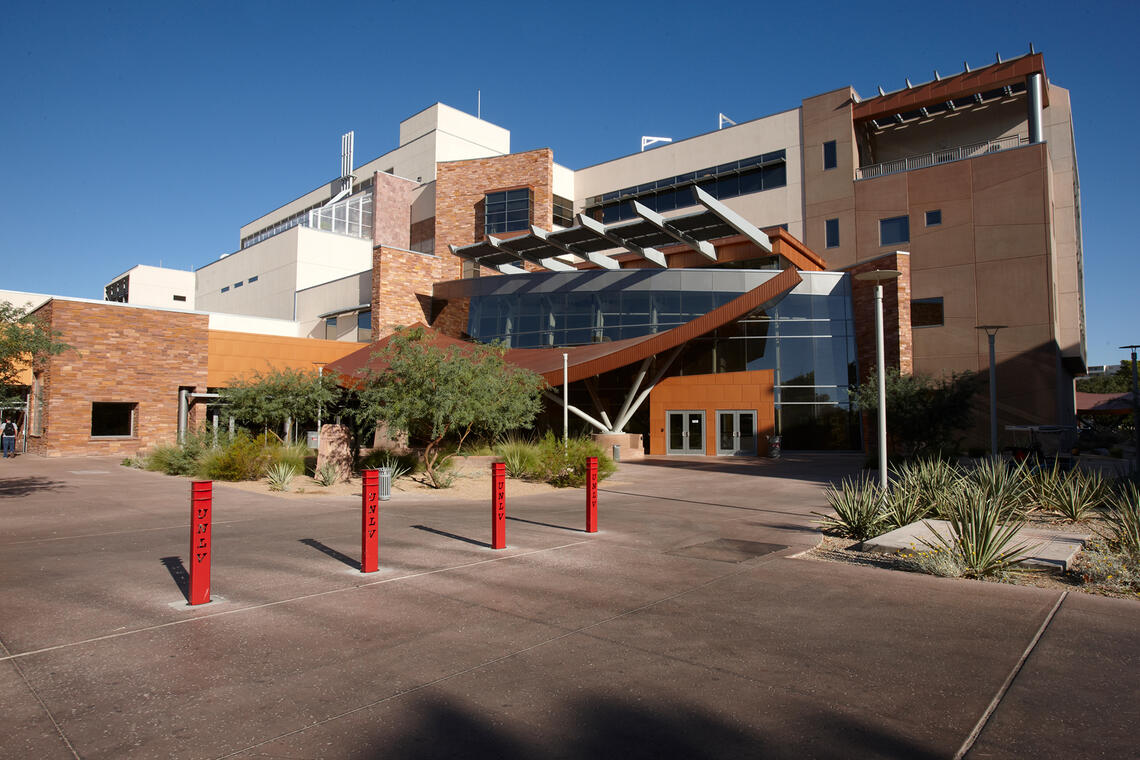
The Science and Engineering Building (SEB), located on the north side of the UNLV campus, is a state-of-the-art facility designed to support interdisciplinary research and education. Its innovative design fosters collaboration among faculty in the sciences, engineering, health sciences, and other research units. SEB also offers faculty and students expanded opportunities to engage in advanced research using some of the most sophisticated technology available.
Additional Information
The mission of the Science and Engineering Building is to provide a state-of-the-art research environment to foster collaboration and interaction among the disciplines of science and engineering; to optimize lab space and operational systems to gain functional efficiency in the circulation of people, data, and materials; to utilize sustainable design principles to conserve water, energy, and natural resources; and to accommodate future growth in UNLV’s research programs.
The vision for the SEB began to take shape more than a decade ago as community and state leaders, including then-Gov. Kenny Guinn, key legislators, and members of the Nevada Development Authority and the Las Vegas Chamber of Commerce, identified economic diversification as one of the state’s top priorities. They highlighted the need to provide additional space for the education of a highly sophisticated workforce and for research on new technologies with commercialization potential that would support a more diverse Nevada economy. In the meantime, enrollment growth had placed heavy demands on UNLV’s engineering and sciences colleges. It became clear a new science and engineering facility would be critical to the future of UNLV and Nevada.
University, government, and the private-sector representatives recognized a shared interest in building such a facility and began to commit time and resources to advocating it. Support for the new building expanded, and it moved from the university’s wish list to the top of the state’s planning and construction project list. The building was approved by the 2001-03 Nevada Legislature, construction started in 2005, and was completed in 2009. A phased move-in and commissioning of equipment started in early 2009 and was completed in late 2009. The building was dedicated Sept. 11, 2011 by then-President Neal Smatresk.
Project Cost
$113 million
Size
205,779 gross square feet
Architecture Firm
Dekker/Perich/Sabatini
Construction Firm
Sletten Companies
Dedication
September 22, 2011
- The building is a state-of-the-art research facility designed to promote interdisciplinary collaboration. It was designed utilizing a “dance floor” configuration, which means that many work areas are not separated by walls; this provides researchers from a variety of disciplines greater opportunity for interaction and facilitates their access to highly specialized equipment. These labs also contain movable lab benches and casework, as well as overhead lines for utilities and computer access, providing flexibility in usage of the space.
- The Science and Engineering Building is at the cutting edge of environmentally friendly design and is in the forefront of buildings installed with structural monitoring systems to measure response during earthquakes.
- The building has also obtained a Leadership in Energy and Environmental Design (LEED) Silver rating, which indicates that a building meets environmentally responsible and sustainable design, construction, and operation standards.
- Construction materials for the building include recycled glass, steel, concrete, and wood. More than 60 percent of the leftover construction waste was recycled for future use instead of being sent to a landfill.
- A roof membrane, which reflects 92 percent of the solar energy striking the roof surface, reduces the amount of energy needed to cool the building. In addition, high performance glazing reduces solar heat gain from the exterior, insulates the building from heat loss on the interior, and allows adequate levels of light to penetrate the building.
- Incoming air is pre-cooled through evaporation, reducing air-conditioning needs. Occupancy and ambient sensor controls are used to automatically turn off lights in unoccupied rooms, reducing electric light usage during the day.
- The building is also designed to reduce water consumption by 42 percent through use of drought-tolerant native landscaping and a drip irrigation system, along with low-flow sinks, toilets, and showers. Additionally, the building utilizes a reclaimed water system that captures the wastewater from the building’s de-ionized water and humidification systems inside the laboratories; this produces 750 gallons of wastewater daily, which is used for flushing toilets.
- Received an LEED (Leadership in Energy and Environmental Design) Silver Rating
- Design received 2004 Citation Award in the Unbuilt Category for the AIA (American Institute of Architects) Nevada Design Awards
- Received the Best Green Practices award in the Green Awards — Building category from the Las Vegas Business Press in 2009
- State-of-the-art flexible laboratories and integrated research space
- Designed for interdisciplinary research with four classrooms and a 200-seat auditorium on the main floor
- Satellite energy plant, housed in a separate building, to provide heating and cooling for the SEB and future buildings on the north side of campus
- Smart conference rooms
- Cafe/coffee shop adjacent to the first floor lobby
In grateful recognition of the individuals and organizations whose generosity helped fund the UNLV Science and Engineering Building:
- Bennett Family Foundation
- UnitedHealthcare
- Bechtel
- National Security Technologies, LLC
- NV Energy
- Southwest Gas Corporation
- Atkins
- Clark & Sullivan Construction
- GES-Geotechnical & Environmental Services, Inc.
- Jacobs
- JT3, LLC
- Poggemeyer Design Group
- Stanley Consultants
Contact
Phone
Fax
702-774-4733
Campus Location
Science and Engineering Building (SEB), Room 2102 (second floor)
The building is open from 8 a.m. to 5 p.m.
Harry Reid Center
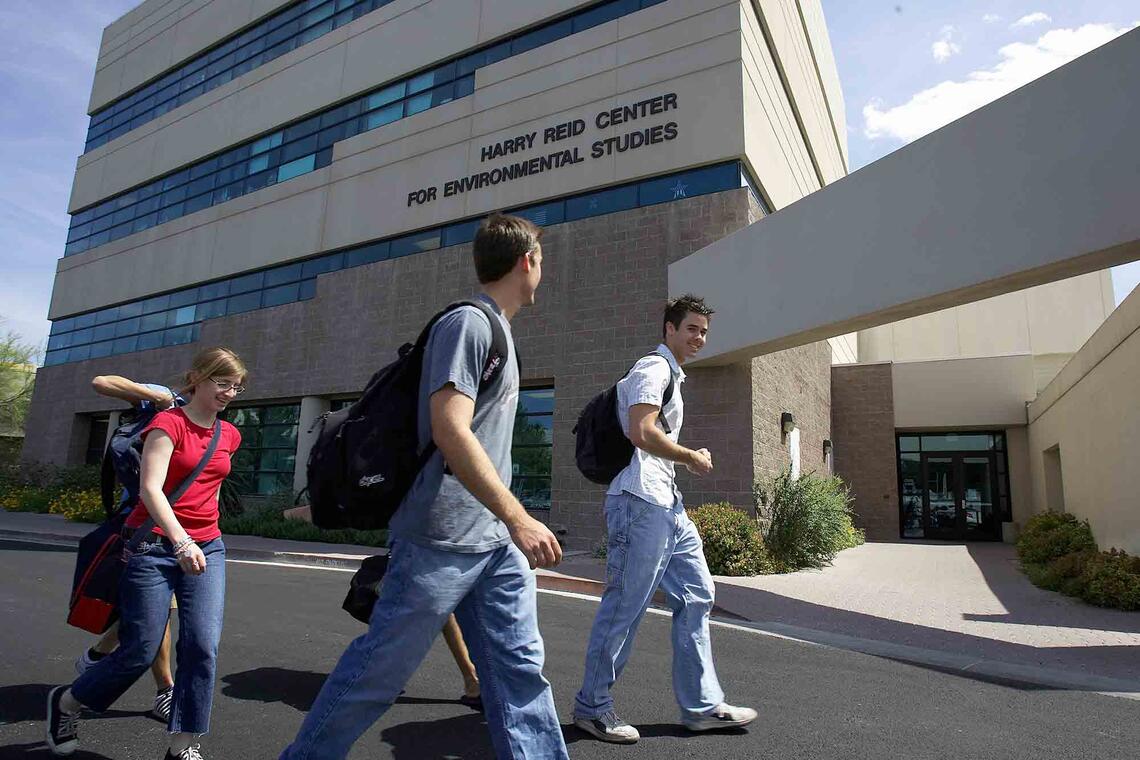
The Harry Reid Center (HRC) is a multidisciplinary research facility that supports a wide range of research activities across the UNLV campus. Faculty, staff, and students from the Colleges of Sciences, Engineering, and Urban Affairs, as well as the School of Public Health, conduct advanced research within the facility. The HRC fosters collaboration among researchers and strengthens interdisciplinary research efforts across the university.
The center provides specialized core laboratories and equipment that enable cutting-edge research across multiple disciplines. By consolidating these instruments and capabilities within a single interdisciplinary hub, the university maximizes its investment and enhances access to high-value technology for the broader research community.
Contact
Phone
Campus Location
Marjorie Barrick Museum of Art / Harry Reid Center (MSM-HRC), Room 100
The building is open from 8 a.m. to 5 p.m.
Campus Lab Building 3 (CLB 3)
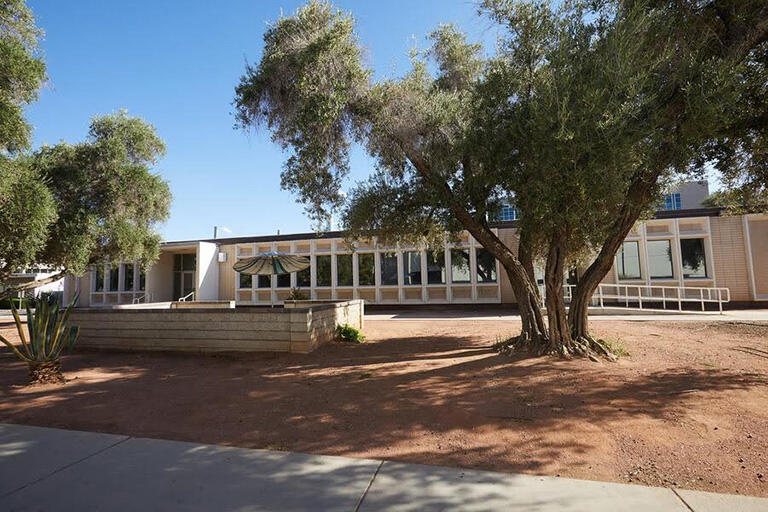
This building was formerly part of the Environmental Protection Agency complex. It now houses laboratory and office space for mechanical engineering, environmental and occupational health, psychology, chemistry and radiological safety.