For media inquiries, visit the Office of Media Relations website or call 702-895-3102.
When you no longer have to adhere to an office dress code, how best to present yourself when working from home can be tricky.


The number of COVID-19 cases in Nevada rose to 405 late Wednesday, and the state reported four more deaths, bringing the total to 10.

As K-12 schools across America have closed their doors to help stop the spread of coronavirus, parents have had to step into the role of teacher, guiding their children through lessons in mathematics, social studies, art, English, and perhaps even physical education at the local park.


As the coronavirus pandemic continues to spread, Americans across the country — including the 60 million who love running or jogging — have been told to stay home.


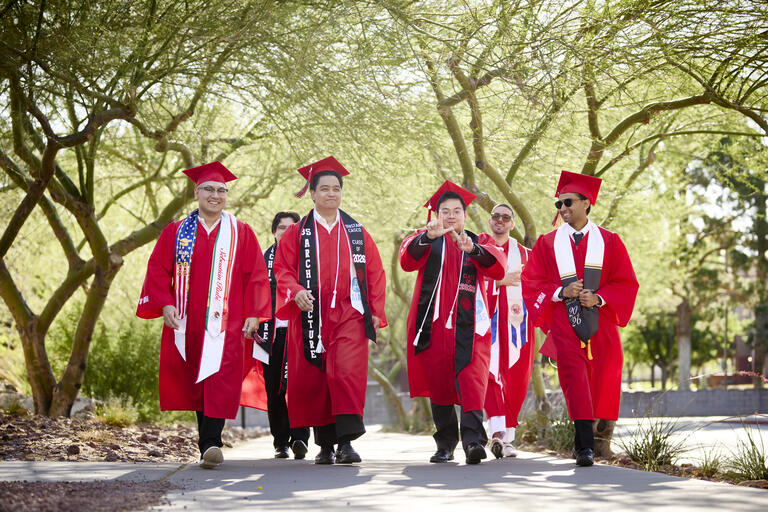
Graduation ceremonies at Nevada’s public universities will be postponed and most classes will continue to be conducted remotely through the end of the spring semester because of the coronavirus pandemic, Thom Reilly, chancellor of the Nevada System of Higher Education, announced today.
Advisors holding the Certified Financial Planner Board of Standards’ designation will be expected to turn over customer dispute documents at the request of the organization during its investigations. Advisors who don’t comply could have their designation revoked, according to the CFP Board’s new proposed procedural rules released Tuesday.

As coronavirus spreads through the country, states have closed schools and nonessential businesses and prohibited group gatherings. This leaves most of us at home, but many of us live in close quarters with other people. We asked public health experts from the UNLV School of Public Health how people can protect themselves from being infected with the new coronavirus in these situations.
As coronavirus spreads through the country, states have closed schools and nonessential businesses and prohibited group gatherings. This leaves most of us at home, but many of us live in close quarters with other people. We asked public health experts from the UNLV School of Public Health how people can protect themselves from being infected with the new coronavirus in these situations.


The novel coronavirus doesn’t seem to be discriminating against who it affects. But are there groups that are at higher risk of infection than others?
You Might Also Like
UNLV Newsmakers 2026: Summer Edition
A selection of prominent headlines featuring UNLV experts from July and August.
UNLV Newsmakers 2026: June
A collection of top headlines featuring UNLV faculty and students.