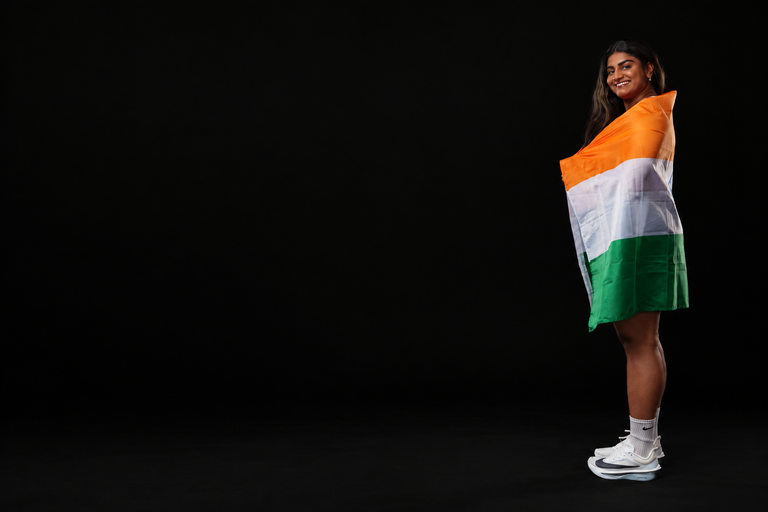
“If there was any place that you’d rather be right now, where would it be?” Deborah Byers asks her patients before they go under anesthesia for a medical procedure.
As the assistant director of the UNLV Nursing’s Certified Registered Nurse Anesthetist (CRNA) program, weaving in psychology and wellness into her practice is key.

“They tell me and I say, ‘OK, let’s go there.’ So I’ll start talking them through it until they go to sleep as I’m giving them medication,” she says. “And I do the same thing, waking them up, and they tell me they have felt less anxiety.”
A Chicago native, Byers is a dual-certified nurse anesthetist and psychiatric mental health nurse practitioner (PMHNP). She's lived a life of many "firsts": the first college graduate in her family, the first with a terminal degree, one of the first Black students in her anesthesia program, and the first Black female who worked as a clinical instructor at Truman Medical Center NAP. And now she's helping train UNLV's first class of nurse anesthetists.
Byers believes her journey wasn’t about mastering anesthesia, but rather breaking barriers, teaching, learning, defying expectations, and paving the way for others like her.
What is your goal as the assistant director? How are you going to make this program different?
I wanted to participate or be involved in a program that will be different, so that when our students come out, they’re not only ready to practice, but ready to teach. They can become mentors to others and let them know, “You do the hard work, you study, you’ve done this. Don’t think you haven’t earned your spot. You got this. You’ve earned this.”
There is an old adage in nursing about how nurses eat their young, how you have to be strict. This field is not only competitive, but it is intense. The amount of information and knowledge that CRNAs have to know and learn — and that’s not including technical skills — why would you put these students in a situation where they’re already in a lot of psychological stressors?
What’s a common misconception about the field?
It depends on who you ask. The lay person thinks of us as glorified nurses who don’t know what we do or are unaware of the curriculum and everything we had to do and learn in order to become a CRNA. There are even people in the healthcare field who have never even heard of a CRNA because they only relate it to anesthesiologists or they have the misconception that all we do is just the technical skill and intubate.
There’s so much more you can do in this field beyond working in the operating room. As CRNAs, we know and recognize that we are registered nurses. We know that that is our foundation.
How is your background as a psych nurse an advantage for your role?
A lot of people find it different to be a CRNA and a PMHNP, but I’ve learned to mesh the two together in my practice.
I want people to know that they matter. That's important, especially when you're talking to patients. I incorporate being a psych nurse with anesthesia because we already have to build a rapport with the patient anyway. When I start talking to them, I ask: “How do you feel today,” and say, “it's going to be OK.”
I just acknowledge that they are seen, they are heard, and that I'm validating their feelings because they're anxious. I'm letting them know, without even saying it, “I will take care of you.” When I started talking to them about the procedure, at the end, I say to them, “I will take excellent care of you.”
Almost 99% of the time, they will tell me, “I already know. I already know you’re going to take care of me.” For some reason, that is validation for me.
Was nursing always your first choice?
After I served in the Army, yes. I served five years in the military as a radio operator and mechanic. The military taught me a lot that I still practice to this day; it was transformative. It made me who I am.
Everything about me goes back to the military. I thought about getting into nursing after I got out of the military because I knew the military would pay for undergrad. I applied to nursing school and was accepted.
What’s a fun fact about you that people may not know?
I love K-pop. When I was in Seoul, I went on a BTS bus tour that stopped at their very first dorm, where they all lived when they had nothing. Standing there was overwhelming; I started crying. For fans like us, or ARMY [the band's fan group], visiting that spot feels like a pilgrimage because we know what they went through to get where they are now.
It’s more than just their music, it’s the lyrics, the meaning, and how deeply it connects to our own struggles. There’s this saying, “You don’t find BTS, BTS finds you,” and that’s true for me.
They’ve helped me learn to love myself and appreciate the present. That lesson stays with me every day, in my work and in my life.
If there was any place you’d rather be right now, where would it be?
Going on a bus tour heading toward Mount Fuji, stopping in one of those quiet villages along the way. It’s amazing there. You can really hear nature, smell the cleanliness in the air, and see the beauty of the mountains not too far from where you're standing. The people don't have a care in the world. They're just walking around, farming, or trying to sell little things that they’ve made as tourists wander through town. There is beauty within that. I love being part of that moment.