For media inquiries, visit the Office of Media Relations website or call 702-895-3102.
There are new recommendations for hospitals to help them be better prepared to respond to mass shootings after a study looked at Las Vegas’ response to the 1 October massacre.


With over 50 reported cases in Clark County and a limited number of vaccine doses, monkeypox is emerging as a threat to public health.

Humans are proud of their brainpower. Our noggins are some of the largest nature has to offer, and we like to think that we are an intelligent species.

Last year, an article published to Frontiers in Ecology and Evolution made headlines across the world after it claimed human brains shrank in size approximately 3,000 years ago. This, according to the authors, may have driven by the externalization of knowledge in human societies, thus needing less energy to store a lot of information as individuals. As a result, we developed smaller brains.
QAnon followers who may have become discouraged about how things turned out on Jan. 6, 2021, have a new sense of purpose with Monday's FBI search of Donald Trump's home at Mar-a-Lago, said University of Missouri researcher Chris Conner.

Hello from the medical district, the headquarters of our medical community. Located here is the new Kirk Kerkorian School of Medicine at UNLV, one way we're trying to bring in more doctors.

Despite the national trend of rent up by as much as 15% year to year in June, housing costs for students on the campus of UNLV appear to be in check.

Builders in Southern Nevada sold 434 homes in July, down from 713 the previous month, according to analyst Home Builders Research, sparking concerns about rippling economic effects.
Until now, our brains were thought to be bigger than they are today. They would have gone through a sudden contraction about 3000 years ago. Scientists are now coming back to that.
You Might Also Like

UNLV Newsmakers 2026: January
A look at some of the most eye-grabbing headlines featuring UNLV faculty, staff, and students.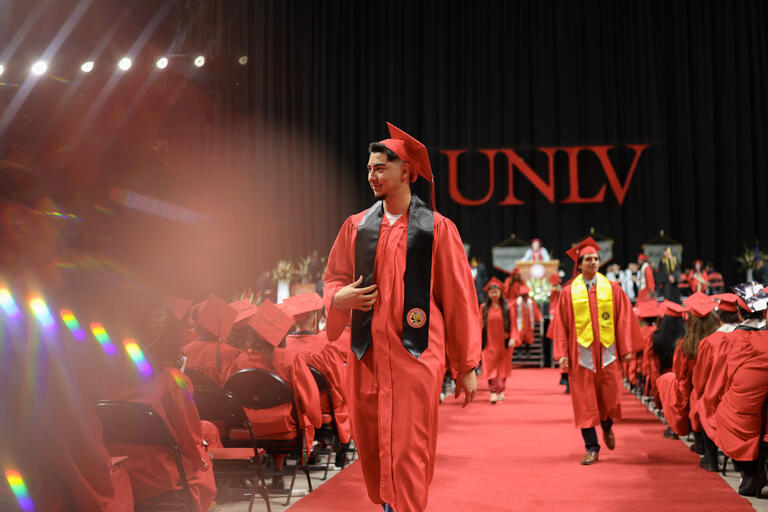
UNLV Newsmakers 2025: November and December
A collection of the top news headlines featuring UNLV faculty and students.