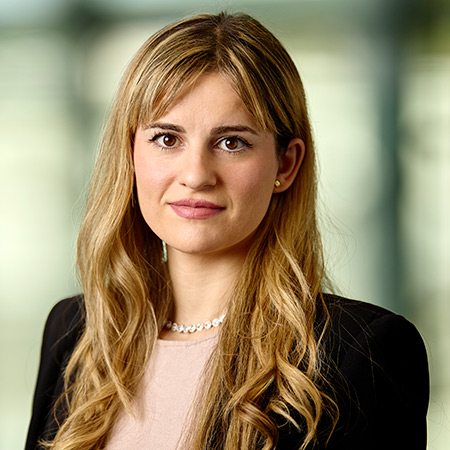
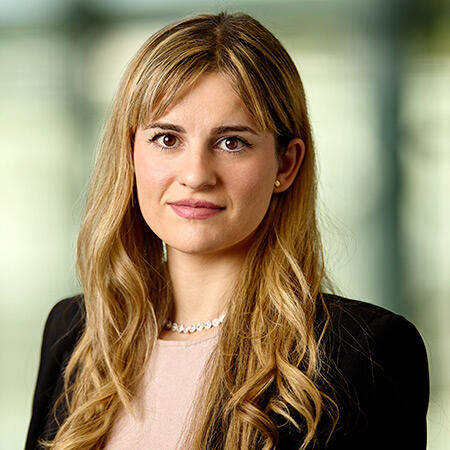
Maria Zhivagui, Ph.D.
Assistant Professor, Personalized Medicine Lab
Biography
Maria Zhivagui, Ph.D., is an Assistant Professor of Personalized Medicine at the UNLV School of Medicine. She also holds affiliations with the Nevada Institute of Personalized Medicine (NIPM), and the College of Sciences.
Zhivagui’s research focuses on elucidating the causes of cancer, particularly how environmental exposures initiate and promote cancer development in humans. Her work centers on the interplay between the exposome and the human genome across various organs, with the goal of identifying reliable biomarkers for the diagnosis and personalized treatment of cancer patients, especially those with specific exposure histories and susceptibilities. Her research aims to advance our understanding of cancer onset and malignant progression.
Zhivagui earned her Ph.D. from the International Agency for Research on Cancer (IARC), part of the World Health Organization (WHO) in Lyon, France. She was the first to identify a mutational signature associated with exposure to chemicals such as acrylamide and glycidamide, which are formed when carbohydrate-rich foods are heated at high temperatures. This signature has been detected in both lung cancers of smokers and liver cancers linked to dietary exposure, highlighting its public health significance.
Following her doctoral studies, Zhivagui completed postdoctoral training in the Department of Cellular and Molecular Medicine at the University of California, San Diego. There, she developed advanced expertise in computational biology, cancer genomics, and machine learning approaches for mutational signature analysis in human cancer data. Her research has had a significant impact on public health, providing critical evidence of the mutagenic and carcinogenic potential of common exposures, including UVA radiation from UV-nail drying devices. Her paper in Nature Communications reached an altimetric attention score greater than 3,450 and is listed as #3 in the Top 25 Life and Biological Sciences Articles of 2023.
Research Interest
Zhivagui leads a multidisciplinary research program at the intersection of genomics, bioinformatics, cancer biology, and exposomics, dedicated to addressing complex biomedical challenges related to cancer etiology and prevention.
Zhivagui’s research is particularly focused on uncovering the underlying causes of early-onset cancer in humans, with a special emphasis on the role of environmental exposures. Her work seeks to determine whether environmental factors are primary contributors to the initiation and progression of cancer, especially in younger populations.
A central theme of her program is the identification and characterization of novel mutational signatures associated with both established and emerging cancer risk factors. By leveraging large-scale cancer genomics datasets—including those from the Pan-Cancer Analysis of Whole Genomes (PCAWG), The Cancer Genome Atlas (TCGA), Mutographs, and the International Cancer Genome Consortium (ICGC)—Dr. Zhivagui aims to elucidate the origins of previously unexplained mutational signatures observed in human tumors. This research not only advances our understanding of cancer causation but also helps to pinpoint environmental and lifestyle factors that may contribute to cancer risk.
In addition, Zhivagui is committed to discovering reliable biomarkers of environmental exposures that can inform cancer diagnosis, treatment, and prognosis. Her work aspires to translate these findings into clinically actionable insights, enabling more personalized and effective care for cancer patients with identifiable exposure histories.
Zhivagui’s research also investigates the mutagenic potential of common exposures—such as chemicals, dietary components, and consumer products—to determine whether they induce mutations that elevate cancer risk. Beyond mutagenic factors, she is interested in non-mutagenic cancer risk mechanisms, including epigenetic alterations and the synergistic effects of combined exposures. Her studies explore how the presence of specific compounds can amplify the carcinogenic potential of others, providing a nuanced understanding of cancer risk in real-world exposure scenarios.
Through her integrative and innovative approach, Zhivagui’s research program strives to bridge fundamental science and public health, ultimately aiming to reduce the burden of cancer through improved prevention, early detection, and personalized intervention strategies.
Research Interest
Cancer Genomics, Exposome, Whole-genome Sequencing, Mutational Signatures, Cellular and Molecular Biology, Environmental Toxicology, Cancer Etiology, and Precision Medicine.