About Our Research
Located within the Kirk Kerkorian School of Medicine at UNLV is the department of brain health. The department’s research spans multiple levels to conduct impactful and translational research on brain health throughout the human lifespan, with particular emphasis on neurodegenerative disorders. This research encompasses cellular and molecular mechanisms of disease and risk factors in the Translational Mechanisms and Drug Discovery laboratory, the investigation and discovery of biomarkers in the Pam Quirk Brain Health and Biomarker Laboratory, the investigation of neuropsychological changes in aging and disease in the Cognitive Aging & Neuropsychological Equity (CANE) Lab, identifying and uncovering the mechanisms of brain repair after stroke in the Regen-Brain Laboratory, and the study of drug development and optimal human application in the Chambers-Grundy Center for Transformative Neuroscience.
Our research is carried out with a particular emphasis on rigor, reproducibility, and transparency, involving local collaborators at UNLV and Las Vegas, as well as globally. We provide research opportunities for numerous students and trainees, as part of the interdisciplinary neuroscience PhD program and undergraduate research.
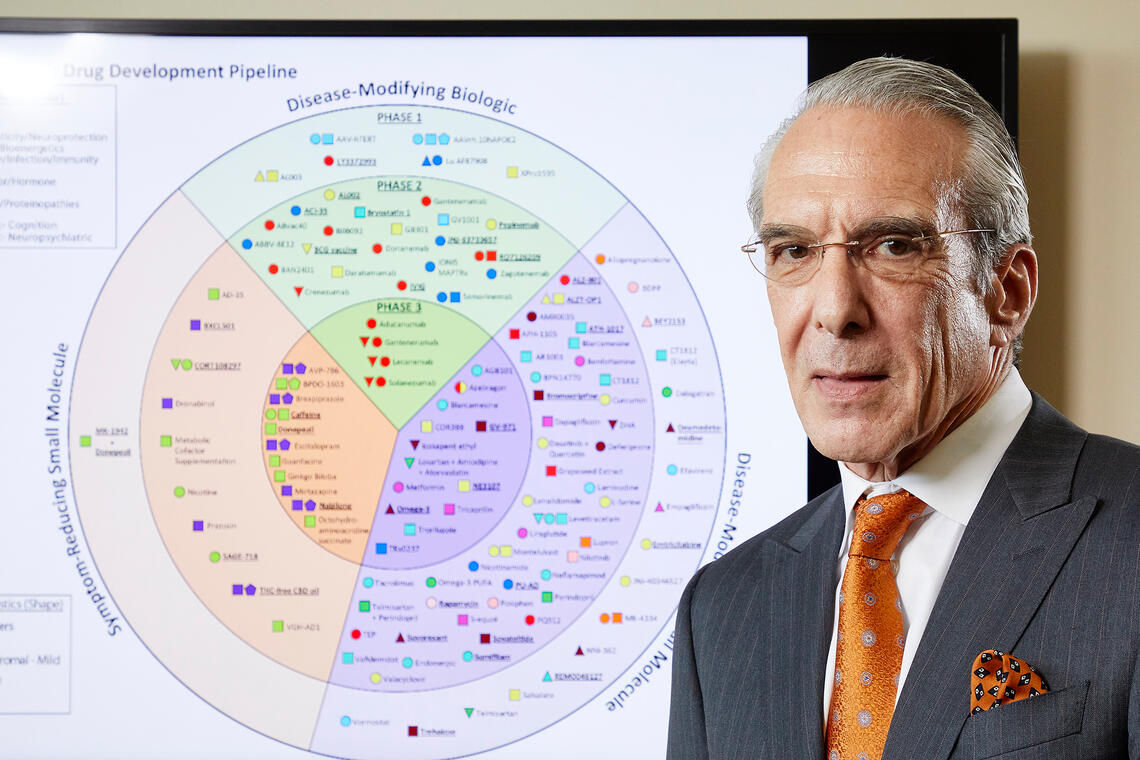
Chambers-Grundy Center for Transformative Neuroscience
The Chambers-Grundy Center for Transformative Neuroscience is primarily dedicated to studying drug development for Alzheimer’s disease and other brain disorders. The center also hosts a clinical trials observatory that monitors emerging treatments, innovative trial designs, and biomarkers in studies targeting neurodegenerative diseases.
Laboratories
Translational Mechanisms and Drug Discovery (TMDD) Lab
Our research projects in the TMDD Laboratory focus on the cellular and molecular mechanisms that are associated with neurodegenerative diseases, with particular emphasis on Alzheimer’s disease, as well as risk factors for the disease. It involves several pre-clinical transgenic mouse models investigated through extensive cellular and molecular biology approaches, ranging from cell culture to flow cytometry and mass spectrometry.
Cognitive Aging & Neuropsychological Equity (CANE) Lab
Our research prioritizes diverse groups to answer important questions about aging and neurodegenerative disease. We utilize neuropsychological assessment, community-based participatory research, collaboration with multidisciplinary colleagues, and multi-method approaches to identify and reduce health disparities in cognitive aging.
Pam Quirk Brain Health and Biomarker Lab
The Pam Quirk Brain Health and Biomarker Laboratory serves as a biobank and biomarker discovery resource for our research and numerous clinical collaborators to store, process, and share human patient specimens. This includes blood samples, saliva, cerebral spinal fluid), and tissues to be utilized for research, particularly in the search for novel biomarkers for Alzheimer’s disease and traumatic brain injury.
Regen-Brain Lab for Innovative Nanotechnologies and Stroke Recovery
The Regen-Brain Laboratory is a multidisciplinary research team focused on uncovering the mechanisms of brain repair after stroke through three main directions: identifying the role vessels play in the activation of neuroplasticity mechanisms such as neurogenesis, axonal sprouting, neuronal circuit and synaptic connectivity; deciphering the role of immunomodulation in post-stroke angiogenesis; and developing innovative and cutting-edge technologies for stroke treatment.