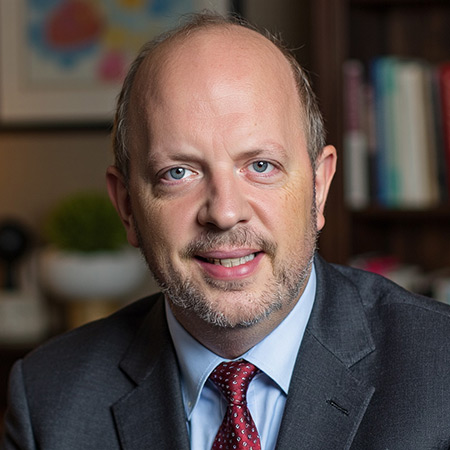
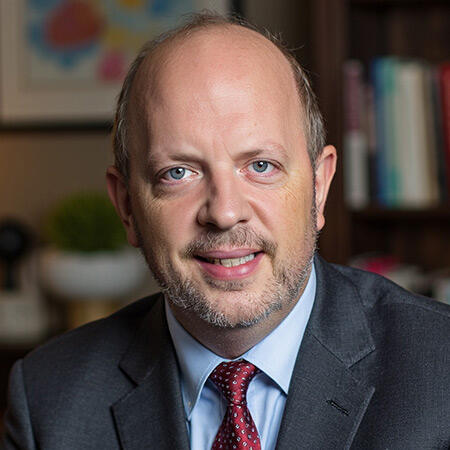
Richard Young
Assistant Professor-in-Residence
Biography
Richard Young is a computational neuroscientist whose interdisciplinary research integrates artificial intelligence, machine learning, and clinical innovation to advance human health and enhance patient safety. He earned his Ph.D. in neuroscience from the University of Nevada, Las Vegas (UNLV), with a dissertation entitled "Machine Learning Methods and Transcranial Direct Current Stimulation for the Understanding and Treatment of Parkinson's Disease." His scholarship focuses on the development of advanced neural network architectures, natural language processing (NLP) techniques, and deep learning models tailored explicitly for applications in neurodegenerative disorders. Leveraging expertise in neuromorphic computing frameworks and explainable AI (XAI), Young designs human-centric AI systems that enhance interpretability, usability, and clinical outcomes, particularly in Parkinson’s disease modeling and patient prognostication.
As part of the foundational cohort in UNLV's Master of Science in data analytics program, Young’s thesis focused on accelerating clinical trial research through innovative machine learning methodologies and large language models (LLMs). He previously graduated magna cum laude with a Bachelor of Arts in psychology, complemented by minors in neuroscience and information technology, and received honors for his thesis, which investigated the "Diversity of Minimotifs in Human Traits and Disease."
At UnitedHealth Group, Young develops large-scale NLP solutions that employ state-of-the-art AI methodologies to proactively identify and mitigate healthcare-related issues while improving customer engagement and operational efficiency. His work involves integrating NLP and LLM technologies with advanced platforms, including Databricks, Snowflake, Microsoft Azure, and OpenAI APIs, resulting in significant improvements in data acquisition accuracy, processing speed, and analytical precision.
Young's leadership in adopting and refining transformer-based semantic extraction pipelines has notably accelerated research timelines, optimized operational productivity, and increased competitive advantage. Additionally, he actively contributes as a scientific member of the Institutional Review Board (IRB) at UnitedHealth Group, ensuring rigorous ethical oversight in research impacting over 100 million patients across the United States.
Young regularly presents at national conferences, discussing emerging trends and the practical applications of AI in healthcare, human-AI interaction, medicine, hospice care, and the treatment of gambling addiction. Furthermore, he serves as a technical editor for specialized texts in data engineering and is currently authoring a book on the Neuroscience of Artificial Intelligence.
In his instructional roles at the Lee Business School, Young combines state-of-the-art industry methodologies with rigorous academic standards in courses such as Business Intelligence and Big Data Analytics. His pedagogical approach equips students and research collaborators with essential analytical tools and profound theoretical insights necessary for innovation at the intersection of AI, healthcare, and business. Young’s unique integration of neuroscience expertise, practical business insights, and patented human-in-the-loop strategies positions him ideally for productive partnerships dedicated to developing sophisticated and impactful AI solutions. Young’s scholarly contributions have appeared in prestigious journals including Brain Sciences, Nucleic Acids Research, the American Journal of Managed Care, Algorithms, Alzheimer's & Dementia: Translational Research & Clinical Interventions, and the Asian/Pacific Island Nursing Journal, as well as through presentations at renowned conferences such as the American Academy of Physical Medicine and Rehabilitation and the Society for Neuroscience.
His research initiatives have been substantially supported by prominent funding agencies and industry collaborators, notably grants from Amazon Web Services (AWS) supporting bioinformatics and AI-driven research, OpenAI for advancing safety methodologies within large language models, and the Nevada Council for Problem Gambling for developing sophisticated neural network frameworks targeting behavioral risk factors.