
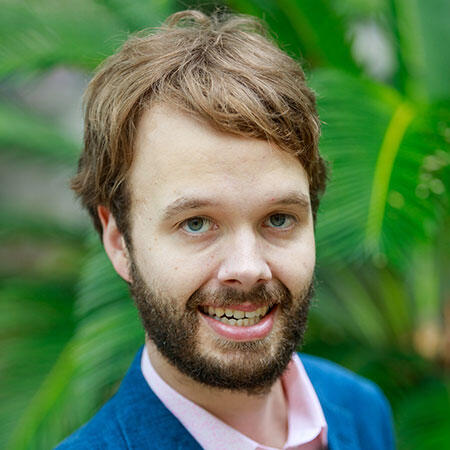
Christopher Willoughby, Ph.D.
Assistant Professor, African American & African Diaspora Studies
Biography
Christopher D.E. Willoughby is a historian and assistant professor with UNLV's African American and African Diaspora Studies program. His work focuses on the role of Atlantic slavery and scientific racism in fostering dangerous work environments and racial health disparities in the past and present.
Willoughby has published several works in this space, speaking to scholars in African American Studies, history, and medicine. He authored Masters of the Health: Racial Science and Slavery in U.S. Medical Schools (University of North Carolina Press, 2022) and edited Medicine and Healing in the Age of Slavery (Louisiana State University Press, 2021). Recently, he has penned several articles aimed at medical professionals, including essays on the influence of 19th-century racial science on contemporary medicine and public health in journals such as Anatomical Sciences Education, the American Journal of Public Health and the New England Journal of Medicine. Additionally, Willoughby published essays in the Journal of Southern History, Medical History, and the Oxford Handbook of American Medical History.
His public-facing editorials, reviews, and blogs on the history of blackface, medical schools' trade in human remains, and COVID-19 have been published by outlets including The Washington Post, Black Perspectives, and AL.com. Journalists around the globe have also called upon his expertise for articles on racial health disparities, the repatriation of stolen human remains, and the history of racism in shaping medical education. Prior to joining the faculty at UNLV, Willoughby held postdoctoral fellowships and visiting faculty positions at Pitzer College, Harvard’s Charles Warren Center for Studies in American History, the Huntington Library, The Pennsylvania State University, the Schomburg Center for Research in Black Culture, and Emory University.