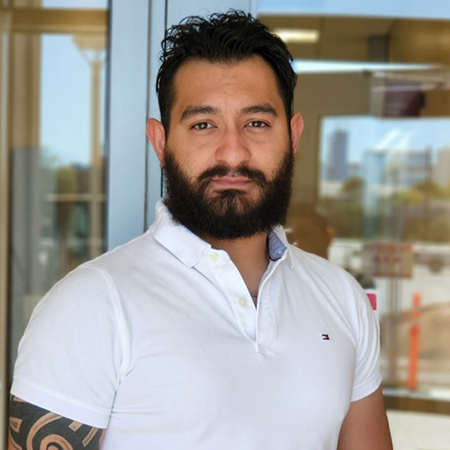

Andrew A. Ortiz, PhD
Chief of Staff and Operations, Research Coordinator
Biography
Andrew A. Ortiz, Ph.D., is a neuroscientist with expertise in cellular and molecular neuroscience, specializing in Alzheimer’s disease. His research focuses on uncovering the underlying mechanisms by which metabolic dysfunction, particularly diabetes, increases the risk of Alzheimer’s disease. He investigates a range of interconnected factors, including obesity, insulin resistance, hypertension, the gut-microbiome-brain axis, aging, menopause, GABA (B) receptor signaling, and chronic neuroinflammation, all of which contribute individually and synergistically to Alzheimer’s disease pathogenesis. Utilizing several transgenic mouse models, advanced biochemical techniques, and analysis of human biofluids such as blood and plasma, Ortiz integrates preclinical and translational approaches to better understand disease mechanisms. He also manages multiple metabolism-related research projects and mentors’ students in Jefferson W. Kinney’s Translational Mechanisms and Drug Discovery Laboratory and the Pam Quirk Brain Health and Biomarker Laboratory, with a focus on understanding how metabolic and inflammatory factors accelerate Alzheimer’s disease progression.
Ortiz now serves in a leadership role overseeing multiple research initiatives, strategic planning efforts, and daily operations at the Chambers-Grundy Center for Transformative Neuroscience, located within the Department of Brain Health at the Kirk Kerkorian School of Medicine. The Center is directed by Dr. Jeffrey L. Cummings, a world-renowned neurologist specializing in Alzheimer’s disease clinical trials, drug development, and discovery. Ortiz manages the execution of multidisciplinary research projects focused on Alzheimer’s disease, neurodegeneration, dementia, and brain health by collaborating closely with several faculty, research teams, clinicians, biotechnology companies, students, and external partners. Leveraging his scientific background, Ortiz ensures that research efforts are both biologically grounded and strategically aligned, while also securing resources, mentoring trainees, and streamlining workflows to advance the Center’s mission efficiently and effectively.