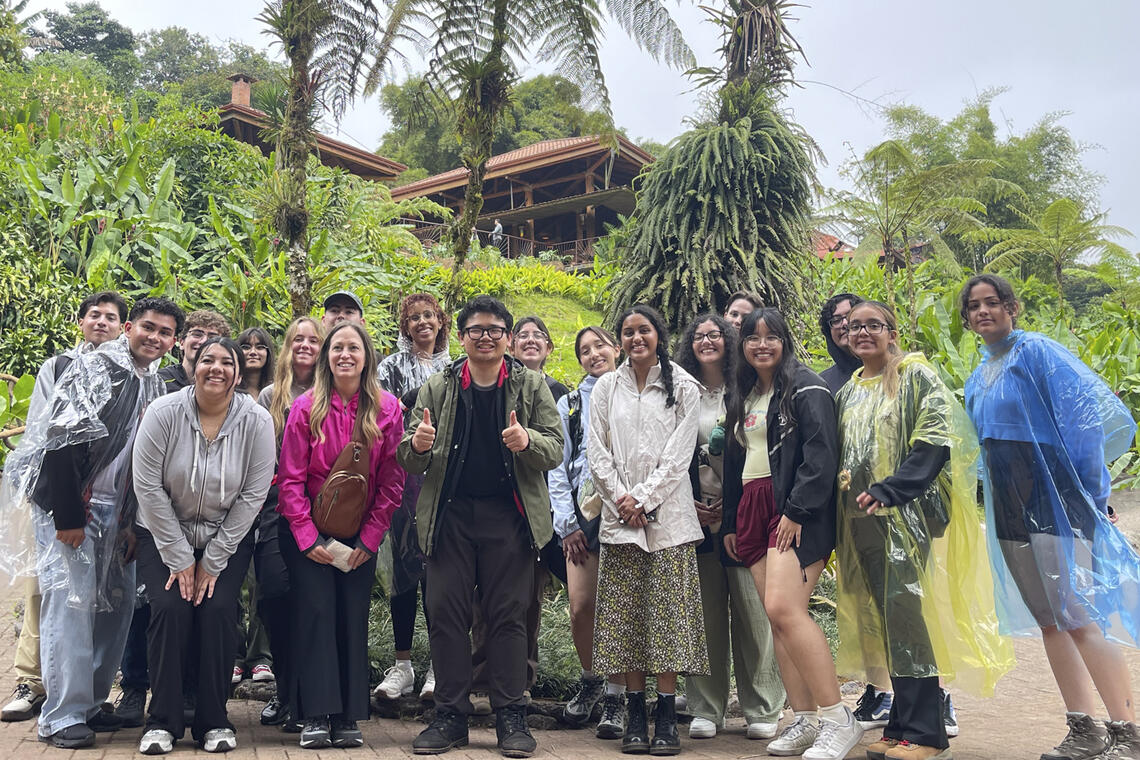
UNLV Honors College students and trip leaders during their week in Costa Rica. (Ryan Nunez)
An Honors seminar paired a week in Costa Rica over spring break with a semester of studying how disorienting experiences can lead to transformation.
By the time the playing cards came out, 18 UNLV Honors College students had been stuck in the Miami airport for hours. They were supposed to be arriving in Costa Rica, where a service project awaited them the next morning.
Instead, flight delays left the group scrambling to find hotel rooms for an unexpected night in Miami.
The students were enrolled in HON 430: Unpacking Study Abroad: Disorientation to Transformation, a spring 2026 seminar taught by Kim McGrath, UNLV’s director of board and volunteer relations. The semester-long course included a week in Costa Rica over spring break, with Honors College Dean Lisa Menegatos joining the class abroad.
Before departure, students studied Costa Rican history and culture and explored their own assumptions through readings, story circles, and writing. The course drew on Jack Mezirow’s transformative learning theory, which holds that experiences that challenge people’s assumptions, or “disorienting dilemmas,” can lead people to reconsider those assumptions.
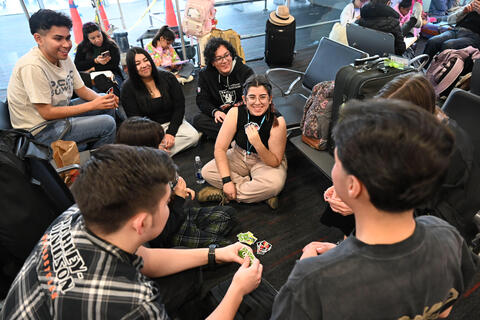
Classmates play cards to pass the time during the Miami airport delay. (Ryan Nunez)
The overnight delay was the first of many such moments on the trip.
Kathy Pham, a self-described shy sociology major, shared a hotel room with three classmates while stranded without her essentials in Miami. The experience, she said, “helped me to stay flexible, as well as pushing myself to talk to others.”
Pura Vida
Once the group reached Costa Rica, the week moved fast. Much of it asked students to do something they hadn't done before, often in Spanish.
Everywhere they went, students heard pura vida, “pure life,” the phrase Costa Ricans use as a greeting and an expression of happiness.
In a cooking class taught in Spanish, they made tortillas from scratch and prepared gallo pinto and mango ceviche. At Doka Estate, a coffee farm, they learned about coffee’s role in Costa Rica’s economy.
At Universidad Latina de Costa Rica’s Heredia campus and Universidad Hispanoamericana, students talked with Costa Rican peers and learned about higher education in another country.
“This experience pushed me out of my comfort zone, helped me build confidence in my Spanish, and gave me a deeper understanding for the language that goes beyond what I could learn in a classroom,” said mathematics major Britohn Blank.
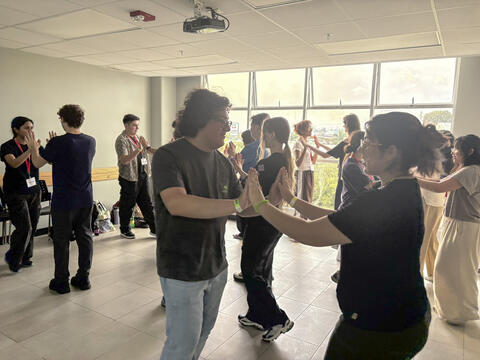
Honors College classmates practice dance steps together during a lesson in salsa, bachata, and merengue. (Ryan Nunez)
In a dance class, students learned salsa, bachata, and merengue steps. McGrath watched their initial discomfort give way to growing confidence.
“This was one of my favorite parts of the trip,” she said. Their willingness to be vulnerable and keep trying, she explained, was “transformative learning theory in action.”
“And they had fun! Even while concentrating on the moves, there were so many smiles!” she said.
Into the Cloud Forest
For students who live in the Mojave Desert, the Costa Rican landscape was a jolt.
"It was mesmerizing and refreshing to witness a different type of geography," said accounting major Angel Meza.
In Monteverde, students crossed hanging bridges through dense cloud forest, where orchids and bromeliads grow on other plants. The trip also included an optional zip-line excursion.
At La Paz Waterfall Gardens, biology major Samantha Zimmerman said she valued "being able to sit in nature and reflect on this semester and life."
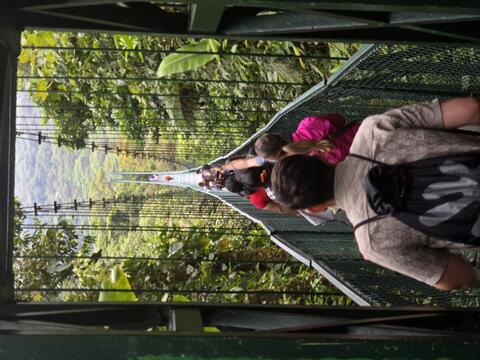
Honors College students cross a hanging bridge through Monteverde’s cloud forest. (Ryan Nunez)
At Toucan Rescue Ranch in Heredia, students heard the stories behind animal rescues and saw how injured and displaced wildlife are rehabilitated. They also learned why wildlife selfies that involve holding or touching animals do real harm.
"Seeing how animals are rescued, rehabilitated, and cared for really changed my perspective of how humans should care more about wildlife," said criminal justice major Isabella Baca.
The People Beside Them
When students wrote about the trip afterward, the subject that came up most was one another. Long bus rides and those unplanned hours in Miami gave them time to connect.
"My favorite part of the trip was getting to know everyone else in the class," said English major Sarah Chemplavil. "I went into the experience with a few friends, but I came out of it feeling more connected both to them and the rest of the class."
"Feeling at home with this group made each experience all the more meaningful," she said.
"Making new friends is always transformative, and I feel like I have transformed a lot because of the people I was surrounded by," said geology major Issa Lozano.
Opening the Door
The friendships and growing confidence students described were exactly what Menegatos hoped the seminar would make possible. She and McGrath developed the idea for the course together.
“Study abroad was something I always wanted to do when I was in college, but my family couldn’t afford it,” Menegatos said.
She wants every Honors student who is interested in that kind of immersive experience to have one. "I don't want money holding them back," she said.
A full semester abroad can be hard to fit into a degree plan and even harder to afford. A weeklong, faculty-led trip lowers both hurdles. The Honors College went a step further, covering every student's airfare and giving each participant a $1,000 scholarship.
"We wouldn't have been able to do that without the many gifts we have received over the years," said Charles Javier, the college's associate director of development. "Our longstanding donors helped make this transformative experience possible for our students, and we cannot thank them enough."
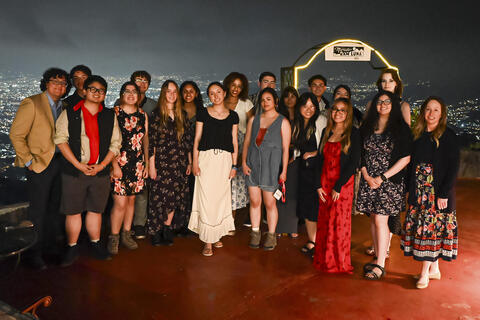
Students enjoy the views during their visit to Ram Luna, a hilltop restaurant overlooking San José. (Ryan Nunez)
Bringing the Learning Home
The class didn’t end when the plane landed in Las Vegas. Back on campus, each student completed a final project examining their experience through transformative learning theory.
Looking back on the semester, psychology and neuroscience double major Kaylynne Cantwell noticed a change in how she handles the unexpected.
"I learned that I have become a lot more flexible and less anxious when unexpected changes occur," Cantwell said. "I feel that I have become more confident and that I am more capable of handling uncertainty than I previously thought."
Pura vida.