“What’s your major?
“What are you interested in?
“What do you want to do?”
“Have you made friends?
For new UNLV students – whether they are in their first year or transferring – feel like these questions are on repeat. They just got here. How are they supposed to be sure of anything, let alone their major, career path, clubs, or friend groups? It’s easy to get overwhelmed.
That’s where the college’s First-Year and Second-Year Seminar courses are helping students turn that uncertainty into opportunity.
At the heart of both courses, COE 103 and 202, is a simple but transformative idea: students design their own futures.
Learning to “Design My UNLV”
When Chelsie Hawkinson joined the program four years ago, she saw an opportunity to further develop the seminars into a more integrated and research-driven experience.
“When I got here, the classes were focused on things like debate and service learning,” she explains. “Those elements remain central. Since then we’ve worked to more intentionally connect students’ experiences throughout the semester.”
That’s where Life Design came in. Emphasizing empathy, reflection, collaboration, and learning through action, Life Design helps students make intentional decisions about their education, careers, and well-being. In the first-year seminar, that means asking questions like.“Who do I want to be at UNLV?” and “How do I make the most of my time here?”
Students explore a semester-long research question, What is the ideal college experience for me?, integrating scholarly research, structured reflection, and campus engagement.
“We’re teaching them how to thrive, not just survive,” Chelsie says.
The impact shows. Nearly 94% of COE 103 students reported that the course helped them take responsibility for their growth, and 97% said it helped them value collaboration in shaping their career paths.
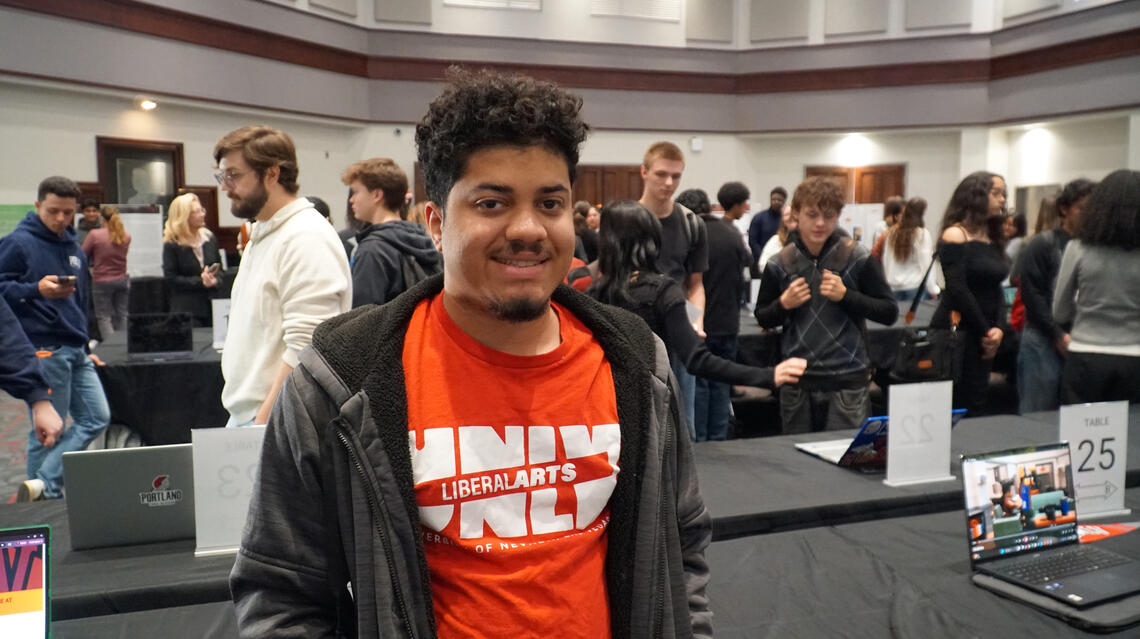
“Before the course, I felt like I was just trying to keep up,” said Teresa Juarez Serrano. “The Life Design activities helped me slow down and think about what I want my experience in college to look like, and actually writing it down helped me realize that I had more control over my time here than I thought.”
“The course definitely helped me take responsibility for my academic growth,” said Roman Reed. “You had to stay on top of readings and actually use campus resources. I didn’t think I needed the Writing Center as an English major, but it ended up really improving my writing.”
From Reflection to Real-World Readiness
By the time students reach the second-year seminar, COE 202, the focus shifts toward professional development and purpose. Here, Life Design becomes career-centered. Students explore pathways, conduct informational interviews, known as prototype conversations, and consider aligning their personal and professional aspirations with their strengths and values.
“It helped me build confidence in my own growth,” said Michael Lacaro. “Taking small steps made me feel more comfortable with why I’m here instead of doubting myself or thinking about dropping out.”
“Connecting my strengths and values to careers made me feel more confident about the path I already had, but it also helped me break things down into mini-goals—like getting my passport so I can study abroad or joining clubs that fit my career plans,” said Reed.
They also dive into Touchstones Discussions, a signature part of the course where students engage in weekly, guided conversations around short readings. The goal isn’t to win arguments. It’s to listen deeply, think critically, and build community.
“We found that, on these days, students were more motivated and connected,” Chelsie says. “It teaches active listening and collaboration. Skills that carry into every other class.”
“Reed explained, “Hearing my peers open up made UNLV feel less like a distant institution and more like a community.”
“Our discussions were often about mental health or just getting through life,” said Juarez Serrano. “Hearing other students talk about that helped me feel less alone.”
These findings aren’t just anecdotal. Data from the Office of Learning Analytics showed that students in discussion-based classes experienced higher engagement and stronger feelings of connection, which in turn enhanced their motivation and self-efficacy.
By teaching students to reflect, connect, and act with intention, the college’s First- and Second-Year Seminars are doing more than easing the transition to college–they’re helping students build the confidence and clarity to design a future that’s truly their own.