How Brian Kasper turned his teaching career into a global adventure
“Teaching is one of the few jobs where you can just pick up your life and move it somewhere completely different,” Brian Kasper says.
And that’s just what this COE alum did: teaching in schools across the world, enduring unpaid salaries, starting a family, and gaining invaluable experience over 16 years.
His journey is proof that a teaching license and a willingness to say “yes” to the unknown can reshape one’s professional practice and worldview.
The Starting Point
At 18, Brian moved from Ohio to Iowa for his undergraduate studies in education. However, feeling disconnected from education, he transferred to Colorado State to study forestry.
After graduating, Brian worked for the U.S. Army and the U.S. Forest Service, conducting environmental research around the country. While Brian enjoyed the constant travel, what he loved most about his job was giving talks to school groups visiting Rocky Mountain National Park.
In those moments, Brian knew that teaching was what he really wanted to do.
Discovering International Teaching
Brian made his way to UNLV and earned a bachelor’s degree in elementary education in 2005. Soon after, he began teaching at Hollingsworth Elementary and discovered the possibility of teaching abroad.
“I was hired mid-year, and the teacher I was taking over from had taught in the Marshall Islands,” he recalls.
Without guidance, he searched for schools the hard way–googling country names and sending paper applications.
Of all his applications, only a school in Kuwait responded with a two-year contract offer. Although he knew nothing about the country, Brian jumped at the opportunity.
“That was part of the adventure. If I didn’t like it, I could just get on the plane and come back.”
Teaching Abroad: The Good, The Rough, and The Uncertain
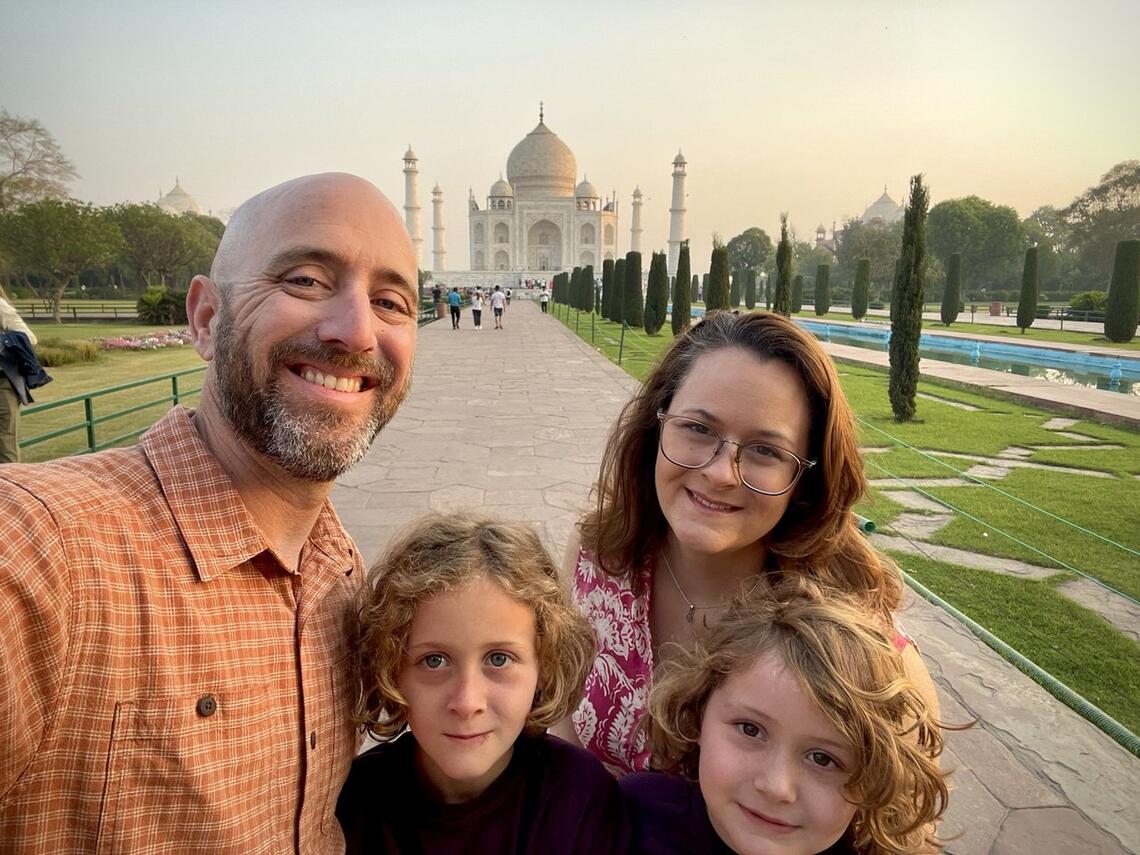
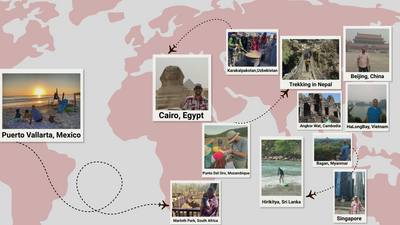
In his sixteen years, Brian taught in Kuwait, Vietnam, Mexico, Mozambique, China, and Uzbekistan. Along the way, he married a fellow teacher, had two children in two different countries, and learned some valuable lessons about how different countries perceive the value of education.
Across all of these countries, Brian saw what school meant to different families. While some parents worried that their children were not reading early, others viewed literacy as something that develops naturally over time.
“Coming from America, you find out that it’s not such a big deal in other places,” he says.
These contrasts taught him that learning does not follow a single universal path, and in the end, parents everywhere want their kids to have a meaningful education.
Of all the places he taught, Mozambique stands out as a favorite because it fit him professionally and personally. It was his first experience teaching the International Baccalaureate Primary Years Programme, which emphasized student choice and inquiry. The country was also especially welcoming to families.
However, not every experience was as positive. In Vietnam, Brian worked at a school where leadership instability created uncertainty, and paychecks arrived late. The experience taught him to look carefully at a school’s stability before accepting a position.
Ultimately, teaching across continents gave Brian a broader perspective on education and culture, and unique experiences like attending the Futsal World Cup in Tashkent, and visiting places he wouldn’t have been able to.
Building Relationships Across Cultures and Adapting
“Everyone knows everyone.”
Brian describes school communities abroad as “small worlds” where you work with the same colleagues every day, see students and their families at school and in social settings, and where administrators, teachers, parents, and students form connected circles.
These school communities are also spaces where cultures and identities intersect, and some celebrate this diversity through events such as International Day.
For Brian, living and working abroad means balancing teaching with the part-time job of navigating life in a new system.
“You have to be willing to learn local customs and avoid missteps that make you stand out, because you already stand out as a foreigner, “ he says.
Since returning to the US, Brian has experienced reverse culture shock, and he now finds ordinary things, like fully stocked grocery aisles, overwhelming after years in places with fewer choices.
Advice to Aspiring International Educators: Go For It
“It’s not as scary as it seems,” Brian says
To anyone considering teaching abroad, Brian’s advice is to be open-minded and adaptable. Schools typically support teachers with visas, flights, accommodations, and sometimes, professional development funds, which take care of many headaches.
He also suggests applying through recruiting agencies such as Search Associates and Global Recruitment Collaborative to skip the rookie mistakes he made.
As Brian’s family demonstrated, with patience, perseverance, and an open mind, teaching can be a passport to the world.
By Sakinah Musa