What would you do if your business needed 100 employees but you only had 60? Who picks up the workload of the other 40? Who skips breaks, covers gaps, and keeps things running?
And how long until the people barely holding it together start to burn out and the system collapses?
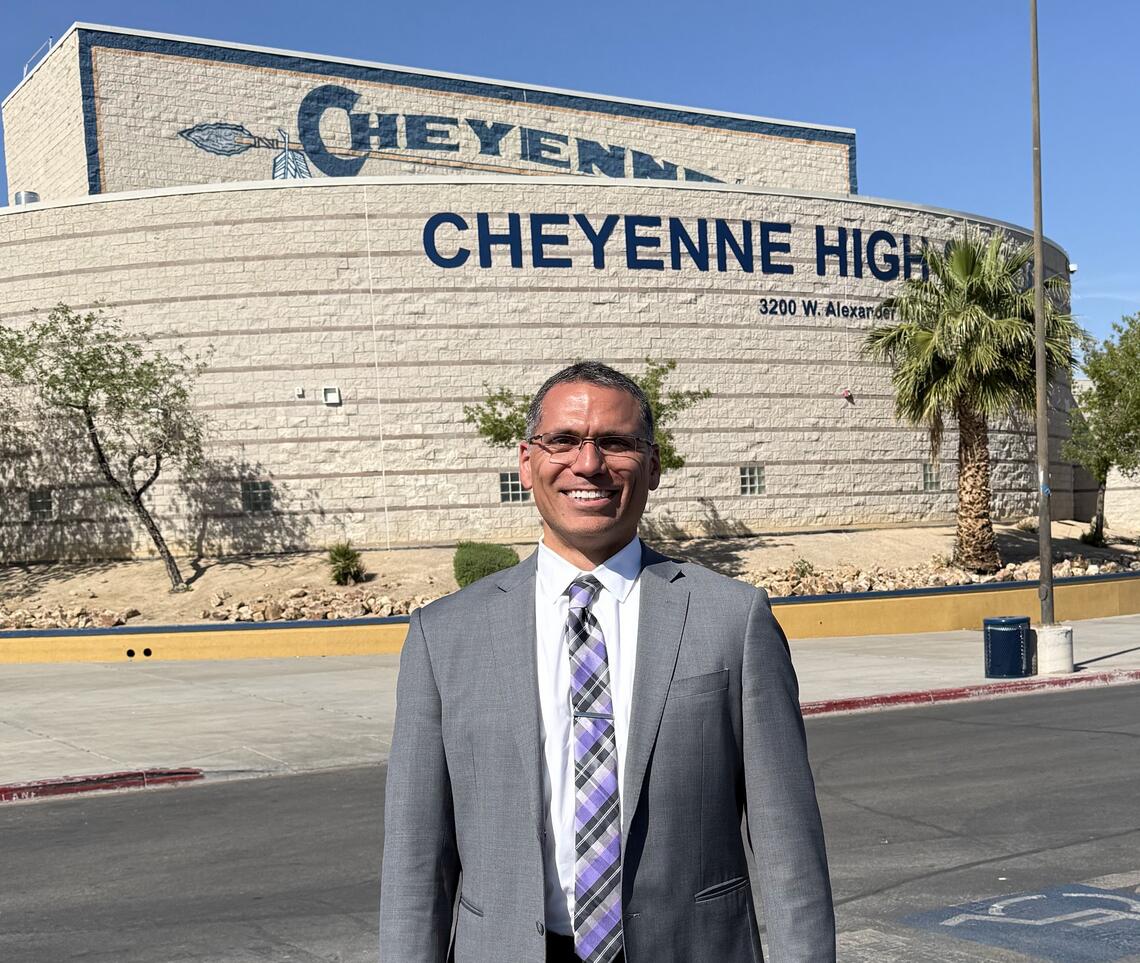
Four years ago, that was the reality at Cheyenne High School. Today, the school is almost fully staffed with a vacancy rate of 3.5%, a transformation that reflects years of strategic leadership, collaboration, and a commitment to growth.
At the center of that transformation is Principal Anthony Nuñez, ‘06 M.Ed. Curriculum & Instruction, ‘09 M.Ed. Educational Leadership, whose strategy is built on vision and authenticity.
Change Begins with Culture
“The first step was identifying our shared core values,” Anthony shared.
When he first arrived at Cheyenne, the challenge was clear. Teachers were tired, and systems lacked structure. His plan of attack? Focus on culture.
Inspired by a book, Traction, Anthony and the staff conducted an exercise reflecting on the qualities of the individuals they admired most. Recurring trends in those responses helped them define the school’s values and establish a common vision for what Cheyenne should represent.
“And to this day, I think that our core values remain authentic to the staff.”
The vision not only boosts staff morale but also plays a key role in recruitment. Anthony and the assistant principals involved in hiring tell candidates that the school is committed to improvement and growth, and that he will support anyone willing to learn and grow.
A Growth Mindset
Anthony encourages his teachers to develop their practice over time rather than feel pressured to be perfect immediately. This growth mindset helps to create an environment where educators feel safe to grow professionally.
“There’s a slightly different focus every year, but the goal is to keep growing and improving,” he shared.
Now, the focus is beyond basic instructional practices; it also includes refining classroom management, strengthening lesson planning, and improving academic instruction.
Changing the Narrative
Before Anthony, Cheyenne had long carried a district-wide reputation as a difficult school. Anthony knew improving the school’s reputation required more than internal changes. One strategy was to give staff positive stories and data to share.
“A lot of what people know about our school is from what the people here are saying,” he said.
Another strategy Anthony uses is increasing the school’s visibility. He has presented at conferences to share the school’s progress and also mentors other administrators.
“If I can talk about Cheyenne, I will talk about Cheyenne.”
Community partnerships have also played an important role. Events held at the school and collaborations with local and national organizations have brought new resources and positive attention to Cheyenne. For instance, the school hosted President Barack Obama twice.
Beyond culture and collaboration, there is also a visible transformation of the school’s physical space. A larger school sign and redesigned outdoor spaces with turf have created welcoming areas for students to gather and build pride in their school.
All of these efforts have yielded results that reinforce the shifting narrative. The school’s graduation rate rose to 88% from 75%, surpassing the district average, a testament to the fact that when teachers stay, students stay.
Looking Ahead
Although the progress at Cheyenne has been significant, the work is far from finished.
“We are going to keep improving graduation rates, increase ACT performances, and ensure our [Career & Technical Education] programs give our students clear pathways into college or the workforce,” Anthony shared.
Another priority for him is staff retention. Recruitment was the first step, but long-term success will depend on retaining the teachers and leaders who have helped rebuild the school.
Above all, the transformation of Cheyenne High School demonstrates what sustained leadership, collaboration, and a growth mindset can accomplish.
Written by Sakinah Musa