Technology is advancing faster than schools can teach. As the gap between what employers need and what our education systems deliver widens, are graduates job-ready?
In the past, high-schools, colleges, and trade industries have worked together to bring practical skills into traditional learning environments. Through auto body, woodworking, and welding classes, students explored potential careers and developed practical skills that prepared them to enter the workforce immediately. Can the same approach work for STEM fields? Associate Professor and researcher Xue “Cher” Xing is finding out.
Trying Every Letter in STEM
Tech jobs are plentiful, but the traditional route requires students to spend thousands in tuition and commit several years to a degree path. Students often blindly select a major hoping it’s the right fit. Xue’s Tech Ready Rebels get a much-needed career preview while they are still in high school.
The Tech Ready Rebels research initiative uses internships to put students in workplaces where they can see how traditional college-level coursework is applied. “What they're learning stays tied to what employers actually need right now.” Xue explained.
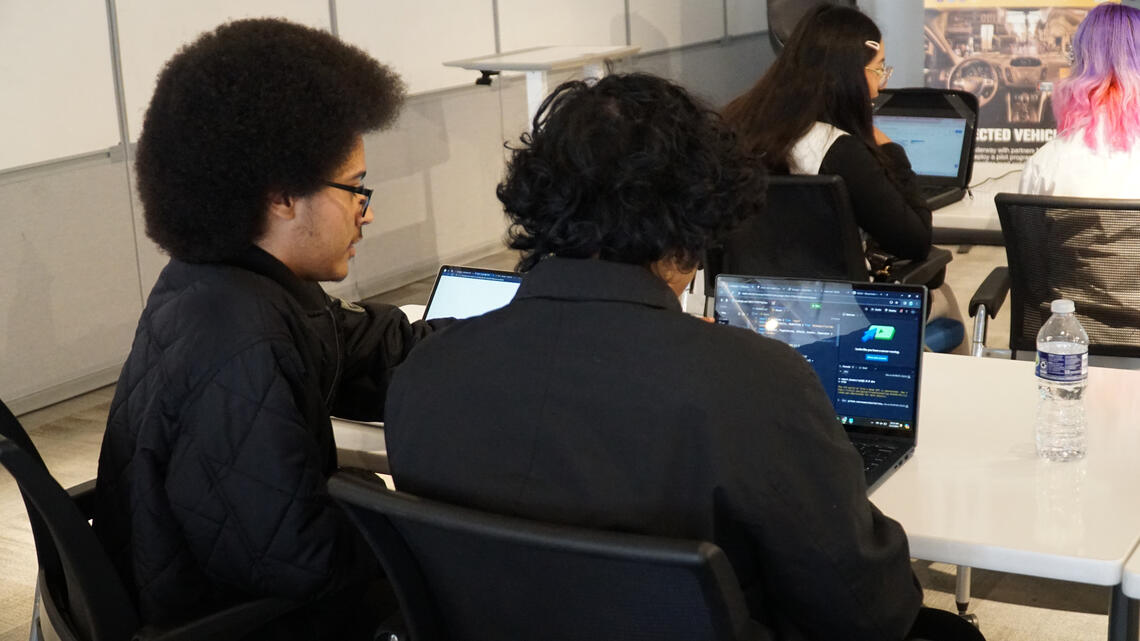
Over the course of a year, students gather on UNLV’s campus each Saturday to complete two college courses, three IT workshops, and participate in industry certification exam preparation. The program, funded through the Governor’s Office of Science, Innovation and Technology and the MGM Foundation, also lets students test out a variety of STEM fields, select one concentration certificate, and get real-world experience all before college applications are due.
Preparing for What Employers Actually Need
Employers claim they can’t find workplace ready college grads. They’re also finding that candidates understand the work, but lack awareness of workplace norms, communication skills, self-efficacy, and professional confidence. In response, the program prioritizes connecting juniors and senior high schoolers to paid-internships and teaches them how to find, interview for, and secure relevant employment over the summer.
Creating Space for Students to Change Their Minds
Her research findings reveal the power of workforce development models: when students try various fields and find their fit, learning sticks and fulfilling careers are thoughtfully pursued. For Xue’s students, building confidence in their education and career choices matters as much as technical instruction, especially for minority female students who don’t often see themselves reflected in the field.
Aliya Ojudae, experienced this firsthand. “Since visiting the Las Vegas Valley Water District, my interests have shifted,” she shared. “I actually changed the certification I wanted to get through this program from computer science to cybersecurity.” The Rancho High School senior went on to secure an IT internship with the Water District and is now studying pre-law along with biology, psychology, and biomedical engineering at Carnegie Mellon University.
Scaling Across Industries
Deploying workforce development models to simultaneously bridge early career exploration, traditional learning, and real workforce application extends beyond trades and STEM pathways. Xue sees a landscape where the same explore and earn-while-you-learn format benefits other hard-to-fill career options like healthcare and education. When students understand the value and career relevance of their academic pursuits, they can move forward with equal parts of confidence and curiosity in today’s dynamic workforce