What did you do during the pandemic?
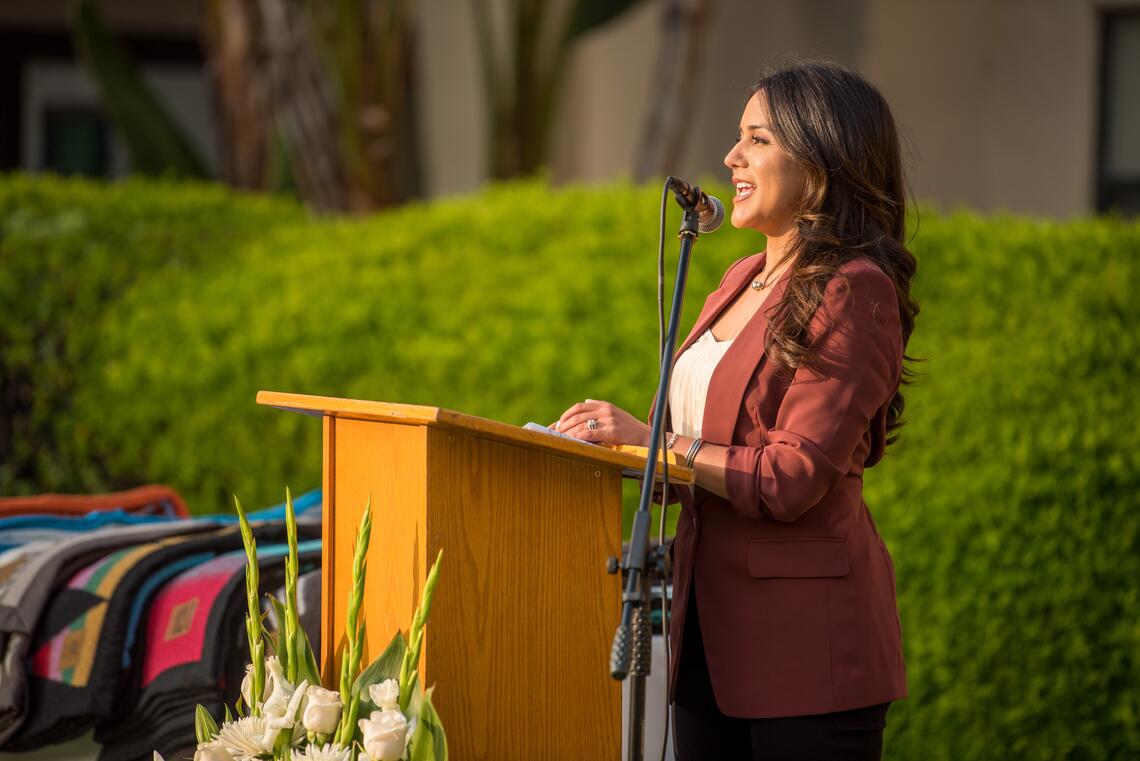
Many of us switched to remote learning and work, and others found new hobbies and made TikTok videos. We tried to stay engaged and connected with others, but also experienced isolation and loneliness. Amidst the uncertainty, Elena Nourrie, ‘17 M.Ed. Higher Education, and two longtime friends, decided to bring their community together. They organized virtual beading circles, wellness gatherings, and community conversations for members of their Indigenous communities.
This grassroots initiative shaped what is now known as the So'oh-Shinálí Sister Project (SSSP). The non-profit organization strengthens Indigenous communities across Los Angeles County through advocacy, wellness initiatives, cultural programming, and community-building efforts.
But Elena’s path to community leadership and advocacy began years earlier.
Finding Her Place
Elena started out as an English major working in K-12 education. She began her professional career as an education guidance counselor for a Southern California tribe. There, she helped Native American youth navigate higher education pathways and witnessed their struggles to access resources
After five years in, she decided it was time to pursue an advanced degree in higher education. However, before choosing UNLV, Elena doubted that she would fit in as an Indigenous student.
A meeting with Doris Watson, a professor of higher education, would change everything.
"When I told her I was Hopi, she immediately knew about my tribe, and she had worked with Hopi schools," Elena recalled. "I was shocked that she knew where my family was from."
That interaction reassured Elena that UNLV was a place she belonged.
“I didn’t think I could do a full-on master’s program. The impostor syndrome was real,” Elena shared.
Doris encouraged Elena to recognize her potential, and she embarked on her master’s program with her mentor’s support.
Belonging Through Community
Elena was not alone in her desire for connection with other Indigenous students. In addition to connections through Native student organizations, she supported the establishment of the UNLV Native American Students Association (NASA), where she met other community members from different tribes.
As a result, she didn’t have to choose academic success over her cultural identity. She made a space where she could have both.
"In higher education, we're often taught that success is singular, but in Indigenous communities, culture and community are our anchors," Elena said.
Advocacy In Action
Conversations about diversity and inclusion were abundant at UNLV. However, much of the discussion overlooked Indigenous communities.
"It validated for me that this work was necessary and that we needed stronger representation and visibility," she explained.
This led her to co-found the SSSP. Their programs focus on early childhood, Indigenous wellness, and advocacy, and strengthen connections across Native communities in Los Angeles County. One such program was a three-part wellness series on honoring Indigenous health. Through interactive workshops, cooking classes, cultural activities, and wellness discussions, Indigenous community members were educated on type 2 diabetes prevention and chronic disease management.
Projects like this demonstrate how Elena applies lessons from her graduate program in policy, advocacy, and visibility in creating meaningful, community-centered initiatives.
Despite challenges including stereotypes, misunderstandings, and systemic underinvestment in Indigenous communities, Elena remains committed to creating opportunities for future generations through cultural continuity with the wisdom of elders and a profound sense of belonging to one's people, history, and land.
Written by: Sakinah Musa