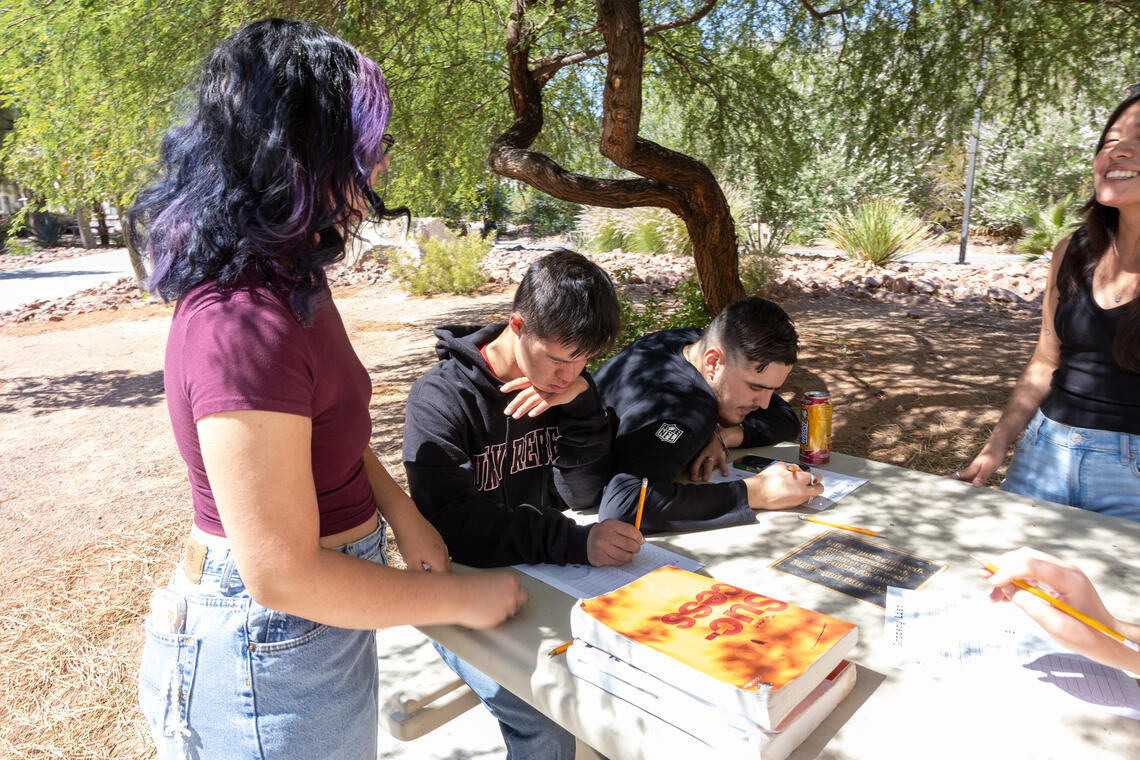
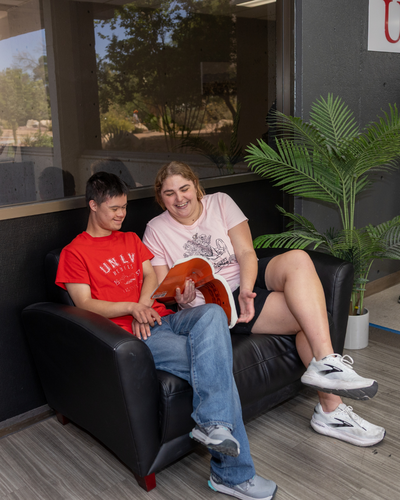
A student with no use of his voice, arms, or legs correctly answered every reading comprehension question using only his eyes. This is just one of many experiences that completely changed what Joshua Baker thought was possible for students with extensive support needs. It expanded his understanding of what these students with intellectual disability are capable of achieving and has shaped both the research and resources from the Nevada General Curriculum Access Center (NVGCA) he runs today.
For Josh, one student success story isn’t enough. He’s discovering what becomes possible when educators stop assuming limitations and begin creating new ways for students to access and demonstrate learning. When curriculum materials meet students where they are, anything is possible.
Small in Number but Not to Be Ignored
Students with extensive support needs are a unique group with diverse intellectual and developmental disabilities. Some are on the autism spectrum, while others have physical or behavioral differences, but most of them take the state's alternate assessment as early as the third grade. "We're only talking about 1% of the [student] population,” Josh pointed out.
On track to receive a Nevada Alternative Diploma, they are often overlooked by school systems that have lower expectations for these students. "There are not many curriculum resources out there for this population of students, so teachers have to make their own materials."
And this is where the NVGCA comes in.
Research Begins With Teachers
A limited range of commercial curriculum materials exist, but they can be rigid, difficult to adapt, and expensive. Instead of creating a whole new curriculum, the center’s team researches, designs and shares learning materials to help teachers make the state’s general curriculum more accessible for their students. They involve teachers throughout the process, and as Josh highlights, value their feedback "because if we just create resources without teacher input, they're probably not going to use them."
The center's adapted books team, led by Catherine Bacos, are intentionally designed to help teachers meet students where they are without lowering expectations. "We create the books at different levels. We have Level 0, 1, and 2 because even though they're all students with extensive support needs, they are not all at the same place," Josh said. Beginning with a simplified version of a text and gradually increasing its complexity gives educators flexible entry points to teach the same academic concept to learners with varying support needs.
The result is a library of over 100 books on various topics and guides to go along with them to help teachers understand how to teach the adapted books.
Challenging Assumptions
Beyond simple word choice and attention-grabbing illustrations, the center’s biggest uphill battle is not designing curriculum materials, it’s changing long held beliefs about intellectual and developmental disabilities. It’s not that special education teachers don’t think highly of their students, far from it. But there are differing opinions about priorities in the classroom.
Josh is all too familiar with teachers saying “I don't think this population needs books. They need to learn life skills.” or “These books are way above their heads.” But he challenges them to consider what he calls the least dangerous assumption instead. Assuming a child can’t learn does far more harm than offering them a chance to try.
Prioritizing Preparation and Access
Helping students reach their full potential is about more than motivating educators to shift their assumptions."A lot of teachers have a special education license, but they may not have specific training working with students with extensive support needs," Josh said. They mean well, but are not aware of the challenge ahead of them.
Going beyond generating classroom materials, the NVGCA team offers professional development training designed to build educators’ specialized skills. In addition, these sessions can count toward state licensure specific to intellectual disabilities and the college’s Intellectual Disability Graduate Certificate, allowing teachers to work toward their credential anytime, anywhere.
These resources can support every corner of Nevada. Offering free asynchronous online continuing education units for rural teachers and opening development workshops up to families ensures that the NVGCA’s on-campus location on campus never dictates a child’s access to higher quality educational experiences.
One student’s success years ago was not proof that every child will master literacy. However, we learned that limits should never be assumed before access is granted. By working with teachers to adapt tools and equipping them with the confidence to hold high expectations, Josh and his team are not just modifying curriculum, they are opening the door to new possibilities for children to go from having exceptional needs to being exceptional students.