Low test scores often lead us to believe students are struggling academically.
But what if certain assessments do not fully measure students’ abilities in the first place? How can we say assessments are accurate if they don’t reflect students’ unique learning styles and cultural backgrounds?
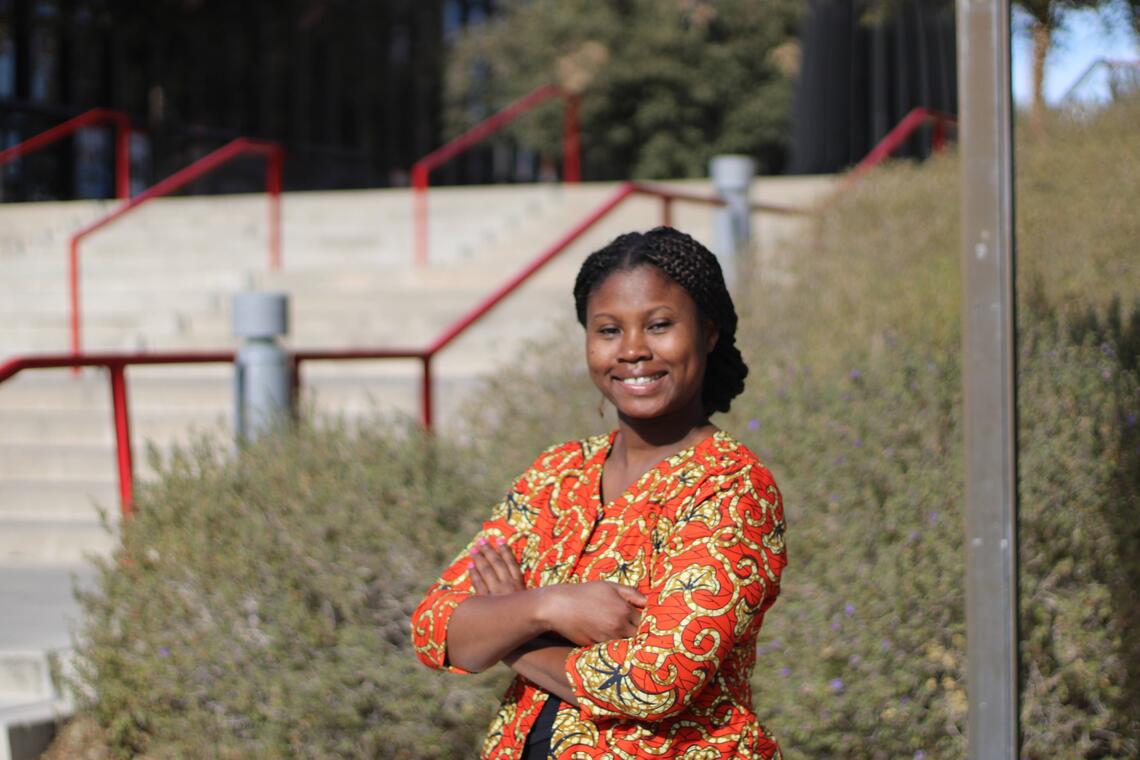
These questions are at the heart of Ayo Aborishade’s doctoral research.
During her undergraduate studies in Nigeria, she had encountered an assessment task that required the students to tie their shoelaces. However, these students only wore shoes with buckles or Velcro straps. This task was one of numerous assessment items that weren’t contextually relevant.
“That’s when I realized some of the children weren’t failing because they lacked the ability. The test just wasn’t culturally relevant,” Ayo shared.
In 2021, when she began her master's in Special Education at UNLV, the American Psychological Association acknowledged the role of assessment in promoting racial inequities. It became clear to her then that there was a gap.
“That moment connected my experiences in Nigeria and the U.S. It showed me that this issue is systemic,” she said
Now, Ayo is seeking a way to bridge the gap by examining the cultural validity of assessments.
From Nigeria to Nevada
Ayo’s interest in education grew from being raised in a family of educators. When her father became disabled from a terminal illness, she decided to connect her passion for education with disabilities by studying Special Education at the University of Ibadan in Nigeria.
In 2019, while presenting at an international conference in Tanzania, she met UNLV professor Monica Brown, who had been the only person in the room to acknowledge the strengths of her presentation. That encounter inspired Ayodele’s interest in pursuing her graduate studies at UNLV.
“The way she represented UNLV in that space made me want to learn more about the institution,” she said.
It’s been seven years since, and Ayo is now a third-year doctoral student in Special Education and a Holmes scholar under the mentorship of the Dunn Endowed Chair for Educational Assessment, Sharolyn Pollard-Durodola, who serves as the program’s faculty coordinator.
Why Assessment Matters
In special education, assessments play a critical role in determining whether students qualify for services, what supports they receive, and, sometimes, even which classroom settings they are placed in.
So, what role does cultural validity play?
A student may struggle on a test not because they are incapable, but because the test assumes experiences, vocabulary, or cultural references that are irrelevant to them. For multilingual students or students from different cultural backgrounds, that disconnect can influence their performance in ways that families and educators may not immediately recognize. This poses a risk of misidentifying students and assigning inaccurate interventions in the classroom.
Ayo’s doctoral research centers on a major gap in special education assessment: the lack of cultural validity.
By intersecting assessment and culture, Ayo’s research aims to reframe how the abilities of culturally and linguistically diverse students are measured. Her work specifically targets learning disabilities and emotional and behavioral disorders, categories with a disproportionate representation of students of color.
“It raises the question: what’s really being measured?” she noted.
Assessment Starts With Teaching
While Ayo’s research examines assessment in special education, she emphasizes that the issue begins earlier.
“Assessment starts with teaching,” she said.
This statement also reflects her renewed outlook on education.
“Students come to the classroom not only with learning challenges, but also with their culture. Culture is the lens through which they perceive the world and engage with learning," Ayo shared.
“It is critical to see students' cultural realities as assets in learning,” she added.
Ayo advocates for classrooms where teachers treat students’ cultural and linguistic identities as assets rather than barriers. When students feel a sense of belonging, they are more engaged and better positioned to succeed in assessments.
As she moves toward her dissertation, Ayo’s next steps include exploring how to prepare teachers to conduct culturally valid assessments.
“I want assessments to see students in their wholeness.”
Written by: Sakinah Musa