Jefferson Kinney


Biography
Jefferson Kinney is the founding chair of the department of brain health in the School of Integrated Health Sciences. Kinney investigates neurodegenerative disorders, including Alzheimer’s disease, vascular dementia, and Parkinson's disease, with a focus on cellular and molecular changes in the brain that underlie these disorders.
His current work includes investigating the role of several risk factors associated with Alzheimer’s disease and subtle changes in cell function, including interactions between diabetes and inflammation in the brain throughout the onset and progression of the disease. As part of this work, Kinney collaborates with the Cleveland Clinic Lou Ruvo Center for Brain Health in Las Vegas.
Earlier in his career, Kinney completed an Intramural Research Training Fellowship with the National Institute of Mental Health and the Helen Dorris Fellowship in schizophrenia research at The Scripps Research Institute.
Education
- B.S., Psychology, Colorado State University
- M.S., Experimental Psychology, Colorado State University
- Ph.D., Behavioral Neuroscience, Colorado State University
Jefferson Kinney In The News


Articles Featuring Jefferson Kinney

Namesakes: The Fellowship Helping UNLV’s Students Find a Cure for Alzheimer’s
Amanda Osse is the first recipient of the award named in honor of Nathan Lindsay, who passed away after a 15-year battle with Alzheimer's disease.

UNLV Newsmakers 2022: February
A collection of news stories highlighting the experts and events at UNLV.

UNLV, Lou Ruvo Center for Brain Health Earn $11.3 Million NIH Grant to Bolster Neuroscience Research in Southern Nevada
Joint Center for Neurodegeneration and Translational Neuroscience earns continuation funding to support regional research, infrastructure, and career development.
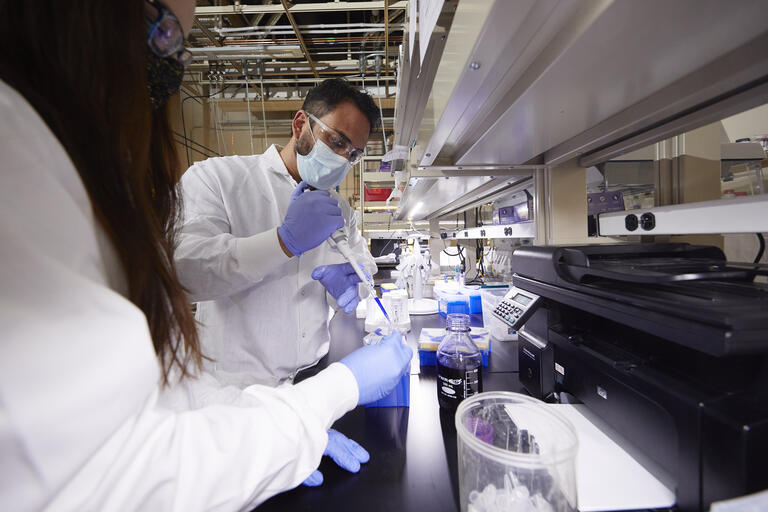
UNLV Newsmakers 2021: Research
UNLV researchers made international headlines this year with their discoveries. Here's a roundup of some of our top stories of 2021.